
The United Nations Children's Fund (UNICEF) warned this Thursday about the "expansion" of the Ebola outbreak in the Democratic Republic of Congo (DRC) and Uganda, and urged to "act very quickly" to stop the spread of the disease. The organization emphasizes that it is essential to have "sufficient supplies and sufficient equipment," something that requires international financial support in a context of cuts in humanitarian aid.
The executive director of UNICEF Spain, José María Vera, has pointed out that "Ebola is expanding through the DRC in a special way, but also Uganda," recalling that the African country "has been affected by a conflict for years, by other outbreaks, by other epidemics, both measles and cholera, and therefore it is a context that is especially difficult and very challenging in the face of an expansion of a virus as aggressive and as lethal as Ebola."
In this vein, he warned that "there is also a risk of it spreading to other countries and in that region itself," which is why he insisted that "action is needed." "It needs to be stopped," he stressed, emphasizing that containing the outbreak is viable "if action is taken very quickly, if sufficient supplies and sufficient equipment are provided, if there is prevention and if prevention is acted upon in a very forceful manner."
Vera explained that "it is a virus that also affects children in a special way, not only due to infections," emphasizing that minors also suffer from interruptions of basic services, the loss of family members, and "the risk of being left alone," as well as misinformation, "stigma," and "the fear of being infected."
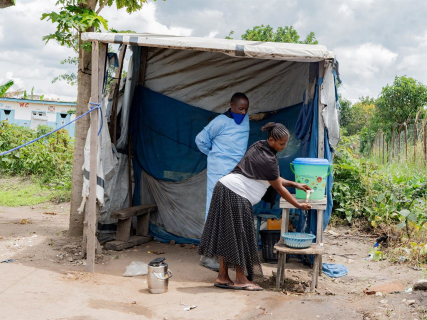
Likewise, he highlighted that UNICEF is already "acting with full force" against the outbreak, among other things by sending 50 metric tons of essential supplies, such as soap bars, water purification tablets, and basic hygiene kits. He reiterated that "everything that has to do with that prevention, with the element of basic health, is essential for Ebola not to spread."
As he specified, "we have positioned a multidisciplinary rapid response team that can act on several fronts. It is essential that 2,000 primary health workers, those who are in the furthest corners and in the communities, are protected, on the one hand, have all the information and can act on prevention."
For this reason, it has stressed that UNICEF needs "economic support at a time of strong cuts in international cooperation and especially for humanitarian action", in addition to humanitarian access to the affected areas, which "are affected by violence and conflict". "If we do not access, the probability of that virus spreading is higher," it concluded.
ACH demands an immediate response to the Bundibungyo strain
In parallel, the national director of Action Against Hunger (ACH) in DRC, Julie Drouet, has warned of the danger posed by the fact that the strain responsible for the outbreak, Bundibungyo, lacks an approved vaccine or treatment, as already pointed out by the World Health Organization (WHO), which last weekend declared an international emergency due to this outbreak.
"We are facing the Bundibungyo strain, for which there is currently no specific vaccine or treatment," she indicated. "Our presence in Mongbwalu, the epicenter of the outbreak, allows us to see that the response must be immediate to avoid a greater catastrophe in communities already exhausted by the conflict. Although there is no vaccine, timely care can save lives," she defended.
The NGO has remarked that the situation in DRC "is critical" due to the combination of the virus and the structural conditions that favor its advance. The lack of vaccines forces the response to focus on containment and prevention measures, something very complicated amidst a serious humanitarian crisis and large population displacements due to armed conflict.
In Ituri province, 1.5 million people need urgent humanitarian aid, a figure that could increase if the outbreak forces the closure of markets. Furthermore, only 30% of the health centers in the area have access to water, which complicates something as basic as hand washing to break the chain of transmission.
Given this scenario, Drouet has asked donors to release funds immediately, recalling that the Humanitarian Response Plan was only 25% funded last year. "We cannot abandon the population; without funding for the health and nutrition response, the impact of the virus can be irreversible," she warned.
The average case fatality rate of the Ebola virus is around 50%, with initial symptoms that can appear suddenly, such as fever, fatigue, general malaise, muscle aches, and headache and sore throat. Vomiting, diarrhea, abdominal pain, skin rash, and signs of impaired kidney and liver function may subsequently develop.
DRC —which in December 2025 declared the end of its last Ebola outbreak, in the Kasai region— is considered the country with the most global experience in controlling this disease, after having faced more than a dozen outbreaks since the virus was identified in 1976 in a double outbreak whose epicenter was located in the Congolese town of Yambuku, on the banks of the Ebola River, which gave its name to the virus.