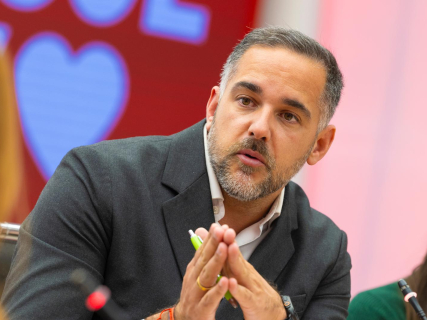

Question - What assessment does it make of the legislature?
Answer - The PSOE asserts the strengthening of public healthcare over the past four years, with new investments, an expansion of services, an increase in specialized healthcare training places, and legislative advances such as the ELA Law or the expansion of neonatal screenings.
The Ministry of Health has met many of the broad lines it set for its department at the beginning of this legislature. I would highlight the consolidation of universal coverage, the reform of pharmaceutical copayment, the approval of the Agencia Estatal de Salud Pública, and the Plan VEO. I would also highlight, the measures that have been taken in relation to mental healthcare, such as the creation of the Comisionado or the approval in the CISNS of the first action plan for the prevention of suicide, an issue that was highly demanded, and which has continued the strategy we updated in 2021 and the Plan de Acción de Salud Mental.
In addition, this is joined by the work we have done in the Cortes Generales with the majority of parliamentary groups, both in the Subcommission and in the study committee, of which I have been a part, placing mental health as a clear priority on the political agenda.
Also, I would point to other relevant measures, such as the approval of the Strategy for the Pharmaceutical Industry, the update of the Plan for Advanced Therapies, the Royal Decree that regulates the evaluation of health technologies, or the amendment of the Royal Decree on authorization of health centers, to ensure that they are staffed by professionals with the official degree and the appropriate competencies, for example, in the field of aesthetic surgery.
The major challenge we face at this moment in the public system is the need to reduce waiting lists. Hence the importance of having a new royal decree, such as the one the Government has been working on, that improves transparency in information and establishes a common framework of guarantees and maximum timeframes across the entire SNS.
Over these years, the Government’s agenda has been very intense, especially in legislative matters, with reforms of major scope that update regulatory frameworks with more than 20 years, and that have required dialogue with trade unions, professional associations, patient associations, etc.
Q - What reforms are still pending?
R - Many and important, due to the electoral advance, and after the social outcry about housing and the PP's rejection of the decree-laws. Among them, two bills from our parliamentary group: one that modified the regulation on the cryopreservation of oocytes and another relating to recognition as a health profession of the profession of biologist and social worker. Both had already been taken into consideration with broad consensus. There were also several bills, such as the Medicines Law, the new Framework Statute and the Patients' Organizations Law, which had been referred to the Congress not long ago and which have lapsed. Specifically, in the Patients' Organizations Law, the committee was working with the different appearances in Congress, where, in addition, a general agreement was expressed by all the groups. In any case, for our party this will be a priority in the next legislature.
P - What figures do you handle regarding funding?
R - In terms of funding, it is important to highlight that the autonomous communities have received additional funding during the Government of Pedro Sánchez, with 300,000 million euros more than during the Government of Rajoy. It is striking that this is not being translated directly into an improvement in public services, especially in some territories.
Our commitment is to consolidate 7% of GDP, because we achieved it in previous years, with measures that allow us to converge with the EU in tax pressure, and by approving a new model for regional funding, as proposed in this legislature, which allows us to have more resources for healthcare and for the entire Welfare State.
As I said earlier, it is necessary to address waiting lists and set maximum times, since the excessive delays we have across the entire NHS are one of the main problems in the functioning of the NHS. We also believe that it is necessary to consider establishing specific plans with the autonomous communities with criteria for earmarked final funding in this area.
Our aim is to strengthen equity between autonomous communities and to establish a regulatory framework where clinical criteria prevail in the management of waiting lists, guaranteeing transparency, accessibility and traceability in the data.
These are measures that could be approved at the beginning of the next legislature because there is already work done, in which progress must continue with the autonomous communities, but without blockages, because I want to remember that it is the autonomous communities. the competent ones in managing the lists.
P - What measures do you propose in Primary Care?
R - The updating and strengthening of Primary Care has been a priority during these eight years of government because of its fundamental role in the proper functioning of the public system, as well as in the coordination and continuity of care for patients, in a context marked, moreover, by the aging of the population, the increase in chronic diseases, unwanted loneliness...
It was a challenge that the pandemic made even more evident, as well as the urgency of allocating more resources to it, to which we have responded through the Ministry’s Primary Care plans with the autonomous communities, which have been very important milestones and that have developed the Strategic Framework of 2019.
Now we want to go further and establish that appointment commitment within 48 hours, continuing with the Plan beyond 2027, which is when it ends, and reinforcing it to foster the organization of centers in managing demand and to incorporate more specialists in Family and Community Medicine, Psychology, and new professional categories, such as health administrative management, and consolidating work in multiprofessional teams. In addition, we consider it necessary, as the Ministry has done in its proposal, to include Primary Care in the royal decree on waiting lists that I mentioned earlier.
P - The electoral program bets on establishing direct management as the preferred modality in the National Health System and approving a Law on Good Governance and Good Management. What changes would this regulation entail with respect to the current model of agreements and public-private collaboration?
R - Our commitment is to establish direct management as the preferred modality in the delivery of healthcare, which ensures the public nature of the SNS, as opposed to management models by private entities with a profit motive.
In addition, we want to approve a Law on Good Governance and Good Management of the SNS at all its levels (state, autonomous, hospitals, primary care, and other healthcare organizations), in accordance with the values, principles, and instruments of good public governance.
P - The lack of professionals, the difficulties in filling certain specialties, and the unease of part of the medical collective continue to be structural problems. The program proposes a new social contract with professionals and improving their working conditions. What specific commitments would the PSOE take on?
R - The PSOE agreed with the OMC’s proposal to create an intergroup to establish a specific space and something more institutionalized with the medical collective during the parliamentary processing of the Estatuto Marco, to which, for example, the PP opposed. In addition, we have held meetings with medical unions, as well as with unions in the area of negotiation, and they have conveyed their demands to us already before the election period.
Socialists agree with the Ministry of Health that improving professionals’ working conditions was and is an unavoidable challenge in order to improve the functioning of the system itself. That “social contract” that we propose is meant to be for all statutory staff, so that all healthcare workers feel in their working conditions the respect and social recognition that their dedication to public health deserves. Among many other challenges, we want to establish measures for reconciliation and equality, and we will give priority to employment stability and reducing temporary work, to apply the modification of the regulation of the special employment relationship for residency that improves the working conditions of specialists in training, to propose incentives and boost professional career development, to reform the Law on the Regulation of Sanitary Professions, and to continue with the state planning of human resources led by the Ministry of Health, by adapting the FSE number of positions to the health needs of the population and the system together with the autonomous communities.
P- The PSOE proposes guaranteeing equitable access to medicines and innovative therapies, strengthening strategic drugs, and promoting generics and biosimilars. It has also defended the reform of the Medicines Law to speed up access to treatments and strengthen strategic autonomy. What changes would it introduce in the current system for financing and evaluating medicines? How would it reconcile early access to innovation with the sustainability of pharmaceutical spending and the push for domestic production?
R- Our commitment to the new Medicine Law is public. A measure that gathered the bill project, and that we believe is of interest, is conditional funding for innovation. In addition, I want to highlight that in these years we have improved access times in a structural way, as the data shows, and the new law allows us to tackle many key challenges, such as ensuring supply, which I am convinced will spark an important consensus.
In terms of pharmaceutical policy, during this legislative term we have carried out partial reforms in Parliament for the benefit of the sector, patients, and the entire NHS. That is how we have to keep working in the next legislative term.
P - Have you had the opportunity to see the 10 priorities of the Spanish Association of Orphan and Ultra-Orphan Medicine Laboratories (AELMHU)? How will they work on those priorities and improve care for people with rare diseases, and if these conditions are going to be a strategic axis and a healthcare priority, given the special role and relevance they have in Europe?
R - Our program includes an explicit commitment to «promote early diagnosis and equitable access to treatment for rare diseases, fostering European cooperation and the exchange of health data».
I share, with our colleagues in the European Parliament, the need for more reference units (CSUR) connected with the European Reference Networks, and to promote a European regulation on rare diseases for the exchange and standardization of data to improve diagnosis and that facilitates swift access to cross-border treatment within the European Union. I also want to highlight Spain’s leadership in clinical trials on rare diseases, and reaffirm that our objective is to continue ensuring these patients’ access to orphan medicines.
P- Finally, with regard to new benefits and prevention, the electoral program includes initiatives such as the Plan Sonríe, with the gradual incorporation of basic dental treatments into public healthcare and grants of up to 200 euros per year, as well as free psychological care with a first consultation within a maximum of 30 days. It also proposes strengthening prevention and care for chronic conditions. What timeline do they have to roll out these new benefits and how will they be funded? What other areas of prevention do they consider priorities for the next legislature?
R - We hope to improve results and expand our parliamentary support to work throughout the next legislature on our commitments to citizens. For example, El Plan VEO, which I just highlighted earlier, required two years. In addition, in terms of dental health, we have taken very important steps these years of progressive government, financing the expansion of coverage by the SNS for children, pregnant people, people with disabilities, cancer patients, or those over 65 years old. That is the path we want to keep following, and to progressively incorporate the rest of the population as well, starting with assistance for households with middle and low incomes. We also want the Plan VEO to be consolidated beyond 2027 and to be incorporated, as beneficiaries, for the adult population in situations of vulnerability.
Our program includes other important commitments, such as progressively increasing investment in prevention until it converges with the European average, strengthening cancer screenings and ensuring the updating of neonatal screening within the framework for the development of the Law amending rules on the neonatal screening program of the National Health System and other regulations that we have approved this year. We will also continue to push for prevention policies against smoking with the regulation of the use of tobacco products, and for the prevention of alcohol consumption among children and adolescents.
IN DETAIL:
In-person or telephone interviews have been impossible; Kilian Sánchez is fully focused on campaigning in La Palma to try to renew his senator seat. The results in 2023 were very close, with barely 227 votes between PP and PSOE. The polls today point to a comfortable victory for those from Génova. The definitive answer, in a few days.