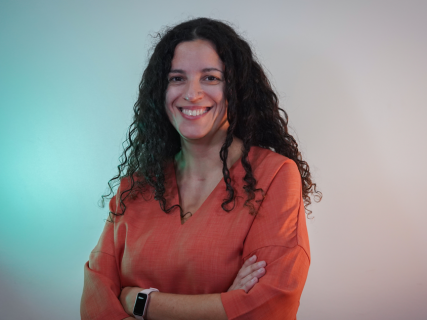









There is less than a week left for the polls to open. On the next 29 November, the 52 electoral constituencies of Spain will decide their future for the next four years. We speak with Noa Presas Bergantiños, head of the list of the Bloque Nacionalista Galego (BNG) to the Congress for Ourense, a repeat candidate—she already did so in the elections of 2015, 2016 and those of July 2023—but also, Galician, a professor and a feminist.
In her conversation with DEMÓCRATA, the deputy in the Parliament of Galicia warns, "you have to excuse me that I have a slightly...soaked voice already begins to take its toll." On 13 November, the campaign got under way in style, but it did not escape ending up getting soaked. While the PP and the BNG bet on the continuation of their heads of list, PSOE and Vox renew their top positions in a board that is joined by formations such as Podemos, Frente Amplio, Se Acabó La Fiesta, Frente Obrero, PUM+J and PCTG.
These are elections in which the nationalist party can make "history." Ourense distributes four seats and the BNG has never managed to win a deputy there. On 23J, the PSOE won one and the PP three, contesting the last seat with the BNG, which finished third in votes, with 15.317 (8,22%), but ended with no representation in Madrid. This year there could be "a change of script," with some weakened conservatives, according to Presas, by the mess of the pepper spray in the hands of the popular deputy for Ourense, Ana Vázquez; but who also drags along a "list of pending debts" with the province.
QUESTION: Before we begin, How is the campaign going? When you started, you said that the BNG had in Ourense an opportunity without precedent. What atmosphere are you finding these days?
ANSWER: An extremely positive atmosphere, the truth. I notice a change for the better in people, that despite the general context of disaffection there are more and more people who are aware that in Galicia there is someone to vote for. The BNG is there to trust in our strength; we are away from this mess of Madrid politics, of noise, confrontation and problems. And that we effectively have in front of us an opportunity to make history and to break with almost 50 years of two-party rule, in Lugo and in Ourense. We want to make the difference with more BNG women deputies.
Q: Precisely on 29N the BNG can make history by getting its first deputy for Ourense. The province elects four and in 2023 the PP took the last one. What has changed so that this time they can challenge for that seat?
R: I think that things in life and in politics do not change from one day to the next, but it is true that we come from a few last years in which the BNG has gained more strength. We have beaten our ceiling in the Galician Parliament twice in a row and I think that people have known how to value that we are the alternative to the Partido Popular and therefore the house brand, the brand of trust to defend the interests of Galicians in Madrid.
P: And on the street how is it perceived?
R: Particularly in Ourense I notice that many people want to see another way of doing politics and that they understand that Ourense is not the caricature of the pepper spray, of the insult and of confrontation that, for example, the Partido Popular is carrying out in the scope of the State and they regret that the only Ourensan deputy who has been known in this time is for that and for talking about a racist discourse in Ceuta and not for defending the interests of Ourense, which has many things on the list of pending debts, from the railway to other worthy infrastructures.
Ourense is not the caricature of the pepper spray, of the insult and of confrontation
P: You headed the list on 23J, when the BNG obtained 8.2% in Ourense. What would you tell a left-wing voter who is in doubt between supporting the BNG or concentrating their vote on the PSOE to take that deputy from the PP?
R: I encourage people to vote with their heart and to trust the BNG, to concentrate the vote on whoever feels the pain of the situation of our country, because we are not going to fail this country.
We are in an upward moment and we have the opportunity to make history, to get that seat and to make the difference, because the balance of the others is full of missed opportunities and therefore if someone can turn the script, it is the BNG.
P: Some polls give you up to three deputies compared to the only one you have now. What result do you expect then for this 29N? What can be achieved with those three deputies that could not be achieved with one?
R: We do not set limits for ourselves; we aspire to achieve the greatest possible number of deputies and deputywomen and Galicians can have the guarantee that we are going to defend this country and social majorities without any kind of strings attached. Nobody is going to stop us or be able to tell us no, because we do not depend on Madrid headquarters.
Historically Galician nationalism has been a driver of progress both to defend specific grievances against Galicia and correct them and to achieve social advances. I can give you an example with feminism. While the Spanish state has not yet been able to legislate on vicaryl violence, in Galicia, feminism from the opposition achieved in 2021 that it be incorporated into the specific law. Therefore, we are a ticket worth triple: to defend social advances, to stop the right, and to defend Galicia.
Q: In social advances there is a ticket that coincides with measures similar to yours. Why does the BNG prefer to keep an independent political voice instead of integrating into a broad left front?
A: In Galicia, we are already a front in and of ourselves. The BNG is made up of many sensibilities; we have a strong social involvement, both in the union sphere, as well as in environmental or feminist areas. We already have our ecosystem of political plurality and strength. Therefore, we are far removed from all the messes that exist within the sphere of the state, which sometimes seem more like a matter of internal powers than of serving society.
I think Galicians value that precisely in some general elections, even if there are people who do not identify 100% with the BNG, they do trust in the endorsement of the work done over the years.
Q: In a hypothetical space in Congress or in a future government, what can that perspective specifically Galician bring, that a progressive state coalition cannot?
A: There are issues that have nothing to do with what Galician reality is and the reality of other places. For example, when we talk about having fair funding, it is more difficult to provide some public services in Galiza due to the dispersion and the population structure we have compared to other places. We will have to put that balance on the table.
Q: And how can that be translated into policies that benefit society as a whole?
A: In any case, the BNG is always a driver of universal social progress. For example, in this legislature we achieved that non-contributory pensions, which here in Galicia carry a lot of weight, would be raised above the CPI by 7%. We are the province of the state that has the lowest pensions and, therefore, once pensioners are helped, others from other parts of the state are also helped. We are that triple ticket.
There are deputies from the Partido Popular who vote one thing in Galicia and another in the context of the State
P: Sometimes it is hard to understand Galician nationalism as a political project that goes beyond defending a language or an identity. What do you think is due to that?
R: I think there are prejudices that are very intentionally brought in by the great powers of the State, but I want to reflect.
In these last two legislatures, it is true that those of us who have been a driving force for the progress of our different towns, but also for social majorities, have been the sovereigntist movements. Issues such as moving forward toward repealing the gag law or demanding an increase in the minimum wage were on the agenda of movements like the BNG, and without being there, the PSOE would not have done it, because the PSOE has to be made to act.
From political plurality we have shown how, in the face of other caricatures, we are always the driving force for social progress.
P: In the campaign you have denounced the "abandonment" of Ourense. If you achieve the seat, what would you ask the central Government first for the province?
R: There is a very symbolic element in Ourense: the railway connections. We need to actually put in place a commuter train model that links together our territory, our comarcas, and not only the connection with Madrid.
P: Although Ourense has high-speed service since 2021, you continue to demand in your electoral program more frequencies and better schedules on the Avants. What assessment do you make of the Government’s rail policy in Galicia?
R: Really it still does not reach the city of Ourense. It stops a few kilometers earlier in a town called Taboadela.
So one of our main demands is that it arrives safely in Ourense and from there to the rest of the country. But in any case, we have tracks that are disused from the old conventional train that we need to be set up and modernized in order to have a Cercanías train, like the one they may have in Cantabria or in Asturias. And that, in addition, all of this be done with prices affordable to social majorities and with safety, above all.
P: Do you think this problem is transferred to the management of the railway in different points of Spain?
We live with a lot of solidarity what has happened along the Madrid-Seville rail line. Evidently, from the point of view of a country that has already suffered a lot with Angrois. The reflection we make is that the centralist policies have continued, no correction has been made, and there is still a lot to do in terms of security.
11. In the 2023 investiture agreement, Sánchez committed to improving the AP-53 bonuses and to implementing Cercanías; the latter commitment has not been realized.
R: We, I insist, have an agreement with Galicia, always. And here what the central Government has done is to breach that agreement with Galicia. We know that there is a study carried out and it is important. Even if it has been interrupted by the electoral call or its publication, we insist that we want steps, we want budgets so that this development of that commuter rail for the whole country can take place.
We are a ballot paper that counts triple: to defend social advances, to stop the right, and to defend Galicia
P: In October they supported the two housing decrees that the Congress overturned. In its program they propose limiting the rental price and establishing the automatic renewal of contracts. What is the BNG’s priority in housing?
R: Beyond these issues, we have to say that the basic competences in housing are of the Xunta and here the Partido Popular has been an obstacle in housing policy. The priority for the BNG would be to secure more funding to build public housing and to buy housing that will then be made public, and thus to have a rental pool that can be transferred to the Xunta and that can have sufficient resources.
P: Would the cap on rental prices also apply in areas that the Xunta has not declared as under pressure?
R: We think yes, that in this emergency in housing, the market needs to be intervened in order to find a solution to this situation.
P: Regarding Galician, one of its maxims in the electoral program, its use has been allowed in Congress since 2023. That same year, one in three minors aged 5 to 14 in Galicia knew how to speak it a little or not at all, according to the Galician Institute of Statistics. What changes are necessary for Galician to gain presence in the classrooms?
R: This is the reality that worries us. I, who also are a Galician teacher, although I am currently on leave, am very aware of the setback we have experienced.
We are the only community with a co-official language that has lost speakers. And that is extremely serious. In addition, we are seeing the consequences of the policies of the Partido Popular and we are concerned that they want to take them to the level of the State.
We see that in the PP’s electoral program their main concern is to ban Galician in the Congress rather than defending that there are more resources and that the teaching of Galician is guaranteed. Therefore, for us it is a symbolic issue and we will fight for more resources to be able to hire more Galician teachers.
Q: What measures could be taken already to stop its disuse?
A: What we are seeing is that the Xunta de Galiza obstructs any progress. It has done so with the transfer of the AP-9; it is blocking it. It was blocking for months the aid for victims of sexual violence, and we see that it is obstructing any progress in housing matters. Therefore, we need more strength as well in Madrid to sharpen those contradictions and to show that there are deputies of the Partido Popular who vote one thing in Galicia and another in the scope of the State.
We need deputies to do the work that the Xunta has not done. For example, the BNG managed to advance the debt write-off that has also been put on hold, but the Partido Popular was sabotaging that debt write-off when we have more than 13,000 million euros that would be alleviated in an important part.
Q: Do you observe differences regarding the use and treatment of Catalan and Galician?
A: Completely. Here the PP reformed the law in 2009 when it returned to government and basically reduced space for Galician by imposing a theoretical multilingualism that is not real. It limits a third of education to Galician and prohibits it from being implemented directly in subjects such as mathematics.
Now it has made an anti-Galician pact with the PSOE, so simply that prohibition is going to be rotated; it is no longer restricted to mathematics and the sciences but they will be able to choose whether to discriminate against Galician in history or in mathematics. This is a problem because we should be building an education that guarantees learning Galician. More hours are necessary, it is necessary to comply with the previous agreements, and we are moving in the opposite direction.
Q: Why do you think that rejection exists that you talk about regarding the use of Galician in education from the right?
R: It seems to me quite inexplicable, but I think what is happening here is a step backward within the PP itself, which has radicalized in recent years. It is renouncing what unites us, which is the Galician language, in order to bring to Galiza discourses of self-hatred that had not been seen before.
In general, the right is very keen on banning things and, therefore, in these elections we are betting a lot on fundamental rights because today the advance of the right would be a step backward in linguistic rights, in women’s rights, in social rights and for the working class. That is why we insist: we are playing for seats with the Partido Popular in all constituencies, and each seat more for the BNG will be a seat to stop the right, to guarantee social advances, and to defend Galiza.
P: Much is said among the left that these are not just any elections. What would happen if Feijóo reaches the Moncloa?
R: I am convinced that that won’t happen, but in any case the BNG will be there, responding and defending the interests of the social majorities and of Galiza both in institutions and on the street. I have a message of hope; I believe that, saving the distances, things like what has happened in Brazil and in other parts of the world show us that nothing is written and that when we mobilize and we don’t resign ourselves, there are advances.
P: If there were a majority for a left-wing government and the BNG seat were decisive, what measure would you demand from the PSOE to support it?
R: We will have to see the result and the balance of forces, but, from the BNG’s side, of course, there are priority issues on the agenda, such as decent pensions, such as advancing labor rights that still remain from the labor reform of the Partido Popular, such as improving severance pay and the corresponding days, or moving toward a reduction in the working day. These are examples that all the parties that live in the Spanish state share, and we would also, of course, have a specific Galician agenda with important issues that we would put forward as a condition.
More than ten years have passed since she presented herself for the first time as a candidate for the Madrid courts with her party; now she assures that she has “more accumulated experience and a deep knowledge of the problems of the Galicians and Galician women,” of course, she sleeps less. The illusion of Presas to bring the ‘Galiza project’ to Congress is not exhausted. “See you in Madrid,” she says goodbye.