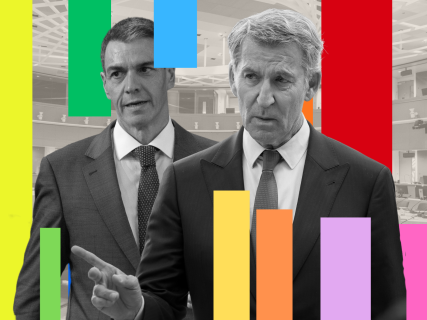










Before Spain’s future President of the Government goes down to breakfast at the Sofitel hotel, in Jourdan Square in Brussels, in order to attend his first meeting of the European Council after the elections of November 29, his sherpas will already have shared with him an endless number of documents on Community policy. Position papers, talking points for each of the topics on the table of the Twenty-Seven, and briefing notes on the discussions that are open within the Union. A folder of pending matters that will shape much of the new Executive’s foreign and economic agenda.
With French and Italian elections also just around the corner, which threaten to weaken the Franco-German axis, Spain can play a relevant role in the major Community negotiations. Until now, Pedro Sánchez’s Executive has sought to set its own profile in those discussions that best matched with its domestic discourse. However, a change of Government, if it occurs, will require reviewing some of those positions and defining a new strategy in the face of the main European files.
There are seven lines on which the Government that comes out of the ballot boxes must set its position: from trade policy and spending on Defense to relations with the United States, regulatory simplification, the next European budget, industrial policy, and monetary integration.
1. The new European trade policy: openness or protection
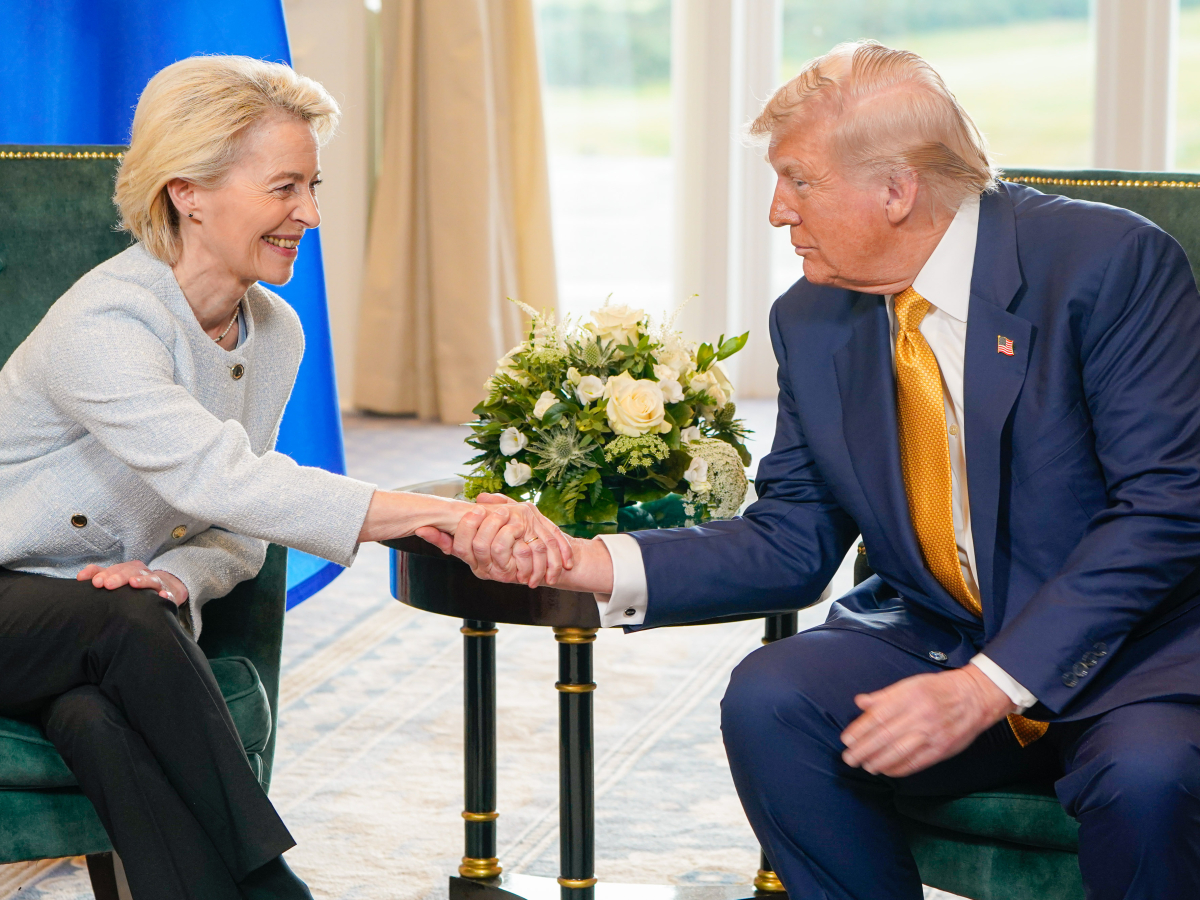
One of the keystones of the current European legislature is the redefinition of its trade policy. Driven to react after the tariff package imposed by the United States, the European Union, with the President of the European Commission, Ursula von der Leyen, at the helm, has opted for a posture of openness and diversification of its commercial relationships. The bet involves expanding the destination markets for European exports and reducing dependence on certain strategic partners.
The mother of all agreements was the sealing with the Mercosur bloc, whose provisional entry into force was activated by Brussels in May of this year, pending the opinion requested by the European Parliament from the Court of Justice of the European Union (TJUE) on its compatibility with the treaties. At the same time, other agreements have been closed with Australia, India, or Canada, in a trade offensive that seeks to strengthen the position of the Twenty-Seven in an increasingly fragmented international scenario.
The agreement with New Delhi, for example, is pending its final adoption by the Council and approval by the European Parliament. This is the largest trade agreement reached so far by the Union and it aims to eliminate or reduce tariffs on almost 99% of the current value of European imports from India. Among the sectors that will benefit are the automobile, electrical equipment, pharmaceuticals, and chemicals. For its part, in Ottawa, the Europeans sealed a new digital trade agreement with Canada that establishes a framework for cross-border data flows.
Until now, Sánchez’s Government has shown itself to be in favor of these agreements. However, the Partido Popular candidate, Alberto Núñez Feijóo, remained critical during the negotiations with Mercosur and demanded automatic protection clauses and control mechanisms to guarantee the inspection of imports. “We don’t want to close borders, but Europe has to protect its strategic autonomy,” his spokesperson, Milagros Marcos, said in an interview with this outlet.
For its part, Vox has already indicated that, if it enters the Government, “the first thing we will do will be to be against future trade agreements.” The position of the next Executive, therefore, will be decisive in determining the extent to which Spain maintains its support for the Commission’s strategy of opening up trade or opts to introduce greater safeguards for certain productive sectors.
2. Defense and security: the 5% commitment on the table
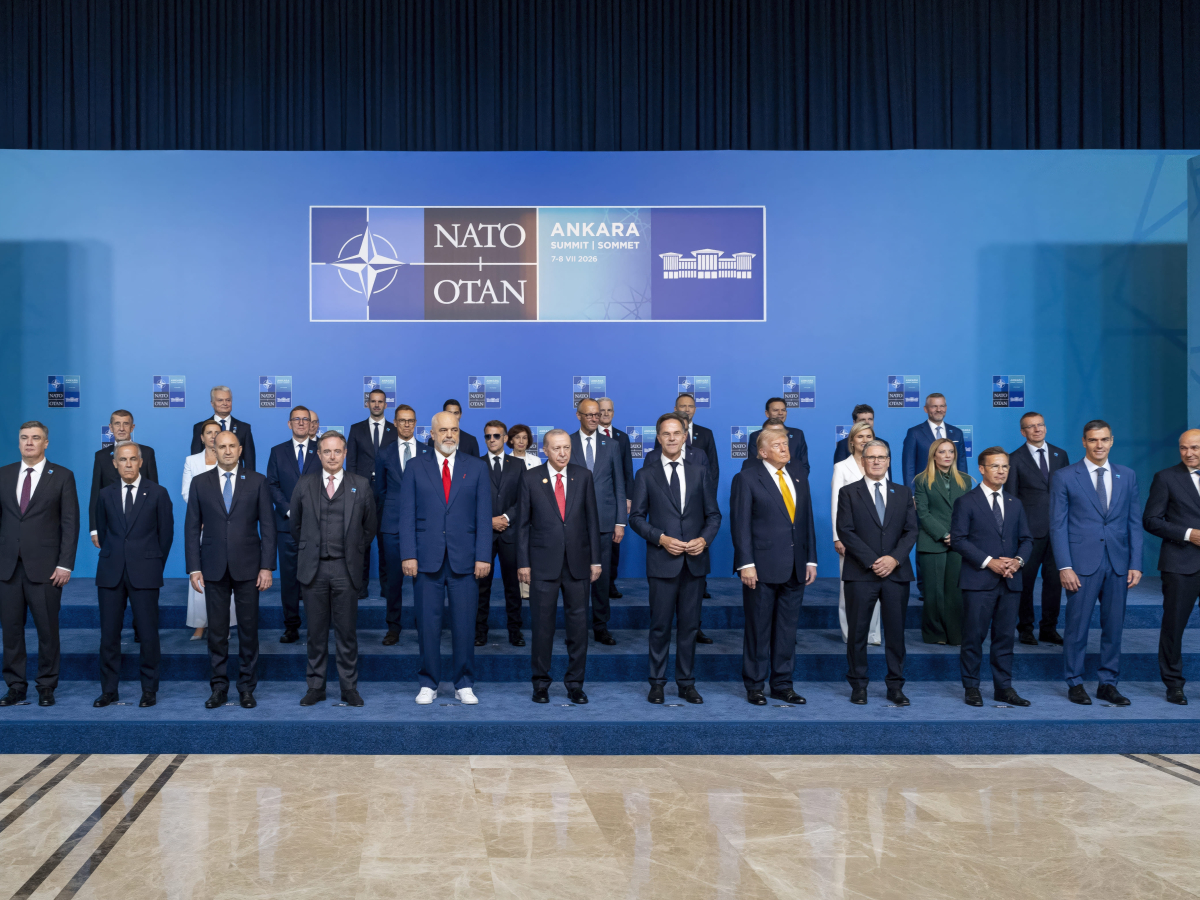
Sánchez has made his refusal to increase spending on Defense, as agreed by NATO, one of his great political banners during this last term in office. The argument put forward by Moncloa is that Spain, due to its economic growth, contributes much more than other allies even by investing only 2% of its gross domestic product. At the 2025 summit held in The Hague, the thirty-two allies signed final conclusions that committed the capitals to allocate 5% of their GDP to Defense and security. Of that amount, 3.5% would correspond to routine investments in military capabilities and the remaining 1.5% to security-related investments.
But the issue the next Government will have to face is not limited to national budget items. In recent months, the European Commission has intensified its calls to the capitals to take advantage of the instruments opened up to develop new disruptive technologies and to drive pan-European initiatives in the field of military capabilities.
"Spain should be prepared to request more loans," the European Defense commissioner Andrius Kubilius said in an interview with DEMÓCRATA, referring to the SAFE program. "I hope that the Spanish Government will support the Commission's proposal to increase spending on Defense and space in the next Multiannual Financial Framework. That money will be very necessary," he added. The fact is that the next European budget, according to the latest drafts that are on the table of the member states this same week, significantly increases the items devoted to one of the Union's major priorities in recent months. The discussion will not be only how much each country should spend, but also what part of that effort should be structured through Community instruments and shared projects.

Featured story
Andrius Kubilius: "If Europe loses confidence in Starlink, the company will suffer the consequences"
10 minutes
Currently, Spain also participates in four of the top five European defense projects of common interest (EDPCI). Among them are initiatives related to anti-drone defense, maritime surveillance, space capabilities, and anti-missile defense. Likewise, during the last month it became known that negotiations between Airbus and the Spanish and German governments are being pushed forward to promote a pan-European next-generation fighter aircraft.
3. United States: rebuilding a strategic relationship
The relationship with Washington will be another of the files that will require a political definition by the next Executive. At a moment when the United States has already confirmed the withdrawal of its defensive capabilities from the European continent and maintains its criticism of EU regulation, especially in the digital sphere, the current Government has opted for a direct clash with the North American Administration, according to sources from Moncloa.
The truth is that the European Union is at a crossroads in its Atlantic relationship. Aware of the need to reduce certain dependencies on Washington, it still maintains strong ties in areas such as security, technological advances, semiconductors, or the digital economy. European strategic autonomy therefore coexists with an interdependence that makes any complete distancing difficult.
The Partido Popular includes in its electoral program a proposal to align interests with Washington. "We will align interests and work for a balanced and strong relationship between the United States and Spain within the framework of the European Union," they state from Génova.
Meanwhile, President Pedro Sánchez took advantage of the most recent electoral face-off to launch attacks again against the Republican leader. "Has Trump brought anything good to the world, to the United States?" he said in front of a Núñez Feijóo who responded with a "less Trump and more trains." The difference between both positions anticipates one of the issues that the new Government will have to resolve: how to shape the bilateral relationship with the United States without losing sight of the fact that much of the commercial, technological, and security decision-making is negotiated within the EU framework.
4. Internal market: curb overregulation without deregulating
Regulatory simplification has become one of the European Commission’s major priorities. In this context, Von der Leyen proposed, before the most recent European Council, a pact with the member states to set limits on the so-called gold plating. This is the practice by which national executives introduce new obligations during the transposition of directives that were not initially included in EU regulation.
Featured story
Von der Leyen proposes a pact against "gold plating" to end the 27 versions of the Single Market
5 minutes
For the German executive official, in the midst of a process of regulatory simplification that already affects practically all portfolios of the Community Executive, combating overregulation constitutes “a crucial part” of the strategy. The aim is to “ensure that national requirements do not add disproportionate requirements,” as she indicated in a letter addressed to European leaders.
The case file has a particularly relevant dimension for Spain. In June 2026, the country had 39 infringement procedures open for lack of transposition or incomplete transposition of directives. Among them are those relating to the resilience of critical entities, the digital VAT, or the Water Framework Directive.
The debate about gold plating thus connects two issues that the next Executive will have to address simultaneously: reducing the regulatory burdens that businesses and citizens bear and improving compliance with Community obligations. It is not only about approving new rules, but also about ensuring that existing ones are incorporated correctly into national law and without adding unnecessary requirements. In recent years, the Government has defended that simplification “cannot entail deregulation.” For its part, the Partido Popular has already confirmed that, if it reaches the Moncloa, it will join the proposal led by Austria to “take a one-year pause so that the Union does not generate new rules until all those that already exist have been reviewed.”
5. The Multiannual Financial Framework: how much money and for what priorities
This same week, the Twenty-Seven will meet again in Brussels to try to move forward in the negotiations on the Union’s budget for the next seven years. It will be the last summit of the current Executive before taking office next Sunday. The intention of the president of the European Council, António Costa, was to speed up the talks with the objective of reaching the unanimity needed for its approval before December.
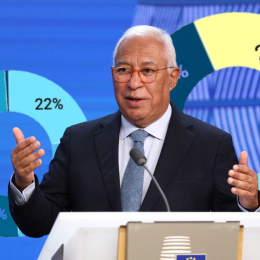
For the moment, the positions between the various countries remain far apart, even after the latest draft negotiation proposal, which includes a 10% cut compared with the initial proposal. Spain is part of the group of 17 countries calling themselves the “friends of cohesion,” which advocate for an “ambitious” financial framework that maintains the funds earmarked for agricultural and cohesion policies.
Opposing them are the so-called “frugals” or “modernisers,” with Germany at the helm, which are calling for a budget more focused on new European priorities, especially Defence and security. The clash between the two blocs reflects one of the main difficulties of the negotiation: how to finance the new Community priorities without neglecting the traditional policies that have underpinned the European budget for decades.

Featured story
How do the parties vote in Brussels? A relationship (almost) without infidelities
10 minutes
In this regard, both the Spanish Socialist Workers' Party and the People's Party have defended similar positions in the European Parliament, by considering that “you can’t do more with less.” However, one of the crucial parts of the conversation will be the basket of own resources: the new Community taxes with which the EU expects to raise close to 60,000 million euros to give content to the budget.
The discussion on own resources will be especially relevant for the next Government, which will have to take a stance on the new sources of funding and the distribution of national contributions. “We like to eat hearty and to dine frugally,” a source from the People’s Party leadership quips, ironically. An expression that sums up the tensions over the overall volume of the budget and the distribution of efforts among the member states.
6. Industrial policy: the challenge of competing with the United States and China
Brussels is immersed in a race to reindustrialise the continent and reduce its external dependencies, not only with regard to the United States, but also vis-à-vis powers such as China. Artificial intelligence, energy, and digitalisation have become central pieces of a strategy that aims to strengthen Europe’s productive capacity and prevent the continent from being relegated in technological sectors considered strategic. “I hate the idea that the race is lost,” the President of the European Parliament, Roberta Metsola, expressed about the Union’s capacity to develop its own artificial intelligence.
The strategy deployed by the European Commission involves extending to a large part of the sectors the approach introduced with its Industrial Accelerator Act. That is, establishing “made in Europe” criteria in public procurement processes and in the awarding of projects, with the aim of promoting European production and strengthening its own supply chains.

The European People’s Party (EPP) views with concern the “rigid market interventionism,” although it supports the ultimate objective of the legislation: strengthening European industry and reducing external dependencies. Genoa does support the objective of 20% European preference as a “clear” political signal to reverse “deindustrialization,” although it insists that this reference should not be translated into mandatory national or sectoral quotas.
For its part, the Government argues that the initial framework, as it had been proposed, could cause a third country that failed to meet reciprocity requirements in a given product or sector to be excluded from the status of “Made in Europe.” From the Ministry of Industry, it has been proposed to European partners to avoid this binary “all or nothing” approach by means of a two-dimensional matrix that combines the geographic scope with sector-specificity. The future Executive will therefore have to set its position on the degree of public intervention in European industrial policy and on the mechanisms to favor Community producers. A discussion that directly affects the competitiveness of Spanish companies and the reindustrialization model that Spain defends in Brussels.
7. Monetary union: completing the integration of European markets
On the economic front, the talks in Brussels currently focus on the Savings and Investments Union package, especially in the files on securitisation and market integration. The initiative aims to improve the channeling of savings into investment and to advance the construction of a more integrated European financial market.
One of the next milestones will be the presentation by the European Commission of the European Deposit Insurance Scheme, scheduled for 2027. This is one of the pending pieces in the debate on deepening the Banking Union, which continues to be one of the major proceedings of European economic integration. At the same time, the Council and the European Parliament will open negotiations on the integration and market supervision package, another of the instruments with which Brussels intends to make it easier for available savings in the Member States to be directed toward investment projects across the Union.
Discussions about the digital euro will also be key, whose rapporteur in the European Parliament is a representative of Spain’s Partido Popular. The file adds a new dimension to debates on monetary integration and on adapting the European financial system to the new payment instruments.