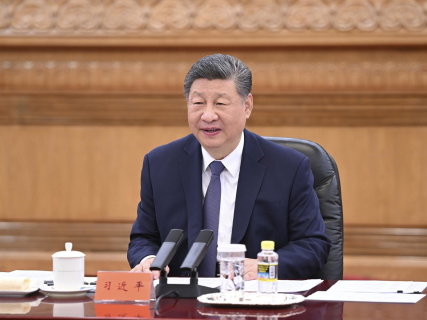
The visit of the President of the Government, Pedro Sánchez, to China has given rise to all kinds of comments, more than usual. It is not a matter of analyzing them now, but it should be noted that relations with China, despite all odds, should remain a state policy. It has been for almost half a century.
China, in practice, has always been above alternations. And even when a Spanish political leader in opposition criticizes a sitting president for taking care of the relationship with China, the truth is that wherever they are in government, they do the same. Coherence is not an easily recognizable virtue in current politics.
"China, in practice, has always been above alternations."
The political climate in Spain suffers from so much excess that even the most elementary things are played with. In order to erode the Government and make it look like a clueless incompetent, everything seems to be valid. There is no room for success. If Sánchez goes to China, it is bad per se. If Alfonso Rueda or Moreno Bonilla go, the situation changes. Although everyone is really going for the same thing.
The relationship of Spain with China, as with any other country, is not perfect. However, as has been emphasized many times, there is harmony. It is not a minor detail, because that starting point sets the tone of the relationship. And it is not a matter of Sánchez, it dates back, at least, to the eighties. All the Prime Ministers of Spain have tried not to fall below that level. But if before it was said that we had arrived too late, now that Sánchez is going too fast.
In China, a good political relationship is essential to advance in other domains. If this does not happen to the desired extent, it may not be solely due to obstacles of all kinds in its bureaucratic machinery, but, simply, because we do not do our homework as we should. A little self-criticism would not do us any harm.
"In China, a good political relationship is essential to advance in other domains"
Are there structural problems? Of course, some relatively solvable, others not so much. If we talk about the trade deficit, it will take time to balance it and it will not be an easy task given the structure of our economy.
We are not Germany, but compensations can be arbitrated via investment, as is already being done. If we talk about systemic components, no prospect of political change in China of a liberal nature is glimpsed on the horizon. In China it is quite clear: if what they have built, despite the contradictions, works for them, why change? There can be common interests without sharing values or models of society.
The current global context has greatly influenced this visit, although an attempt has been made to downplay it by appealing to commercial content. But it is undeniable that, adhering to certain characteristic principles of our long-standing foreign policy, despite the "systemic rivalry", it is easier to agree on things with China than, for example, with the Trump Administration, tragically mired in continuous nonsense.
Here there has been a loss of tune. This does not mean that relations with allies based on deeper and broader ties should be broken, but rather to accept the emergence of China as a key partner in many global issues that concern us.
China is strategic for Spain. And I would say for any country in the world today. Squandering the capital accumulated in that relationship is absurd; on the contrary, we must develop and enrich it. That is the task of any government regardless of internal circumstances.
Europe and the West, multinationals of various calibers, have done great business in China and obtained huge profits. China has been intelligent: it has opened up without disarming its sovereignty and has managed, with great effort, to achieve unthinkable objectives. Now we find that they have overtaken us and all we do is complain because the balance has shifted and we can no longer dictate the rules as before. Before we went with the idea of teaching; now it should be about learning.
"China is strategic for Spain. And I would say for any country in the world today. Squandering the accumulated capital in that relationship is absurd"
Perhaps we should leave a certain arrogance behind and strive more to know and understand. Our ability to give lessons has suffered greatly. Theirs is not a finished process, far from it.
Far from it is their political identity comparable to ideological models of another time: it is more complex and eclectic. There is room for change, more sustained by their culture than by our liberalism. Their main goal is the preservation of sovereignty, more decisive than the ideological mold of origin itself.
All of this does not mean that the government should disengage from its natural habitat. But it does matter, and a lot, to read well what is happening and make decisions with a constructive and future-oriented vision. We can join those who argue for security to hinder trade or put ideology first with the vain purpose of saving a hypothetical hegemony. It is not going to work because the scale and relevance of China are irreversible.
Of course, even so, it will sound like a justification for those who find it difficult to look beyond the Pyrenees and glimpse, even intuitively, the profound changes that are coming in the international order and in which China will play a key role.