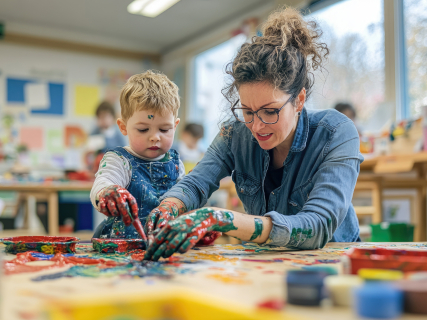










Nursery schools will have a maximum of four babies under one year per educator, six children between one and two years old, and eight between two and three years old, according to the reform approved this Tuesday, November 24, by the Council of Ministers. The reduction in ratios will begin to be applied in the 2027-2028 school year and will advance progressively until its full implementation, scheduled for 2029-2030.
The change especially affects the first cycle of Early Childhood Education, where the general reference limits were eight, thirteen, and twenty children under the age, depending on their age. The stated goal by Education is to improve individualized care and the working conditions of the professionals.
How many children may there be per educator
| Age | Previous reference ratio | New maximum ratio |
|---|---|---|
| Under one year | 8 | 4 |
| Between one and two years | 13 | 6 |
| Between two and three years | 20 | 8 |
| Second cycle of Early Childhood (3 to 6 years) | 25 | 20 per classroom |
| Upper Secondary Education | 35 | 30 per classroom |
The previous values are general state references. Some autonomous communities already applied lower limits, so the effective change will depend on the regulations and the conditions of each center.
From which school year will the new ratios be applied
The Ministry of Education plans to begin implementation in 2027-2028, starting with classrooms for children under one year.
The reduction will move forward in the following school years until reaching a complete implementation of the first cycle in 2029-2030.
| School year | Announced calendar |
|---|---|
| 2027-2028 | Start in the classrooms of the first year of Early Childhood |
| 2028-2029 | Continuation of the progressive implementation |
| 2029-2030 | Goal of complete implementation |
The exact calendar and the possible transitional rules for each age must be consulted in the published Royal Decree.
How students with special educational needs are counted
The reform includes a significant modification for ordinary classrooms: each student with special educational needs will be counted as two places for the purposes of ratio calculation.
This rule will apply in the stages included in the measure, including those in which, for now, the general maximum number of students has not been reduced.
What happens with Primary, Compulsory Secondary Education (ESO) and Upper Secondary Education
The Government has approved reducing up to thirty students in Upper Secondary Education classrooms. It has also announced changes in Vocational Training, including a maximum of fifteen students per teacher in basic level FP, with implementation planned for 2029-2030.
In Primary and Compulsory Secondary Education, no new general reduction of ratios has been approved. This change requires a law whose processing was interrupted with the dissolution of the Cortes.
What other conditions must nursery schools meet
The current decree updates facility and space requirements. In the first cycle of Preschool it includes separate classrooms, rest and hygiene areas, a multipurpose room of thirty square meters, and a play yard with a minimum surface area of 75 square meters.
Also added are requirements related to air conditioning and action protocols in the event of extreme temperatures and other weather-related risks.