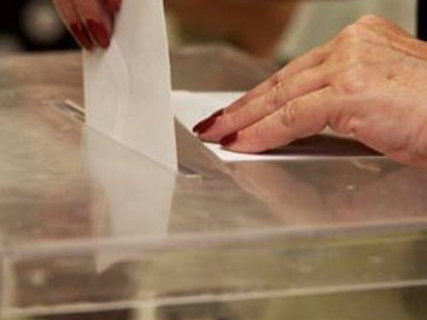

The general elections held this Sunday, November 29, will cost the public treasury 243.4 million euros, that is, 23 million euros more than the elections of July 23, 2023, when the budget was 220.8 million euros, according to figures released by the Ministry of the Interior.
The largest outlay falls on the postal operator, in this case the State-owned company Correos y Telégrafos (Correos) —responsible for this service in electoral processes— to which 104.000 million euros are allocated, which represents 42.73% of the total planned expenditure.
Likewise, 89.5 million euros will be earmarked for public administrations; 36.04 million euros for electoral logistics; and close to 11 million euros for the dissemination of the provisional count and the telecommunications services linked to election day.
The budget for these elections, according to information from the Ministry of the Interior collected by Europa Press, also includes a specific item of 2.8 million euros to deal with other unforeseen contingencies that may arise during the process.
In these elections, which are the seventeenth of the current democratic stage, the electorate will, for the first time, have the possibility to vote by accrediting themselves, if they so choose, with the digital DNI, after the Central Electoral Board (JEC), the body responsible for supervising elections, authorized the use of this identification system last day 6 and after the Supreme Court this same week endorsed it.
MORE THAN 60,000 DIGITAL DNI READING DEVICES
For this reason, the Ministry of the Interior has distributed, through Correos, more than 60,000 reading devices accompanied by detailed instructions on how to use them, so that citizens can identify themselves correctly before the polling stations.
In this way, voters who choose to identify themselves with their mobile phone must open the application "MiDNI" in front of the polling station and generate at that moment the temporary QR code issued by the Policía Nacional, which guarantees the authenticity of the information shown.
In turn, the polling station will have a mobile device provided with the "MiDNI" QR verifier, which will allow identity to be validated securely through reading of said code.
"Since April 2, 2026, citizens have the right to identify themselves with the digital ID card on their mobile, and currently almost 2 million people have registered their data in the MiDNI application of Policía Nacional and more than 1.7 million have activated the digital ID."
"The security of the Documento Nacional de Identidad on the Mobile (MiDNI) has been evaluated and certified by the Centro Criptológico Nacional (CCN), an entity dependent on the Centro Nacional de Inteligencia (CNI)."