
The shellfish gatherers of the Ría de Arousa have reiterated their demand to be exempt from paying Social Security contributions while business shutdowns last and, in addition, they have demanded "dialogue" from the Xunta after feeling "abandoned" by the regional administration.
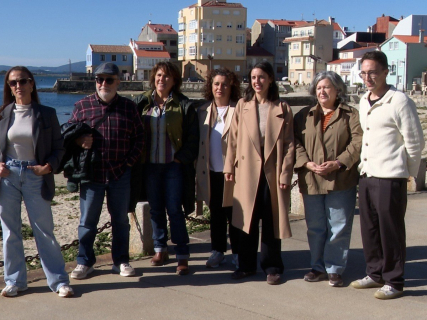
Before holding this Tuesday a meeting with Podemos leader Irene Montero, the coordinator of Mulleres Salgadas, Sandra Amezaga, explained to the press that "most" of the shellfish gatherers are currently "stopped and abandoned" and that they do not see any measures being put in place to support these stoppages.
"The stoppage is due to force majeure causes and there are many women who do not have the right to a cessation benefit or whose benefits are running out, so they will be in a very precarious situation," she lamented, warning of the economic vulnerability faced by numerous female workers in the sector.
Amezaga also insisted on the need for Mulleres Salgadas to be part of the Observatorio da Muller do Rural e do Mar, reproaching that neither the Consellería do Mar nor that of Política Social agree to receive them despite the fact that they themselves were "the promoters" of this body. "It seems to us like a very serious democratic anomaly," she underscored, also calling for their presence in Redemar and in the official bodies linked to shellfish gathering.
In the same vein, the president of Mulleres Salgadas, María Vales, focused her remarks on business shutdowns, emphasizing that they are facing "a problem" because, when they are left without income, "they take away the Permex" since they cannot combine shellfish gathering with another occupation "where you earn more than you do with on-foot shellfish gathering." Thus, she explained that if on-foot shellfish gathering "is zero, with one euro they already take away your Permex."
For her part, the president of the shellfish gatherers of Carril, María Porto, has warned of the "bleeding" of professionals in the area. As she detailed, seven years ago there were 99 people working and now only 49 remain. "Not only are on-foot shellfish gathering jobs lost, but everything that is related to our way of life," she said, referring to the social and economic impact on the community.
In this context, she criticized that the Consellería proposes to them that they can "dedicate themselves to sea tourism," to which she replied: "I wouldn't consider doing sea tourism without shellfish gatherers."
Porto has also denounced the absence of dialogue with the Consellería do Mar, since, as it has explained, the shellfish gatherers have requested meetings and have not been received on the grounds that they already "represent the federations". "We do not feel represented because the federations have not asked us at any time what our problems are," she has criticized.
GREATER PATTERN RAXÓ
In another vein, Sandra Amezaga has referred to the complaint about the insults made by the greater pattern of Raxó (Poio) to a shellfish gatherer, considering that "this is not an isolated incident", but that "it happens in more confraternities".
For the coordinator of Mulleres Salgadas, the audios of the greater pattern are "of tremendous violence" and they trust that the Consellería do Mar "will make a statement" this Wednesday in Parliament.
"This is especially serious because we have the elections in a few months and we are seeing that in Galicia women are not in the management bodies of the sea. There are 63 confraternities and three greater patterns. There is no single cause, but it has to be studied," she has maintained, calling for a deep analysis of the low female presence in the sector’s command positions.