Electricity price today, Monday, November 2: six hours in negative and the most expensive period arrives at 18:00

The regulated tariff records negative prices between 10:00 and 16:00. The cheapest hour is from 10:00 to 11:00, at −0.01730 euros per kilowatt hour, while from 18:00 to 19:00 the price rises to 0.32855 euros

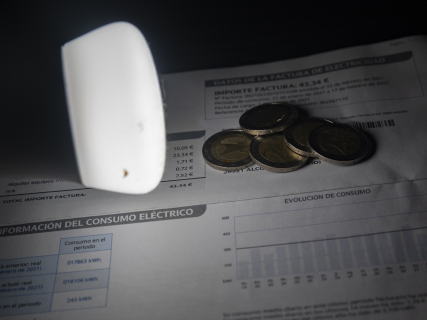
EuropaPress 4165629 lampara refleja importe factura dia precio luz marcado minimo primera vez

EuropaPress 4165629 lampara refleja importe factura dia precio luz marcado minimo primera vez

Add DEMÓCRATA to Google

Ask FREN

Published

Last updated

1 minute

Most read

Elecciones 29N · Encuestas

La media de las encuestas

Media a 2 de noviembre de 2026 · 16 institutos

  • PP30,6 %
  • PSOE27,3 %
  • Vox19,0 %
  • Frente Amplio6,4 %
  • Podemos2,6 %
  • ERC2,4 %
010203040ene 2024jul 2024ene 2025jul 2025ene 2026jul 2026

Media del último estudio de cada instituto en 30 días y su evolución semanal desde el 23J. Partidos con al menos un 2 %.

Todas las encuestas

Elecciones generales del 29 de noviembre · Demócrata

The average electricity price today, Monday, November 2, 2026, is 0.1874 euros per kilowatt hour (€/kWh) for consumers with a regulated tariff or PVPC, before taxes. For those who can choose when to run the washing machine or dishwasher, the difference between doing it in mid-morning or when returning from work is around 35 cents for each kilowatt hour consumed.

What time is it cheapest to run the washing machine today

The two cheapest consecutive hours are from 10:00 to 12:00. There is also room for those who prefer to wait until after lunch: from 14:00 to 15:00 the second-lowest price of the day is recorded, −0.01546 €/kWh, and the 15:00 to 16:00 slot remains negative. These prices correspond to the energy consumed; the bill also includes items such as the contracted power and taxes.

The jump comes starting at 16:00. During the first hour of the afternoon outside the negative slot, electricity costs 0.09789 €/kWh. At 17:00 it already reaches 0.27012 €/kWh and between 18:00 and 21:00 the three most expensive hours are concentrated. If consumption is 2 kWh, shifting it from the most expensive hour to the cheapest one means a difference of about 69 cents in the energy term, before taxes.

Electricity price by hour today, November 2

The table shows the PVPC energy price without taxes, in mainland time. If you have contracted a fixed-price tariff 24 hours a day, these hourly changes do not modify the kWh price agreed with your company.

Electricity price by hour · Monday, November 2, 2026
Mainland timePVPC (€/kWh)
00:00–01:000.26329
01:00–02:000.26157
02:00–03:000.25645
03:00–04:000.24959
04:00–05:000.25207
05:00–06:000.26084
06:00–07:000.27827
07:00–08:000.28792
08:00–09:000.24305
09:00–10:000.08342
10:00–11:00−0.01730 · Minimum
11:00–12:00−0.01498
12:00–13:00−0.01487
13:00–14:00−0.01509
14:00–15:00−0.01546
15:00–16:00−0.01445
16:00–17:000.09789
17:00–18:000.27012
18:00–19:000.32855 · Maximum
19:00–20:000.32649
20:00–21:000.32055
21:00–22:000.29628
22:00–23:000.26511
23:00–00:000.24804
Source: Red Eléctrica (ESIOS) data published by Vatio. Prices before taxes.

More key points, information and questions with FREN

AI-GENERATED CONTENT

What parliamentary procedures regulate the setting of the PVPC and how are its criteria updated?

The Parliament establishes the legal framework of the PVPC, but does not vote on its hourly prices nor each update of its formula. The methodology corresponds to the Government, and certain adjustments can be approved by ministerial order. Therefore, it is necessary to distinguish between reforming the law, modifying the regulation, and applying daily the already approved criteria.

1. What the Parliament decides

The basis is article 17 of the Law 24/2013 of the Electricity Sector. It defines the PVPC as the maximum price that reference retailers can charge consumers who meet the requirements and establishes its components: electricity production, access tolls, charges, and commercialization costs. Taxes are applied on that price.

The separation of powers is explicit: article 17.4 states that "The Government shall establish the calculation methodology." It adds that the necessary provisions to establish these prices shall be issued by ministerial order, following agreement of the Government Delegated Commission for Economic Affairs.

To change what is set by law, a norm with the rank of law is needed. The Cortes can reform that framework through the legislative procedure; an example is Law 3/2014, whose eleventh final provision modified article 17.2.a), related to production cost. That legislative intervention does not equate to approving each resulting price.

There is also the precedent of Royal Decree-law 17/2013, which determined the reference price for the first quarter of 2014. The Congress ratified it — that is, agreed to maintain its validity — on January 21, 2014, according to the published agreement. It was an exceptional intervention, not the ordinary update mechanism.

2. How the criteria are modified

The main development is Royal Decree 216/2014. Its methodology was reformed by Royal Decree 446/2023 to incorporate references from forward markets and reduce exposure to daily market fluctuations. The new formula began to be applied on January 1, 2024.

  • Regulatory reform: the Government can modify the methodology by royal decree within the legal framework, without needing a parliamentary vote for each change.
  • Authorized adjustments: the 2023 reform foresees modifying by ministerial order, following agreement of the Delegated Commission, the weight and distribution of forward products. This is not an authorization to alter any element of the law.
  • Technical development: the Resolution of June 30, 2023 approved operation procedure 14.12, on estimating the cost of PVPC components.
3. What is updated automatically

The approved transition gave the forward signal a weight of 25% in 2024, 40% in 2025, and 55% from 2026; the remaining 45% corresponds to the daily and intraday signal. These are weightings of the energy methodology, not percentages of the entire bill.

Futures references are calculated with OMIP quotations: six months prior for the annual product, three for the quarterly, and one for the monthly. The system operator calculates and publishes the hourly components according to the formula, including balancing services and other costs associated with supply.

In short: changing market prices modifies the PVPC without reforming any norm; changing the criteria requires the competent provision; and changing the legal framework requires a norm with the rank of law.

What competencies does the National Commission on Markets and Competition (CNMC) have in supervising electricity prices in Spain?

The CNMC supervises how electricity prices are formed and applied, monitors competition, and can investigate and sanction infringements. Additionally, it sets the tolls for transmission and distribution networks. But it does not generally set the final electricity price: its powers differ depending on whether it concerns the wholesale market, supply contracts, or regulated components of the bill.

1. Monitoring the wholesale market

The CNMC analyzes the functioning of the market where electricity is bought and sold before supplying it to the consumer. It examines price evolution and participant behavior to detect irregularities that may alter price formation. It also publishes final market prices based on information from market and system operators.

Article 7 of Law 3/2013 entrusts it with guaranteeing transparency and competition, including wholesale price levels. In application of the European regulation REMIT, it supervises possible manipulations and misuse of insider information, in coordination with European regulators and ACER, the European Agency for the Cooperation of Energy Regulators. This supervision does not equate to deciding the market price daily.

2. Supervision of retail prices and contracts

In supply to households and businesses, it verifies that prices and conditions comply with legislation. It monitors effective competition, supplier switching, and transparency obligations, and must publish recommendations, at least annually, on price adequacy to public service obligations and consumer protection.

This includes overseeing contractual information and price revisions. For example, the CNMC has reminded that retailers with fixed-price contracts cannot modify the committed price. However, supervision does not mean prior approval of each free market offer nor imposing a single commercial tariff.

3. Setting tolls and network remuneration

Here it has direct authority: it establishes the structure and methodology of transmission and distribution tolls, which finance network use, and approves their values through resolutions published in the BOE. It also determines methodologies and amounts of remuneration for these activities within the legal framework.

Circular 3/2020, amended by Circular 1/2025, develops this methodology. Values applicable from January 2026 were approved by Resolution of December 18, 2025. These tolls should not be confused with charges, intended for other regulated costs and whose setting corresponds to the government sphere.

4. Limits regarding PVPC and taxes

The CNMC does not decide on its own the methodology of the Voluntary Price for the Small Consumer (PVPC). Article 17 of the Law 24/2013 of the Electricity Sector assigns that methodology to the Government. The PVPC incorporates the energy cost determined by market mechanisms, tolls, charges, and commercialization costs. Taxes are also not set by the CNMC.

5. Investigation, sanctions, and information

To exercise its functions, it can request information, inspect, and initiate sanctioning procedures within its competencies. It also acts against restrictive agreements and abuses of dominant position. A price increase alone does not constitute an infringement: conduct contrary to regulations must be proven.

Finally, it manages the offer comparator and publishes analyses to facilitate informed decisions. In summary, it combines supervision, network regulation, and sanctioning, without replacing the Government or the market in all billing decisions.

What legal requirements must retailers meet to offer fixed-price tariffs versus the PVPC tariff?

Retailers can offer electricity at a fixed price in the free market, but must comply with sector commercialization obligations and guarantees of contractual transparency and consumer protection. The PVPC, on the other hand, has a regulated methodology and can only be offered by reference retailers. Additionally, the former obligation of the latter to offer an annual fixed-price alternative was eliminated in 2022.

1. Who can offer each modality

Law 24/2013 of the Electricity Sector defines retailers as commercial companies or consumer and user cooperatives that acquire energy to sell it. A fixed-price offer in the free market does not become PVPC just because it is aimed at small consumers: it remains a commercial contract, subject to legal supply obligations.

To offer PVPC it is necessary to assume the status of reference retailer, according to the procedure and requirements of Royal Decree 216/2014. Operating as a free market retailer alone is not enough. Article 17 of the law establishes that PVPC is a maximum price, unique throughout the territory, whose methodology is determined by the Government.

2. What a fixed-price offer must explain

Article 44 of the Electricity Sector Law requires communicating the conditions before contracting, also when intermediaries are involved. The information must be clear, understandable, and sufficient to compare offers. In particular, the contract must specify:

  • The identity and address of the company, contract duration, and renewal and termination conditions.
  • The applicable prices and clauses allowing revision of agreed conditions.
  • The duration of discounts and the concepts or prices on which they are calculated.
  • The cost of additional services, such as maintenance, explicitly indicating if they are mandatory or optional.
  • The procedure for claims and dispute resolution.

Therefore, advertising a fixed price requires delimiting what remains fixed and for how long. The energy price should not be confused with the final bill amount. The law requires breaking down, at least, energy, tolls, charges, and taxes; commercial information must allow understanding the real scope of the offered commitment.

3. Revisions, contract exit, and claims

The company must bill according to the contract. According to article 44.1.e), any intention to modify conditions must be communicated transparently, informing of the right to terminate without cost. Contractually foreseen price revisions must be notified directly with at least one month's notice.

That communication must compare previous and new prices and include an estimate of the annual cost and its comparison with the previous one. The existence of a revision clause does not allow presenting as unchangeable an offer whose price may change without explaining that circumstance.

The law recognizes the right to change supplier without cost. It is advisable to distinguish that right from early termination conditions: not any penalty should be considered valid simply because it appears in the contract. Conditions must be fair and respect consumer regulations. Additionally, retailers must provide free attention for complaints and claims.

4. A decisive regulatory distinction

Royal Decree 184/2022 repealed title IV of Royal Decree 216/2014 and removed references to the fixed-price alternative offer to PVPC. Therefore, it is not appropriate to automatically apply the former conditions of that regulated alternative to current free market offers. Verification must focus on the contracted modality, the scope of the fixed price, and the previous guarantees.

Play

Test your knowledge with FREN!

How much do you know about this topic? Answer the following 3 questions.

In which time slot is the lowest electricity price recorded on November 2, 2026?

Question 1 of 3

What is the maximum electricity price recorded during the day, and at what time does it occur?

Question 2 of 3

What happens if you have a fixed price tariff contracted regarding the hourly variations of the PVPC?

Question 3 of 3