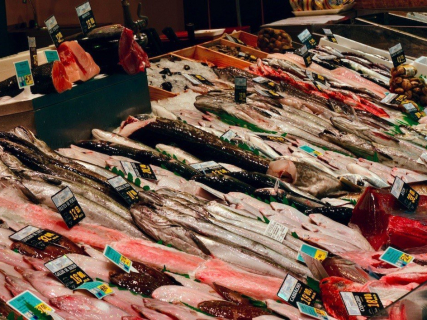

The fishmongers’ shops across the country, grouped under Fedepesca, have drawn up a proposals document addressed to political parties ahead of the upcoming ballot-box appointment.
In that document, the Federation calls for a legal framework adjusted to the reality of microenterprises, one that facilitates compliance with regulations, reduces management costs, and helps restore profitability for these businesses.
Among the requests for small establishments is also a reduction in the administrative, tax, and labor burden they bear. To that end, it proposes reducing employer contributions, containing self-employed workers’ fees, maintaining simplified tax regimes, and rolling out incentives that favor hiring and investment.
Likewise, the employers’ association asks that changes to the interprofessional minimum wage (SMI) and to working conditions take into account their impact on microenterprises and be negotiated within the framework of social dialogue.
Elimination of VAT on fishery products
With the aim of promoting a healthy diet and curbing the consumption of ultra-processed foods and the pathologies associated with poor dietary habits, the Federation proposes removing VAT from fish and aquaculture products so that they are more accessible to all households, along with other measures to promote healthy eating.
The sector also warns about the lack of generational replacement and calls for a state program that promotes the continuity of businesses, facilitates the transfer of viable establishments, and improves the involvement of young people and new professionals.
Another of Fedepesca’s demands is to ensure that all fish products, whether fresh, frozen, prepared, processed, or canned, are subject to consumer information obligations that are equivalent—ones that apply not only to fishmongers, but also to supermarkets, online sales, catering, and restaurants.
To achieve this, the document asks that Spain back the reform of the Common Organization of Markets for fishery and aquaculture products (OCM), in line with the European initiative “Follow the fish,” whose data indicate that consumers receive the complete information required by the OCM in only 52% of instances of consumption.
The Federation also calls for a review of the system of infringements and penalties provided for in Law 32/2014, on Metrology, considering it to be “abusive in the treatment of merchants when it comes to sanctioning administrative offences.”
Warning and corrective mechanisms
The organization argues for keeping consumer protection guarantees intact, but insists on the need for a penalty regime that includes warning mechanisms and the possibility of rectification when there is no fraud or harm.
In terms of digitization, Fedepesca supports a coordinated and proportionate implementation of electronic invoicing and computer billing systems, and seeks for fishmongers to abandon signs and labels written by hand through digitization of traceability.
Alongside these demands, the report incorporates other lines of action to strengthen the sector’s competitiveness, drive innovation, ensure supply, promote collective projects through business associations, and guarantee adequate European funding for the entire value chain of fishing and aquaculture.
At present, there are fewer than 10,000 fishmongers operating in Spain, most of them managed by self-employed workers. Fedepesca groups, directly or indirectly, more than 60% of these establishments.