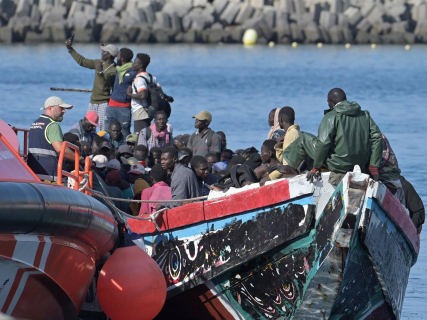
Canarias declares the emergency in El Hierro and demands the deployment of the UME in the face of the migration crisis

Fernando Clavijo warns of the overflow of health and welfare resources after the arrival of more than 3,000 migrants in three days, while the Government defends its capacity to respond

fotonoticia 20261118180147 1920

fotonoticia 20261118180147 1920

Add DEMÓCRATA to Google

Ask FREN

Published

Last updated

3 minutes

Most read

Hasta el día de las elecciones (29 de noviembre) se muestran los resultados de las elecciones generales anteriores, las del 23 de julio de 2023.

Resultados de las elecciones generales del 29N en directo

Elecciones generales del 23 de julio de 2023 · Congreso de los DiputadosSenado

Escrutado: 100,00 %Votantes: 24.952.447Participación: 66,59 %

Votos

PartidoEscañosVotosPorcentaje
PP1378.160.83733,06 %
PSOE1217.821.71831,68 %
Vox333.057.00012,38 %
Sumar313.044.99612,33 %
ERC7466.0201,89 %
Junts7395.4291,60 %
EH Bildu6335.1291,36 %
EAJ-PNV5277.2891,12 %
BNG1153.9950,62 %
CCa1116.3630,47 %
UPN152.1880,21 %
PACMA0169.2370,69 %
CUP-PR099.6440,40 %
FO046.2740,19 %
NC-bc045.5950,18 %
PDeCAT-E-CiU032.0160,13 %
RECORTES CERO023.4210,09 %
PUM+J023.2900,09 %
U.P.L.023.2010,09 %
EXISTE020.4400,08 %
PCTE013.3820,05 %
GBAI099380,04 %
SY096970,04 %
Adelante091910,04 %
JM+082930,03 %
ESCAÑOS EN BLANCO079860,03 %
XAV073620,03 %
BQEX058070,02 %
CJ056200,02 %
FE de las JONS046830,02 %
PAR041730,02 %
PCTC038750,02 %
ESPAÑA VACIADA031580,01 %
PH029020,01 %
ASTURIAS EXISTE EV023140,01 %
XH019310,01 %
VP019170,01 %
Zsi018430,01 %
VB017740,01 %
POR MI REGIÓN016980,01 %
AHORA CANARIAS-PCPC016740,01 %
PARTIDO AUTÓNOMOS014460,01 %
EVB014420,01 %
CpM012980,01 %
JxG012180,00 %
EV-PCAS-TC011840,00 %
PREPAL09640,00 %
Somos Cc09630,00 %
ALM08740,00 %
PCTG07020,00 %
F.I.A.05060,00 %
3e04840,00 %
Ud.Ca04630,00 %
ESCONS EN BLANC04620,00 %
GITV03660,00 %
PUEDE02690,00 %
EVC02650,00 %
LB02630,00 %
PCTE/ELAK02590,00 %
UNIDOS SI02530,00 %
+RDS+01650,00 %
CCD01530,00 %
FUERZA CÍVICA01150,00 %

Porcentajes sobre votos válidos. Resultados definitivos del 23J de 2023.

Escaños (350)

Mayoría: 176
PP: 137 escaños en 2023PSOE: 121 escaños en 2023Vox: 33 escaños en 2023Sumar: 31 escaños en 2023ERC: 7 escaños en 2023Junts: 7 escaños en 2023EH Bildu: 6 escaños en 2023EAJ-PNV: 5 escaños en 2023BNG: 1 escaño en 2023CCa: 1 escaño en 2023UPN: 1 escaño en 2023137121333120232023
  • PP 137
  • PSOE 121
  • Vox 33
  • Sumar 31
  • ERC 7
  • Junts 7
  • EH Bildu 6
  • EAJ-PNV 5
  • BNG 1
  • CCa 1
  • UPN 1

Pactómetro

Pulsa los partidos para sumar sus escaños.

Los escaños más ajustados

Quién tiene el último escaño, quién le sigue y los votos que le faltan
  1. GironaJxCAT - JUNTSyPP285 votos

    El último escaño de Girona (el 6.º) es para JxCAT - JUNTS. Le sigue el PP, que necesitaría 285 votos más para quitárselo. Ver Girona ›

  2. CantabriaVOXyPP403 votos

    El último escaño de Cantabria (el 5.º) es para VOX. Le sigue el PP, que necesitaría 403 votos más para quitárselo. Ver Cantabria ›

  3. TarragonaJxCAT - JUNTSyPSC1247 votos

    El último escaño de Tarragona (el 6.º) es para JxCAT - JUNTS. Le sigue el PSC, que necesitaría 1247 votos más para quitárselo. Ver Tarragona ›

  4. AlbacetePSOEyVOX1412 votos

    El último escaño de Albacete (el 4.º) es para el PSOE. Le sigue VOX, que necesitaría 1412 votos más para quitárselo. Ver Albacete ›

  5. SalamancaPPyPSOE1495 votos

    El último escaño de Salamanca (el 4.º) es para el PP. Le sigue el PSOE, que necesitaría 1495 votos más para quitárselo. Ver Salamanca ›

Provincias con al menos el 30 % escrutado donde el último escaño cambiaría de manos con menos votos. Pulsa una para ver el detalle.

Senado

100,00 % escrutado
PartidoSenadores
PP120
PSOEPSOE: 73 senadoresSe presenta con estos nombres:
  • PSOE48
  • PSC12
  • PSdeG-PSOE4
  • PSE-EE (PSOE)4
  • PSN-PSOE3
  • PSIB-PSOE1
  • PSOE-SUMAR-EUIB-ARA EIVISSA1
73
EH Bildu4
EAJ-PNV4
ERCERC: 3 senadoresSe presenta con estos nombres:
  • ERC-ESQUERRES PER LA INDEPENDÈNCIA2
  • ERC1
3
Junts1
UPN1
A.H.I.1
ASG1

Los partidos que se presentan con varios nombres van juntos: pasa por encima para ver el detalle. Baleares y Canarias eligen sus senadores por islas.

Senadores (208)

Elegidos en las urnas
PP: 120 senadores en 2023PSOE: 73 senadores en 2023 (PSOE: 48; PSC: 12; PSdeG-PSOE: 4; PSE-EE (PSOE): 4; PSN-PSOE: 3; PSIB-PSOE: 1; PSOE-SUMAR-EUIB-ARA EIVISSA: 1)EH Bildu: 4 senadores en 2023EAJ-PNV: 4 senadores en 2023ERC: 3 senadores en 2023 (ERC-ESQUERRES PER LA INDEPENDÈNCIA: 2; ERC: 1)Junts: 1 senador en 2023UPN: 1 senador en 2023A.H.I.: 1 senador en 2023ASG: 1 senador en 20231207320232023
  • PP 120
  • PSOE 73
  • EH Bildu 4
  • EAJ-PNV 4
  • ERC 3
  • Junts 1
  • UPN 1
  • A.H.I. 1
  • ASG 1

Los senadores designados por los parlamentos autonómicos no se eligen en las urnas.

Mapa

Ganador por provincia

    CanariasCeutaMelillaAraba/Álava: PSE-EE (PSOE) 27,7 %Albacete: PP 39,9 %Alicante/Alacant: PP 36,7 %Almería: PP 40,9 %Ávila: PP 43,3 %Badajoz: PSOE 39,2 %Illes Balears: PP 35,6 %Barcelona: PSC 35,7 %Burgos: PP 40,6 %Cáceres: PSOE 38,9 %Cádiz: PP 34,8 %Castellón/Castelló: PP 35,2 %Ciudad Real: PP 40,5 %Córdoba: PP 37,9 %A Coruña: PP 43,1 %Cuenca: PP 39,8 %Girona: PSC 28,9 %Granada: PP 37,0 %Guadalajara: PP 36,3 %Gipuzkoa: EH Bildu 31,2 %Huelva: PP 36,4 %Huesca: PP 38,2 %Jaén: PP 37,3 %León: PP 36,9 %Lleida: PSC 29,5 %La Rioja: PP 45,6 %Lugo: PP 50,2 %Madrid: PP 40,6 %Málaga: PP 38,3 %Murcia: PP 41,2 %Navarra: PSN-PSOE 27,4 %Ourense: PP 50,0 %Asturias: PP 35,7 %Palencia: PP 42,0 %Las Palmas: PSOE 33,2 %Pontevedra: PP 39,7 %Salamanca: PP 46,9 %Santa Cruz de Tenerife: PP 35,4 %Cantabria: PP 42,1 %Segovia: PP 45,0 %Sevilla: PSOE 36,6 %Soria: PP 37,2 %Tarragona: PSC 32,9 %Teruel: PP 35,0 %Toledo: PP 37,8 %Valencia/València: PP 33,6 %Valladolid: PP 40,8 %Bizkaia: EAJ-PNV 26,9 %Zamora: PP 44,7 %Zaragoza: PP 36,0 %Ceuta: PP 38,8 %Melilla: PP 49,2 %

    Pulsa una provincia para ver sus resultados y elegir municipio.

    Mapa

    Partido con más senadores por provincia

    CanariasCeutaMelillaAraba/Álava: PSOE, 3 de 4 senadoresAlbacete: PP, 3 de 4 senadoresAlicante/Alacant: PP, 3 de 4 senadoresAlmería: PP, 3 de 4 senadoresÁvila: PP, 3 de 4 senadoresBadajoz: PSOE, 2 de 4 senadoresIlles Balears: PP, 3 de 6 senadoresBarcelona: PSOE, 3 de 4 senadoresBurgos: PP, 3 de 4 senadoresCáceres: PP, 2 de 4 senadoresCádiz: PP, 3 de 4 senadoresCastellón/Castelló: PP, 3 de 4 senadoresCiudad Real: PP, 3 de 4 senadoresCórdoba: PP, 3 de 4 senadoresA Coruña: PP, 3 de 4 senadoresCuenca: PP, 3 de 4 senadoresGirona: PSOE, 3 de 4 senadoresGranada: PP, 3 de 4 senadoresGuadalajara: PP, 3 de 4 senadoresGipuzkoa: EH BILDU-INDEPENDENTZIA EZKERRETIK, 3 de 4 senadoresHuelva: PP, 2 de 4 senadoresHuesca: PP, 3 de 4 senadoresJaén: PP, 3 de 4 senadoresLeón: PP, 3 de 4 senadoresLleida: PSOE, 3 de 4 senadoresLa Rioja: PP, 3 de 4 senadoresLugo: PP, 3 de 4 senadoresMadrid: PP, 3 de 4 senadoresMálaga: PP, 3 de 4 senadoresMurcia: PP, 3 de 4 senadoresNavarra: PSOE, 3 de 4 senadoresOurense: PP, 3 de 4 senadoresAsturias: PP, 3 de 4 senadoresPalencia: PP, 3 de 4 senadoresLas Palmas: PSOE, 4 de 5 senadoresPontevedra: PP, 3 de 4 senadoresSalamanca: PP, 3 de 4 senadoresSanta Cruz de Tenerife: PSOE, 3 de 6 senadoresCantabria: PP, 3 de 4 senadoresSegovia: PP, 3 de 4 senadoresSevilla: PSOE, 3 de 4 senadoresSoria: PP, 3 de 4 senadoresTarragona: PSOE, 3 de 4 senadoresTeruel: PP, 3 de 4 senadoresToledo: PP, 3 de 4 senadoresValencia/València: PP, 2 de 4 senadoresValladolid: PP, 3 de 4 senadoresBizkaia: EAJ-PNV, 3 de 4 senadoresZamora: PP, 3 de 4 senadoresZaragoza: PP, 3 de 4 senadoresCeuta: PP, 2 de 2 senadoresMelilla: PP, 2 de 2 senadores

    Pulsa una provincia para ver sus senadores y candidatos.

    Resultados definitivos de las elecciones generales del 23 de julio de 2023 (Ministerio del Interior). Mapas: Instituto Geográfico Nacional (es-atlas, CC BY 4.0). Demócrata.

    The Government of the Canary Islands has declared this Wednesday level 2 of emergency status in El Hierro and has requested the deployment of the Military Emergency Unit (UME) from the central Executive in order to reinforce healthcare systems and support for migrants. The island has received more than 3,000 people in just three days, amid a surge in arrivals via the Canary route and four days before the general elections on 29N.

    The Canary president, Fernando Clavijo, has activated the Territorial Emergency Plan for Civil Protection of the Canary Islands (Plateca) in the face of difficulties in guaranteeing healthcare assistance with the resources available. «This situation is, in every way, unsustainable,» the leader of Coalición Canaria has warned, who has again criticized the central Government’s lack of foresight.

    Two more dinghies have arrived this Wednesday at the port of La Restinga with 190 people on board, including 12 women and 11 minors, according to Salvamento Marítimo. They add to the approximately 2,000 people who disembarked on Tuesday, a record figure in the more than three decades of activity of the Canary migration route.

    Clavijo had already called for the intervention of the UME last week. The regional Executive installed a field hospital to ease pressure on care services in response to the increase in arrivals.

    Sánchez trusts in a reduction in arrivals

    The president of the Government and PSOE candidate for the general elections, Pedro Sánchez, stated this Wednesday in an interview on TVE that the Executive maintains contact with the authorities of Senegal and Gambia and has been working for weeks to strengthen immigration controls.

    Sánchez trusts that arrivals will decrease in the coming days and has defended Spain’s ability to care for migrants. He has also argued for intensifying surveillance, expanding routes for regular migration, and addressing integration policies.

    Along the same lines, the Minister of Inclusion, Social Security and Migrations, Elma Saiz, has defended during an election event in Pamplona that the humanitarian care system is prepared to respond to the increase in arrivals.

    The Canary Islands already oversee nearly 3,500 migrant minors

    The regional Government disagrees with the assessment of the central Executive. The Minister of Social Welfare and Childhood, Candelaria Delgado, has warned of overcrowding in reception centers and of the insufficient transfers of migrants to the Peninsula.

    According to data provided by Delgado, more than 1,100 unaccompanied migrant minors have arrived in the Canary Islands so far in November, compared with approximately 920 who have been transferred to other autonomous communities throughout all of 2026.

    The islands already care for nearly 3,500 minors, a figure that still does not include all those who have arrived on the latest boats. The Canary Islands executive has had to reopen one of its large reception centers, which already has more than half of its places occupied.

    Frontex’s intervention, at the center of the debate

    The increase in arrivals has reopened disagreements between the central government and the regional government over the participation of Frontex, the European Agency for the Border and Coast Guard, in monitoring the Atlantic route.

    The government delegate in the Canary Islands, Anselmo Pestana, defended this Wednesday the deployment of European air and maritime resources off the coasts of West Africa, following negotiations with the countries of origin. The formula would restore the cooperation model of the Operation Hera, launched in 2006 during the first major crisis of the cayucos.

    Migration pressure has also gained prominence in the final stretch of the election campaign. The PP candidate, Alberto Núñez Feijóo, visited La Restinga last Friday, where he advocated for greater collaboration with Frontex and Europol and the strengthening of border control.

    Clavijo, for his part, has criticized the electoral use of immigration and xenophobic speeches during the campaign.

    The Minister of Youth and Childhood, Sira Rego, will travel this Thursday to El Hierro to address the situation of unaccompanied migrant minors who have arrived on the island over the past few days.

    More key points, information and questions with FREN

    AI-GENERATED CONTENT

    What is the status of the parliamentary processing of possible legal reforms on migration management in the Canary Islands?

    As of November 25, 2026, the situation requires distinguishing three levels: the reform on the distribution of migrant minors already approved, the bill derived from it that expired, and the new immigration and asylum reforms, which are registered as government draft bills. Therefore, not everything announced about migration management in the Canary Islands is pending a parliamentary vote.

    1. Distribution of minors: approved regulation, subsequent bill expired

    The main modification is Royal Decree-Law 2/2025, of March 18, on urgent measures to guarantee the best interests of children and adolescents in the face of extraordinary migration contingencies. It was published on March 19, 2025, and introduced article 35 ter of the Immigration Law, with criteria to distribute unaccompanied minors among autonomous communities and cities and a referral mechanism from territories under extraordinary pressure, such as the Canary Islands. See the Official State Gazette publication.

    The Congress upheld the decree through its ratification — the vote confirming its continuation — on April 10, 2025 and agreed to also process it as a bill to allow modifications. However, that bill, with file number 121/000055, expired on October 6, 2026: it is no longer open for changes. The expiration of the subsequent bill does not mean repealing the previously ratified decree. The timeline of the reform records its initial approval.

    2. Immigration and asylum: government phase, no parliamentary approval

    The Council of Ministers approved on August 25, 2026 a draft bill to amend Organic Law 4/2000, on Immigration, and another for a new Asylum Law. These are state reforms with potential effects on the Canary Islands, not regulations exclusive to the archipelago. The consulted sources do not show their subsequent approval as bills nor their entry into the Parliament.

    The immigration draft includes a border return procedure, with a maximum of twelve weeks, for those arriving irregularly without the right to international protection. The adaptation also contemplates an initial examination of identification, health, and vulnerability of up to 72 hours, extendable judicially in individual cases. The new asylum regulation foresees accelerated procedures and guarantees for minors. These provisions should be distinguished from already approved Spanish legislation: see the Government reference and the Demócrata explanation.

    3. Canary Islands Parliament: political agreements, not legal reforms

    There are relevant regional initiatives, but they are non-legislative motions: requests to the Government that do not directly modify state laws.

    • 11L/PNLP-0509, on strengthening the state response to migration pressure: registered on October 1, 2026, and approved in the Plenary on the 13th and 14th. It demands more means for identification, care, reception, and transfer, as well as sufficient funding. Its parliamentary progress is recorded.
    • 11L/PNLP-0175, on agreements to transfer minors between communities: its approved text was published on November 15, 2024. It is a precedent of territorial cooperation, not a pending reform. See the published agreement.

    In conclusion: the legal distribution mechanism was already approved; its review through bill 121/000055 was closed due to expiration. The general immigration and asylum reforms remain, according to what was found, in the government phase. To assess upcoming changes, it is advisable not to confuse these three situations with parliamentary agreements that only demand actions.

    What are the specific powers of the President of the Government of the Canary Islands regarding civil protection and emergency management according to regional legislation?

    The consulted regional legislation distinguishes between the powers of the President of the Government of the Canary Islands, those of the Government as a collegiate body, and those of the competent ministry in emergencies. This distinction is decisive: the sectoral powers detailed below are assigned to the Government or the ministry, so they should not automatically be presented as personal powers of the president.

    1. The Statute assigns the competence to the Autonomous Community

    Article 149.1 of the Statute of Autonomy of the Canary Islands assigns the competence in civil protection to the Autonomous Community, in accordance with state legislation. It includes regulation, planning, and execution of measures related to emergencies and civil safety, as well as the direction and coordination of civil protection services, including fire prevention and extinction.

    The article itself requires respecting state competencies in public security. Its second paragraph also recognizes the autonomous executive competence in maritime rescue, with mechanisms for collaboration and cooperation with state services. The recipient of these powers is the Autonomous Community, not personally its president.

    2. What corresponds to the Government of the Canary Islands

    Law 9/2007, of April 13, on the Canary Security and Emergency System specifies the distribution of functions. In civil protection and emergencies, it assigns to the Government:

    • Set the general guidelines of prevention and self-protection policy.
    • Approve regulations and general civil protection rules.
    • Approve the Territorial Emergency Plan for Civil Protection of the Canary Islands and special and specific plans.
    • Approve the regulation of organization and operation of the Civil Protection and Emergency Care Commission of the Canary Islands.
    • Create the necessary bodies and instruments to coordinate the different government departments in this matter.
    • Exercise sanctioning powers under current legislation and other powers recognized to it.

    These are, therefore, decisions attributed to the collegiate body. The law also assigns it, in the general security field, general planning, management model definition, strategic planning, and control of its execution.

    3. What corresponds to the competent ministry

    The same law places the main preparation and sectoral management functions in the ministry:

    • Draft general provisions to be approved by the Government and issue those necessary for their development and execution.
    • Develop, maintain, and implement regional plans and collaborate in the preparation of island and municipal plans.
    • Set guidelines for the risk map and the catalog of means and resources.
    • Carry out the direction tasks foreseen in territorial, special, and specific plans.
    • Submit reports to the Government on the application of plans and preside over the Civil Protection and Emergency Care Commission.
    • Require necessary collaboration from administrations, private entities, and individuals, and advise administrations on self-protection and emergencies.
    4. Scope of the president's personal powers

    The consulted provisions do not establish a specific catalog of personal powers of the president in this matter. In particular, they do not allow attributing to him alone the operational direction of any emergency, the activation of any plan, or the adoption of specific measures such as evacuations.

    The law expressly refers direction tasks to what is foreseen in each plan. Therefore, a distinction must be made between the legal attribution to the ministry and the specific responsibilities established by the applicable plan. The consulted sources do not show a specific provision specifying when the president may personally assume that direction.

    What legal requirements must be met to request the intervention of the Military Emergency Unit in an autonomous community?

    An autonomous community can request the intervention of the Military Emergency Unit (UME) when an emergency of special severity makes military support necessary. It is not mandatory to previously declare a national interest emergency: the community can maintain the direction of the emergency and receive that support. The decision to intervene corresponds to the Ministry of Defense, through the state activation procedure.

    1. Applicable legal framework

    The central norms are Organic Law 5/2005, on National Defense, which contemplates the collaboration of the Armed Forces in situations of serious risk, catastrophe, or calamity; Law 17/2015, on the National Civil Protection System, whose article 37 regulates that collaboration; and Royal Decree 1097/2011, which approves the UME Intervention Protocol. This protocol specifies the cases, the request, and the decision of intervention.

    2. There must be an emergency justifying the support

    The protocol foresees intervention when an emergency occurs with a serious character, regardless of whether it has been declared of national interest. Among the risks considered are:

    • Natural risks: floods, earthquakes, landslides, heavy snowfalls, and other large-scale adverse meteorological phenomena.
    • Forest fires requiring such collaboration.
    • Technological risks, including chemical, nuclear, radiological, and biological.
    • Emergencies derived from attacks, illicit or violent acts against critical infrastructures, hazardous installations, or essential public services.
    • Environmental contamination and other emergencies decided by the president of the Government.

    The request must respond to protection needs of people, property, or the environment. The UME does not ordinarily replace autonomous services: it provides extraordinary capabilities within the emergency response.

    3. The request must come from the competent autonomous authority

    The request must be made by the authority of the autonomous community competent in civil protection, according to its organization and emergency plans. It does not have to be necessarily the autonomous president: the body legally responsible for that competence must act.

    A municipality can communicate needs and request support through civil protection channels, but cannot directly order the deployment of the UME. Nor does a direct request to a military unit replace the activation procedure.

    4. The state activation channel must be followed

    The autonomous authority requests intervention from the Ministry of the Interior through the Government delegate in the autonomous community. Interior assesses the emergency's dimension and available means and, when appropriate, requests intervention from the Ministry of Defense. The order corresponds to the head of Defense, by delegation of the president of the Government.

    To support the request, it is advisable to specify the situation, affected territory, necessary actions, mobilized means, and additional required capabilities. These elements allow assessing and organizing support; they should not be confused with a universal list of mandatory documents for any emergency.

    5. It is not required to exhaust all resources nor declare national interest

    There is no general requirement to previously consume all autonomous resources. What matters is justifying the need for state means considering the severity, evolution, and needs of the emergency. The declaration of national interest is a different decision, affecting the direction of the response, not a prerequisite to request the UME.

    When the emergency remains autonomous, military action is integrated into civil protection coordination, maintaining the forces their military command. In summary: an emergency justifying support is needed, a request from the competent authority, its state channeling, and the Defense intervention order.

    Play

    Test your knowledge with FREN!

    How much do you know about this topic? Answer the following 3 questions.

    What measure has the Government of the Canary Islands taken in response to the massive arrival of migrants to El Hierro?

    Question 1 of 3

    What number of unaccompanied migrant minors is currently under the care of the Canary Islands, according to the Minister of Social Welfare?

    Question 2 of 3

    Which European agency is mentioned as a possible reinforcement in monitoring the Atlantic migration route?

    Question 3 of 3