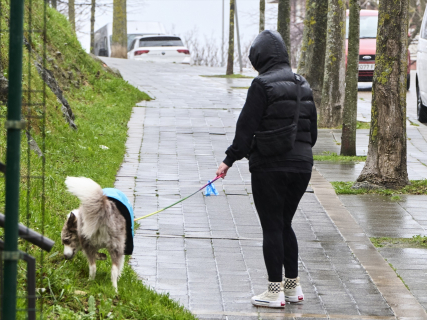
The rainstorm in Spain leaves alerts, floods, and cuts in several communities

The episode leaves floods, cuts, and mobility problems in several territories, in addition to a deceased in Olivella.

4 minutes

EuropaPress 6487023 llegada temporal maritimo viento lluvia cantabria 30 enero 2025 santander

EuropaPress 6487023 llegada temporal maritimo viento lluvia cantabria 30 enero 2025 santander

Add DEMÓCRATA to Google

Ask FREN

Published

Last updated

4 minutes

Most read

The rain and storm weather system keeps a good part of the east and southeast of Spain on alert this Thursday. Intense rains particularly affect the Comunitat Valenciana, Región de Murcia, Andalucía, Cataluña, Baleares, and Castilla-La Mancha, where there are weather warnings of different levels and, in several territories, extraordinary civil protection devices.

The situation has a special impact in Valencia, where the precipitation on Wednesday left accumulations exceeding 100 liters per square meter in some points and caused numerous floods, cuts, and mobility problems. In Andalucía, the Junta has activated the emergency phase for floods in Almería, while in Cataluña a man has died after the vehicle he was driving was trapped by the water in Olivella (Barcelona).

Valencia concentrates a good part of the incidents

The Comunitat Valenciana faces one of the most complicated situations of the episode. According to data collected by Emergencias, by 11:00 PM on Wednesday, 478 incidents had been managed in the province of Valencia. The capital concentrated 214, followed by Torrent, with 45; l'Eliana, with 22; la Pobla de Vallbona and Moncada, with 16 each, and San Antonio de Benagéber, with 14.

The rains exceeded 100 liters per square meter at stations in l'Eliana, Chiva, and Torrent. In Torrent, 71 liters were recorded in just 30 minutes, while other localities in the metropolitan area also exceeded 70 liters in that same period. The Generalitat activated situation 1 of the Special Flood Plan and launched an ES-Alert to the northern and southern coast of the province due to the risk of flooding.

The episode also caused the interruption of the Metrovalencia lines, the closure of Valencia airport due to flooding, and the closure of tunnels in the capital. Valencia has suspended classes in its southern pedanías and Elche has done the same with all teaching activities. For this Thursday, AEMET maintains an orange alert for rains in areas of the Valencia and Alicante coast, with the possibility of accumulations of 60 liters per square meter in one hour and more than 120 in periods of two or three hours.

Murcia extends preventive measures

The Region of Murcia also maintains a risk situation due to the precipitation. The forecast has led to the suspension of educational activities until 3:00 PM in 15 municipalities and several districts of Murcia, including Águilas, Cartagena, Lorca, Mazarrón, San Javier, San Pedro del Pinatar, Torre Pacheco, and Totana.

The measure has also been extended to social centers and day centers for the elderly and people with disabilities in the affected localities. The decision responds to the risk associated with the rains expected during the first part of the day and seeks to reduce movements in the areas with greater exposure.

Almería activates the emergency phase

In Andalusia, the province of Almería concentrates the most delicate situation. The Junta activated the emergency phase, operational situation 1, of the Emergency Plan for Flood Risk in response to the orange and yellow alerts for rains and storms. Additionally, Pulpí, Huércal-Overa, and Cuevas del Almanzora have suspended in-person educational activities this Thursday and have closed parks and gardens.

AEMET maintains an orange alert in the Almerian Levante for precipitation that can reach 50 liters per square meter in one hour and 100 liters in twelve hours. There are also yellow alerts in Córdoba, Granada, Jaén, and Málaga for storms and intense precipitation.

Catalonia faces new rains after a complicated night

Catalonia is another of the most affected territories. The episode left incidents on roads and transportation services and forced the activation of Civil Protection alerts in different regions. In Olivella, the Bombers de la Generalitat located the lifeless body of a man whose vehicle had become trapped while trying to cross a stream. The body was found about 500 meters from the car, and the Mossos d'Esquadra confirmed that it was the driver.

The Servei Meteorològic de Catalunya maintains this Thursday the monitoring of the situation through its alert map, while precipitation and storms continue in different parts of the territory. The episode maintains special attention on areas where intense rains can generate sudden floods and water accumulations.

Balearic Islands and Castilla-La Mancha also activate their devices

In the Balearic Islands, Emergencies maintains the orange alert for rains and storms in all the islands and the yellow alert for coastal phenomena in Mallorca and Menorca. The Balearic Government expects two waves of storms during this Thursday: one in the early morning, with special impact on Ibiza and Formentera and the channel of Mallorca, and another from noon, which will first affect the Pitiusas and later Mallorca.

Castilla-La Mancha has also activated the METEOCAM in alert phase in Albacete, Ciudad Real, and Cuenca. The device responds to warnings for rains and storms, with an orange level in the regions of Albacete due to precipitation that can reach 30 liters per square meter in one hour, in addition to the risk of large hail and very strong gusts of wind.

The episode thus maintains a distribution especially concentrated in the eastern peninsula, the southeast, and the Balearic Islands. The evolution during this Thursday will depend on the trajectory of the precipitation bands and the intensity with which new storms form, while emergency services keep their devices active and recommend following the indications of each territory.

More key points, information and questions with FREN

AI-GENERATED CONTENT

What procedures must an autonomous community follow to activate an emergency plan for floods?

No specific explanation has been found in the consulted sources, in this search, about the procedures that an autonomous community must follow to activate an emergency plan for floods. The information retrieved refers to the general legislative procedure (processing of laws in the General Courts), which is not directly related to the operational activation of civil protection plans against floods.

To provide a technically precise answer adapted to the current legal framework, it would be necessary to start from the specific civil protection and flood risk management regulations (basic state regulations and autonomous development), as well as the autonomous and, if applicable, special flood plans approved by each autonomous community. That information is not included in the results obtained in this query, so I cannot break down phases, thresholds, and competent bodies with the specificity your question requires without engaging in speculation.

In practice, the activation procedure you seek is usually regulated in three types of instruments:

  • Basic state civil protection and risk management regulations, which set the general framework, principles, and distribution of competences between the State and autonomous communities.
  • Autonomous civil protection law and regulatory development rules, where the management bodies (competent ministry, coordination centers, emergency committees), the autonomous territorial plans, and their relationship with municipal plans are determined.
  • Specific civil protection plans against floods, approved by each community, which define risk scenarios, emergency levels or phases, activation criteria, and coordination protocols.

Since this regulatory and planning architecture may vary between autonomous communities (names of plans, management bodies, emergency level scales, etc.), a minimally rigorous “general” scheme requires relying on specific texts. Without access to those texts in this search, any detailed description of:

  • Which authority formally declares the activation of the plan.
  • Which levels or phases are distinguished and what they imply.
  • Which technical thresholds (flows, hydrometeorological warnings, impact on population and infrastructure) trigger each level.
  • How coordination is articulated with the Government Delegation/Subdelegations, Hydrographic Confederations, security services, health services, roads, etc.

would necessarily be conjectural and, therefore, not reliable from a legal and institutional point of view.

If you need to work on a real case (for example, preparing an internal protocol, a risk analysis, or an explanatory note for a client or institution), the appropriate approach is:

  • Identify the specific autonomous community of interest.
  • Locate the autonomous civil protection territorial plan and, if applicable, the special flood plan approved in that community.
  • Review the sections where emergency levels, activation criteria, and coordination bodies are established.
  • Contrast that information with the state planning and coordination instruments to see how it integrates into the National Civil Protection System.

With those documents located, it would be possible to prepare an orderly summary of the activation procedures for that specific territorial scope (or, from several cases, extract a truly grounded common pattern). In the absence of that regulatory basis in the results of this search, the most honest and safe approach from a technical point of view is to acknowledge that limit and not detail a procedure that might not comply with current regulations.

What are the competences of AEMET and the Servei Meteorològic de Catalunya in issuing meteorological warnings?

In Spain, meteorological competence is structured on two levels: the state level, led by the State Meteorological Agency (AEMET), and the autonomous level, where the Servei Meteorològic de Catalunya (SMC) operates in Catalonia. Both have their own functions in forecasting and warnings but coordinate closely, especially through civil protection systems.

1. Competences of AEMET in meteorological warnings

The Royal Decree 186/2008, which approves the AEMET Statute, grants it the status of state public meteorological service and state meteorological authority, within the framework of the state competence of article 149.1.20 of the Constitution.

According to this Statute, AEMET is responsible, in executing the state meteorological policy, for:

  • Managing the state public meteorological service, aimed at meeting the basic meteorological and climatological information needs of society throughout the territory.
  • Serving the public institutions competent in civil protection, defense, and state security, providing the necessary meteorological information and services for emergency management.
  • Exercising the state meteorological authority, which includes guaranteeing observation, forecasting, and monitoring of adverse phenomena with national or supraterritorial impact.
  • Maintaining and operating observation networks and basic infrastructures that support forecasting and monitoring, essential for issuing warnings.

In practice, this means that AEMET:

  • Operates as the national meteorological service internationally recognized (before the World Meteorological Organization) and is Spain’s official interlocutor in data and product exchange.
  • Issues official state-wide meteorological warnings (adverse phenomena, storms, heat or cold waves, wind and sea storms, etc.), which serve as a reference for civil protection bodies and other public services.
  • Provides key information for state civil protection plans (such as flood, forest fire plans, or the State General Emergency Plan for Civil Protection), where meteorological forecasting and monitoring are essential inputs to assess risks and scenarios.

Law 17/2015, of the National Civil Protection System, sets the framework in which this information is integrated into alert systems and decision-making by civil protection authorities. It is important to emphasize that AEMET issues warnings and forecasts, but the activation of civil protection alerts and emergency plans corresponds to civil protection authorities (state, autonomous, or local), not the meteorological service.

2. Competences of the Servei Meteorològic de Catalunya (SMC)

In Catalonia, the Law 15/2001, on meteorology, creates and regulates the Servei Meteorològic de Catalunya as a public law entity of the Generalitat, with its own legal personality, and establishes it as the meteorological reference in Catalonia, within the framework of the autonomous competences provided in the Statute of Autonomy.

Among its legal functions related to warnings are:

  • Planning, implementing, and managing a system for forecasting and monitoring meteorological phenomena, and exploiting and disseminating those products in Catalonia.
  • Forecasting, monitoring, and tracking meteorological risk situations, in coordination with the Catalonia Emergency Center (CECAT), to improve the effectiveness of actions and ensure communication to affected users through the warning system determined by regulation.
  • Providing official meteorological advice, permanently, to the administrations and institutions competent in civil protection in Catalonia, and collaborating, when appropriate, with the state meteorological authority.
  • Serving as the main source of meteorological information for Generalitat bodies in matters such as emergencies and civil protection, territorial planning, public works, agriculture, or environment. The law expressly establishes that Generalitat bodies must request from the SMC the information necessary for exercising their competencies in emergencies and civil protection.

From this framework, it follows that the SMC acts as the official meteorological service of the Generalitat, with specific competence to design and operate the meteorological warning system used by Catalan civil protection devices, integrating and complementing, when necessary, information from AEMET.

3. Division of functions and coordination in warnings

The division can be summarized as follows:

  • AEMET is the national meteorological service, responsible for providing the state public meteorological service and the state meteorological authority. Its warnings serve as a reference for the entire territory and for state civil protection plans and international commitments.
  • SMC is the meteorological service of the Generalitat, with its own functions of forecasting, monitoring risk phenomena, and issuing warnings in Catalonia, in coordination with CECAT and Catalan civil protection authorities.
  • Catalan regulations require the SMC to coordinate with the state meteorological authority and avoid duplications through agreements and collaboration mechanisms, so that warning systems are coherent.
  • In all cases, the decision to activate civil protection alerts, close infrastructures, or adopt emergency measures corresponds to civil protection bodies (state or Generalitat), which rely on information and warnings issued by AEMET and, in Catalonia, by the SMC.

In summary, AEMET and SMC share the goal of ensuring quality meteorological information and anticipating dangerous phenomena, but they do so from two complementary competence levels: AEMET as the state meteorological service and SMC as the official meteorological service of Catalonia, both integrated into the civil protection system through specific regulatory and operational coordination.

How many similar special flood plans have been activated in Spain in the last decade?

There is no single consolidated figure in the official sources consulted regarding how many times special flood plans (state and autonomous, such as INUNBAL, INUNCAT, INUNCAM, PERI, INUNGAL, etc.) have been activated in Spain in the last decade. The available information is fragmentary, by autonomous community and by episode, so it only allows an order of magnitude idea: activations number in the dozens each year across the country, so reasonably, we are talking about several hundred activations in a decade, although an exact figure cannot be specified.

Why there is no single number for all of Spain

The Ministry of the Interior expressly reminds that the management of territorial civil protection plans, including those specific to floods, is the competence of the autonomous communities. Each decides when to activate its plans for flood risk, fires, adverse meteorological phenomena, etc., and does so in different phases (pre-emergency, alert, emergency) according to the episode’s evolution. This warning appears in an official Interior note on the management of autonomous civil protection plans, where it is explained that, after their own risk analyses, it is the autonomous authorities who activate the alerts and phases of their plans (Ministry of the Interior note).

This decentralization implies that there is no, at least publicly, an aggregated statistic summing all activations of all flood plans from 2014 to 2024. What can be found are examples and partial data in autonomous communications and sectoral reports.

Examples of recent activations by autonomous community

  • Illes Balears (INUNBAL): In an August 2024 note, the Balearic Government indicates that despite the danger of DANAs, in 2023 the Directorate General of Emergencies and Interior only activated risk levels of the INUNBAL plan on two occasions: once in emergency phase with severity index 0 and another with index 1 (Balear Government note on INUNBAL). In September 2024, the activation of operational situation 1 of INUNBAL is again communicated due to rain and storms (INUNBAL activation).
  • Galicia (INUNGAL): The Xunta reports in 2024 that the special civil protection plan against flood risk in Galicia (INUNGAL) “has been activated in pre-emergency situation six times this year,” as part of the continuous improvement of the autonomous device (Xunta note on INUNGAL).
  • Andalusia (PERI): The Andalusian Government has reported several activations and phase changes of its Special Emergency Plan for Flood Risk (PERI) during autumn 2024: activation in pre-emergency, escalation to emergency (operational situation 1), and subsequent transition to recovery phase at different moments in October and November, following various storms (pre-emergency activation, PERI emergency phase).
  • Catalonia (INUNCAT): Civil Protection notes record multiple alert activations of the INUNCAT plan due to heavy rains and flash flood risk in 2024, both preventive (due to forecast of heavy rains) and during ongoing episodes. These activations repeat every rainy season depending on meteorological warnings (INUNCAT alert for flood risk).

Reference events and order of magnitude

As a complementary indicator of flood frequency and severity, the Insurance Compensation Consortium notes that in the last 23 years it has recorded 115 catastrophic events, of which 52 were floods (Ministry of Economy note on the Consortium). This only describes the most damaging episodes compensated by the Consortium, not all civil protection plan activations, which also include many lower-impact episodes.

Considering that:

  • Several autonomous flood plans are activated several times a year (as shown by Galicia or Andalusia in 2024 alone).
  • In the Balearic Islands, at least two activations with severity levels are recorded in a single year (2023), in addition to seasonal pre-emergencies.
  • In Catalonia, INUNCAT alerts are recurrently activated every heavy rain season.

It is reasonable to conclude that, summing all autonomous communities and the different phases (pre-alert, alert, emergency) over ten years, the total number of special flood plan activations in Spain is several hundred. However, a precise or official numerical figure for 2014–2024 cannot be provided with the publicly available information.

For an exact calculation, it would be necessary to access the operational databases of Civil Protection of each autonomous community and the Directorate General of Civil Protection and Emergencies, or a specific state statistic that, to date, is not publicly available in the consulted sources.

Play

Test your knowledge with FREN!

How much do you know about this topic? Answer the following 3 questions.

In which province were 478 incidents related to the storm managed, with the capital being the most affected?

Question 1 of 3

What measure was taken in Murcia in anticipation of heavy rains?

Question 2 of 3

What consequence did the storm have in Catalonia, according to the news?

Question 3 of 3

Hola, soy Fren. ¿Cómo te ayudo?