The fire in Íscar (Valladolid) is now stabilized after two days of intense fight against the flames

The Board of Castilla y León lowers the emergency after the operation managed to stabilize the perimeter of the fire, which reached level 2 severity due to the risk to several inhabited areas.

1 minute

EuropaPress 7664669 municipio iscar cercano incendio forestal 14 julio 2026 iscar valladolid

EuropaPress 7664669 municipio iscar cercano incendio forestal 14 julio 2026 iscar valladolid

Add DEMÓCRATA to Google

Ask FREN

Published

Last updated

1 minute

Most read

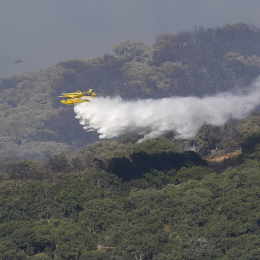
The wildfire declared on July 14 in Íscar (Valladolid) is now stabilized, as reported by the Junta de Castilla y León on its fire platform INFORCYL, ending two days of intense activity in which the fire reached the Potential Severity Index (IGR) 2 due to the threat it posed to the population and various infrastructures. Although the evolution of the fire allows for the lowering of the emergency level, the extinction teams maintain a surveillance and finishing device to prevent possible flare-ups while continuing perimeter securing efforts.

The fire mobilized a large operation

The fire required the deployment of a significant operation from the Castilla y León wildfire fighting forces. During the hours of greatest intensity, air and ground resources worked, including helicopters, ground-attack aircraft, water tenders, forest brigades, helitransported brigades, environmental agents, and specialized technical personnel. The rapid mobilization of resources made it possible to contain the spread of the flames on a day marked by high temperatures, wind, and the high risk of fires existing in a large part of the country.

Surveillance due to high fire risk

Despite the improvement of the situation in Íscar, the Junta maintains surveillance on the ground and reminds that the risk of fires continues to be very high in large areas of Castilla y León. The authorities insist on avoiding any activity that could start a fire in forest areas and on following the instructions of emergency services while adverse weather conditions persist.
More key points, information and questions with FREN

AI-GENERATED CONTENT

What competencies does the Junta of Castilla y León have in the management of forest fires according to regional legislation?

The regional legislation of Castilla y León assigns the Junta, through the ministry responsible for forests and civil protection, a central role in the prevention, monitoring, extinction, and restoration related to forest fires, as well as in the operational coordination when these are considered civil protection emergencies. The Law 3/2009 on forests establishes the substantive competencies regarding defense against fires in forests and their surroundings, while the Law 4/2007 on Civil Protection integrates the forest fire operation into the regional emergency and coordination system. These laws have been partially amended by later provisions (including Law 4/2024 and Decree-law 2/2023), but maintain the basic structure of competencies. Below is a detailed breakdown of the functional distribution according to current regulations.

1. General organization of defense against forest fires

The Law 3/2009 on forests of Castilla y León establishes that the ministry responsible for forests, in coordination with the General State Administration, is responsible for the organization of defense against forest fires. This defense explicitly includes:

  • Prevention of forest fires.
  • Detection and monitoring.
  • Extinction of fires.
  • Restoration of areas affected by fire.

All this is exercised “without prejudice to the competencies of local entities,” meaning that the Junta designs, directs, and coordinates the system, while municipalities and provincial councils may carry out their own actions within this framework.

2. Annual plans and preventive measures

The same law assigns the Junta the competence to develop and approve the annual plans for prevention, monitoring, and extinction of forest fires throughout the regional territory. These plans:

  • Cover the entirety of Castilla y León.
  • Must follow the guidelines and common criteria set by the State (Basic Forest Law).
  • Are applied continuously throughout the year, and may be broken down into a multi-year general plan and a more detailed annual operational plan.

The Junta may also agree on mandatory preventive measures both in forests and in lands up to 400 meters from them. Owners must carry out or allow the ministry to execute these forest fire prevention measures.

3. Regional prevention and extinction operation

According to Law 3/2009 and in connection with Decree-law 2/2023 on urgent measures for prevention and extinction, the Junta establishes an Operation for prevention and extinction of forest fires as the set of human, material, and technological resources that the regional administration organizes integrally to:

  • Fight forest fires.
  • Extinguish them when they occur.
  • Operate detection systems and support prevention.

This operation has a permanent structure throughout the year, adjusting its size and functions according to the danger period and risk zoning. Operational planning and sizing of the device are direct competencies of the Junta.

4. Use limitations, restoration, and registry of burned forests

The Junta has powers to prohibit or limit activities that pose a risk of forest fire, as well as to restrict the presence and transit of people and vehicles in forests under high danger situations. It can also prohibit transit with devices likely to cause fires and immediately apply prohibitions established in basic state legislation when extreme risk situations occur.

After a fire, regional regulations assign the Junta key competencies in the post-fire phase:

  • Automatically suspend livestock and hunting uses for 5 years, with certain authorizable exceptions.
  • Prohibit change of forest use and modification of urban classification for 30 years, except in exceptional cases provided by basic state law.
  • Create and manage an administrative registry of forests affected by fires, with data on date, location, extent, and terrain characteristics.

5. Forest fires as civil protection emergencies

The Law 4/2007 on Civil Protection of Castilla y León, amended by Law 2/2019 and partially by Law 4/2024, integrates the forest fire fighting services as an essential service of the civil protection system. It defines these services as the operation of means and resources that the responsible ministry makes available for prevention and extinction tasks, according to sectoral regulations (mainly the Forest Law).

Among its specific functions, the Civil Protection Law lists, without prejudice to other attributions:

  • Analysis of forest fire risk.
  • Establishment of danger periods and zones.
  • Distribution and organization of the fire fighting operation according to risk and zones.
  • Prevention and detection of forest fires.
  • Evaluation and extinction of fires.
  • Information on consequences and damages caused.

Forest fires are thus treated as civil protection emergencies, integrated into the Junta's coordination structure (coordination centers, assistance levels, etc.), in coherence with the Statute of Autonomy reformed by Organic Law 14/2007 and with basic state regulations, such as Royal Decree-law 15/2022 on forest fires.

6. Complementary regulatory framework and references

Decree-law 2/2023 also cites specific regional regulations that develop the device (Decree 63/1985 on prevention and extinction, the INFOCAL civil protection plan for forest fires approved by decree, the regional Forest Plan, etc.), as well as orders regulating danger periods, fire use, and operation. These regulatory provisions detail the planning and coordination of resources assigned by law to the Junta.

Part of this framework has been affected by the recent use of the regional decree-law (such as the repealed Decree-law 1/2025 and Decree-law 2/2025), but the fundamental structure remains: the Junta of Castilla y León is the administration responsible for designing, organizing, coordinating, and directing the regional system of prevention, monitoring, extinction, and restoration against forest fires, in connection with the civil protection system and in coordination with the State and local entities.

Other laws and documents cited in the legal references, although they do not directly define new competencies on forest fires, are part of the legal and competency context of the Community: among others, Law 5/2014, Order MAV/570/2022, orders approving civil protection emergency plans (Order IYJ/1410/2007 and Order PAT/442/2007), STC 132/2017, STC 162/2014, and STC 97/2013 on forests and fires, as well as international agreements and state norms on civil protection and emergencies (Spain-Portugal Protocol, RD 907/2013, RD 1031/2011, State seismic risk plan, among others).

Also part of the general regulatory environment of Castilla y León, although not directly focused on forest fires, are provisions such as LO 11/1994, various regional constitutional challenges (challenge 1511-2011, Meseta-Ski challenge, challenge 1710/1990) and several sectoral and social regional orders (Order EDU/179/2017, Order EDU/95/2017, Order PRE/1070/2015, Order PRE/1172/2014, Order EDU/1044/2014), which complete the general regulatory framework of the Community.

Could you break down exactly what the annual plans for prevention, monitoring, and extinction of forest fires in Castilla y León contain? How is the regional forest fire operation coordinated with municipal services and the General State Administration in a major emergency? What changes did Decree-law 2/2023 and Law 4/2024 introduce in the Junta's competencies over forest fires?

How many forest fires with Potential Severity Index 2 or higher have been recorded in Castilla y León in the last decade?

There is no published and consolidated figure in open official sources for the total number of fires with Potential Severity Index (IGP) 2 or higher in Castilla y León during the decade 2014-2023, so it is not possible to provide an exact number. The Junta of Castilla y León and MITECO do store this data in their technical databases, but the documents and notes accessible online only offer totals of fires and some averages of “severity declarations,” without breaking down year by year how many reach IGP≥2. What can be stated is that these episodes are a small fraction of the total incidents (more than 14,000 in the decade) but concentrate a large part of the burned area and pressure on the civil protection system. To know the exact figure, it would be necessary to consult directly the statistical databases of the Junta or MITECO.

What official information is available

The Castilla y León Statistics Center (CESCyl) publishes a graph of “Evolution of forest fires in Castilla y León, 2014-2023”, but the visible material does not break down how many of those fires reach IGP 2 or higher, nor how many level 2 activations have occurred each year. This graph can be consulted through CESCyl at this evolution graph.

At the national level, the Ministry for Ecological Transition and Demographic Challenge (MITECO) maintains the Forest Fire Statistics, which includes the IGP reported by each autonomous community. There are two main channels:

  • The annual statistical updates, where provisional data by community are published.
  • The consolidated statistics in database format, accessible from the fire statistics page, which allows downloading files that include the IGP field.

At the regional level, the Junta of Castilla y León reports a total of 14,540 fires (2013-2022) and 49 Large Forest Fires (GIF > 500 ha), according to a report accessible through the Official Bulletin of Castilla y León: see the document cited in this reference. GIFs do not exactly equate to IGP≥2, but illustrate that only a small proportion of incidents reach high severity.

A recent journalistic piece also summarizes that in 2024 only 5 level 2 cases have been declared in Castilla y León, compared to an average of about 27 severity declarations (levels 1 and 2 combined) in the period 2014-2023, giving an idea of the magnitude but not allowing reconstruction of the exact IGP 2 count for the entire decade. This balance is included in a regional analysis available in this report.

Why an exact figure cannot be given with open sources

The IGP is a technical indicator used in operational reports and detailed fire statistics, but it rarely appears summarized in press releases or public reports with a simple table “number of fires with IGP≥2 by year and community.” Research on official sources explicitly points out that the data are in the “Excel database of the 2023 annual report” of the Junta (environment chapter) and in MITECO files, but that this breakdown is not included in the publicly accessible text.

Moreover, in Castilla y León public communication is usually made in terms of operational levels of the INFOCAL Plan (level 0, 1, 2, etc.) and GIFs, while the IGP remains an internal variable. Although there is correlation between level 2 fires and a high IGP, there is no automatic equivalence that allows summing “all level 2” and presenting them as “IGP≥2” without consulting the original records.

Where the exact data could be obtained

If an official and precise figure of the number of fires with IGP 2 or higher in Castilla y León between 2014 and 2023 is needed, the reasonable path is:

  • Download the database from the environment chapter of the 2023 annual report of CESCyl (linked to the official graph) and check if it includes a tab with the breakdown by IGP.
  • Access the consolidated fire statistics of MITECO through the pages of statistical updates and consolidated statistics, filtering by community “Castilla y León” and summing records with IGP≥2 year by year.
  • Consult the documentation of the Annual Forest Fire Plan of Castilla y León (such as the order of the 2024 Annual IIFF Plan) where averages of severity declarations are sometimes summarized.
  • Review the cartography and fire layers in the Junta's geographic viewer (for example, the IDECYL service accessible at this geographic resource), which may include the IGP value in the attributes of each fire.

Without direct access to these databases, “No further information is available in the consulted sources” to provide an exact total figure for 2014-2023.

Other cited links and institutional context

At the national level, Interior and other agencies have published general balances and notes on fires, hazard, and large fires, which help contextualize recent evolution: Interior note 2026, 2026 state campaign, Environmental indicators panel, new AEMET fire danger index, or other analyses such as Greenpeace on 2025-2026.

The reality of fires is also reflected in regional institutional communication (for example, agendas like this appearance, this other, this training day, or drills), in warnings to the agricultural sector as disseminated by ASAJA (fires caused by harvesters, opening of high risk period) and in media coverage such as the newspaper Demócrata (latest fire news, among many other political and current affairs pieces featured on its front page).

In summary, prevention and extinction policies have been strengthened in recent years — also following major episodes in Castilla y León — but the specific figure of fires with IGP≥2 in 2014-2023 remains, to date, a technical data point that can only be reconstructed by accessing the detailed statistical databases of the Junta and MITECO.

Other links mentioned in the sources (political, legal, or general current context) include, among others: analysis on Labor Inspection, coverage of the CJEU and amnesty, Íscar (Valladolid) fire, and many other Demócrata pieces on politics, justice, elections, and digital power (Congress Board and Spokespersons' Board, elections in Castilla y León, BOE highlights, among many others linked on the media's front page).

How is the Potential Severity Index exactly defined and how does it relate to levels 0, 1, and 2 of INFOCAL in Castilla y León? Which large forest fires recorded in Castilla y León between 2014 and 2023 reached IGP 2 or higher and what area did they burn? What regulatory and resource changes has the Junta of Castilla y León approved in recent years following the community's large fires?

What requirements are demanded for the Military Emergency Unit to intervene in forest fires in Spain?

The Military Emergency Unit (UME) only intervenes in forest fires when the fire reaches significant severity and the autonomous community or the competent civil protection authority requests support from the State. On that basis, the Ministry of the Interior forwards the request to the Ministry of Defense, and the Minister of Defense, by delegation of the President of the Government, formally orders the activation of the UME. In emergencies of national interest, the UME also becomes a central piece of the National Civil Protection System, assuming operational command under the political leadership of the Minister of the Interior. All this is framed within a principle of subsidiarity and support to the autonomous competencies in fire extinction.

Basic legal framework

The requirements and activation protocol of the UME are supported by a set of state regulations:

  • Royal Decree 399/2007, which approves the UME Intervention Protocol (RD 399/2007).
  • Law 17/2015, of July 9, on the National Civil Protection System (Law 17/2015).
  • Order DEF/160/2019, on the organization and functioning of the UME (Order DEF/160/2019).
  • State Civil Protection Plan for emergencies due to forest fires, approved by Council of Ministers Agreement of October 24, 2014 (State Forest Fire Plan, and its erratum).
  • General State Civil Protection Emergency Plan (PLEGEM), approved in 2020 (PLEGEM).
  • Creation and initial functioning norms, such as Order PRE/1776/2006 (Order PRE/1776/2006) and Royal Decree 1097/2011, cited by Order DEF/160/2019 (RD 1097/2011).

Law 17/2015 considers the UME a public intervention and assistance service and the “main collaboration structure of the Armed Forces” in civil protection emergencies, especially when the emergency is of national interest.

Types of situations in which it can intervene

The Intervention Protocol approved by Royal Decree 399/2007 establishes that the UME can be activated when, with serious character, among others, the following emergencies occur:

  • Forest fires (expressly mentioned as one of the specific cases).
  • Other natural risks (floods, snowfalls, earthquakes, etc.).
  • Technological risks (chemical, nuclear, radiological, biological).
  • Terrorist attacks or other serious violent acts, and severe environmental contamination.

In the specific case of forest fires, the State Forest Fire Plan and Law 17/2015 frame the UME intervention in two main scenarios:

  • Support to regional plans when the autonomous community requests state reinforcements because its means are insufficient.
  • Emergency of national interest, when the requirements of article 29 of Law 17/2015 concur (severity, affectation of several territories, impact on essential services, etc.).

Who and how can request the intervention

According to the UME Intervention Protocol (annex to RD 399/2007):

  • Competent civil protection authorities (mainly autonomous communities, through their emergency coordination centers) can request the Ministry of the Interior for UME collaboration when the forest fire exceeds their response capacity.
  • The Ministry of the Interior, once the emergency dimension and available means are assessed, forwards the request to the Ministry of Defense.
  • The Minister of Defense, by delegation of the President of the Government, is the one who formally orders the UME intervention in that forest fire.

Order DEF/160/2019 also introduces an exceptional mechanism: in “state of necessity, unforeseen, or extremely serious causes,” the UME Chief can directly order the intervention of its units, informing the Minister of Defense afterwards. This provision strengthens immediate response capacity in very fast or unexpected fires.

Principles of subsidiarity and coordination

Both Law 17/2015 (Law 17/2015) and PLEGEM (General State Plan) configure the UME intervention under the principles of:

  • Subsidiarity: autonomous communities maintain the main competence in prevention and extinction of forest fires; the UME acts as reinforcement when their capacities are exceeded or when the emergency affects national interest.
  • Coordination: in emergencies not declared of national interest, the UME integrates into the command structure foreseen in regional and special forest fire plans.
  • Operational command in national interest: in emergencies declared of national interest, Order DEF/160/2019 establishes that the UME General Chief assumes operational command under the direction of the Minister of the Interior.

Practical summary of requirements

In summary, for the UME to intervene in a forest fire, it is usually required:

  • That the fire has serious character or risk of reaching that severity.
  • That the regional civil protection authority or, if applicable, the State, request its collaboration through the Ministry of the Interior.
  • That the Minister of Defense orders the activation, except in exceptional cases where the UME Chief intervenes urgently.
  • That the action is framed within the civil protection plans (regional and state forest fire plans), respecting the distribution of competencies and established command schemes.
What exactly does it mean for a forest fire to be declared “of national interest” and who makes that decision? How is the UME coordinated with regional extinction services and what role does each have in the command of the operation? How does the UME's intervention in forest fires differ from its action in other types of civil protection emergencies?

Play

Test your knowledge with FREN!

How much do you know about this topic? Answer the following 3 questions.

On what date was the forest fire declared in Íscar (Valladolid)?

Question 1 of 3

What measures are the teams maintaining in Íscar after stabilizing the fire?

Question 2 of 3

What was one of the main factors that hindered the extinguishing of the fire in Íscar?

Question 3 of 3

Hola, soy Fren. ¿Cómo te ayudo?