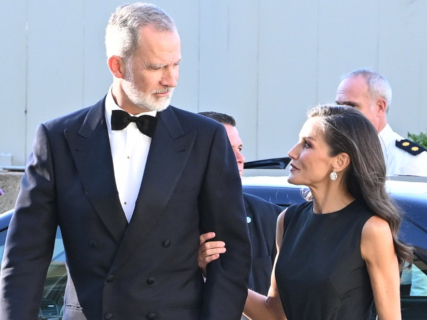

The King Felipe VI maintains contact with ten of the mayors of the municipalities in Madrid affected by the forest fire that continues to hit the southwest of the Community of Madrid, an emergency that has forced extraordinary protective measures to be taken for the population and that keeps firefighters, Guardia Civil, Civil Protection, UME, health services, and municipal teams deployed.
The communication with the mayors seeks to know firsthand the situation in each locality, the impact of the fire on the residents, the most urgent needs, and the evolution of the evacuations or confinements decreed in the last hours. In an emergency of this magnitude, the mayors have become an essential piece of the operation, because they are the ones who immediately receive the concerns of the residents and who coordinate the closest attention on the ground.
Institutional support for the residents
The contact of the head of State with the mayors also has a component of institutional support for the affected municipalities, especially at a time when thousands of people have had to leave their homes or remain confined due to the presence of smoke, the advance of the fire, or the risk of the flames reaching new inhabited areas.
The Royal House thus follows the evolution of an emergency that not only leaves burned hectares but also displaced families, threatened homes, cut-off roads, damaged farms, and enormous uncertainty in localities that depend on the evolution of the wind and the work of the firefighting teams to regain normality.
The mayors, the front line of the emergency
The town halls are playing a key role in the daily management of the crisis. In addition to attending to the residents, they must collaborate in the dissemination of official instructions, enable reception spaces, coordinate local resources, identify vulnerable people, and maintain communication with the regional and state administrations.
In small or medium-sized towns, this work is especially important because the mayors know the developments, paths, isolated homes, elderly people living alone, livestock farms, and sensitive points of the municipality. This information can be decisive for organizing evacuations, avoiding unnecessary risks, and facilitating the work of emergency services.
An emergency with a strong human impact
The fire has turned several municipalities in Madrid into the center of a rapidly changing crisis. Evacuation and confinement orders, road closures, and the transfer of resources depend on very variable factors, such as wind direction, smoke intensity, temperature, humidity, and the possibility of new hotspots or reproductions appearing.
For this reason, institutional contact with the mayors allows for a more accurate picture of the emergency in each locality. The situation can be different even among nearby municipalities: some may be awaiting the arrival of smoke, others the protection of homes, and others the assistance to evacuated neighbors who do not know when they will be able to return.
Monitoring the evolution of the fire
Felipe VI is following the evolution of the fire in coordination with the competent authorities and with special attention to the municipalities most affected by the fire. The priority remains to protect lives, keep the necessary roads clear for emergency services, and prevent unauthorized movements towards the affected areas.
While the teams continue to work on the ground, the mayors convey the official instructions to their neighbors and try to sustain the local response in an emergency that has tested the coordination capacity between administrations. The King's contact with these ten mayors is part of that institutional monitoring of a crisis that remains open and keeps a good part of southwestern Madrid on edge.