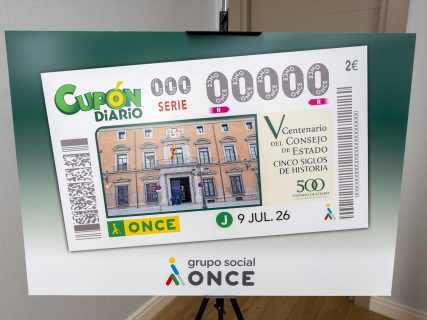

A 79-year-old woman residing in Los Alcázares, Murcia, claims the payment of the 35,000 euros she won with a coupon from the ONCE in August 2025. When she tried to collect the prize, the entity verified that she was listed in the General Registry of Access Prohibitions to Gambling and suspended the payment.
The case, reported at the beginning of July by La Verdad, has reached the High Court of Justice of Madrid. The affected woman has also requested that her registration in the registry be declared null, arguing that she never voluntarily requested to be prohibited from playing.
The woman's case is represented by RPB Legal, a law firm in Murcia. They made the case public on their website as well:
Her husband would have registered her without permission
The woman had been registered as a self-prohibited person for 13 years when she won the prize. According to the documentation known during the claims, the application was submitted in January 2012 via a burofax written in her name.
The family claims that it was the husband, who passed away in 2015, who sent the document without his wife's consent and with a signature that did not correspond to hers. The document included a supposed authorization for him to carry out the procedure because she could not travel.
The affected woman's daughter links the incident to a marital dispute over her mother's attendance at the bingos organized at a senior center. However, this is the family's version, and there is still no judicial resolution that has declared the registration fraudulent or null.
The woman's lawyer also states that the request was made using an unofficial form. The family questions whether the document was accepted despite containing alleged errors in personal data and in the signature.
Why doesn't ONCE pay the 35,000 euros?
ONCE maintains that it cannot award a prize to a person registered in the self-prohibition registry, even if they physically purchased the coupon and subsequently present it for collection.
The regulations require operators to identify the winner and verify that they are not affected by any prohibition before paying the prize. The legislation considers this verification an essential condition for collecting it.
The organization has stated that it will pay the 35,000 euros if the Administration or the courts officially annul the registration. According to its version, it is not assessing how the registration occurred, but rather applying the information currently listed in the registry.
What is the self-exclusion register for gambling?
The General Register of Access Prohibitions to Gambling, known as RGIAJ, brings together individuals who have voluntarily requested to be prevented from participating in certain gambling activities and those who are prohibited from doing so by court ruling.
The registration affects online gambling and in-person activities where identity must be verified. It can also extend to lotteries when their specific rules establish it. The application must identify the interested party and can be submitted electronically or through the authorized in-person channels.
The register aims to protect those who want to limit their access to gambling. In this case, the controversy does not revolve around its purpose, but rather whether the woman was validly registered and truly gave her consent.
Two procedures to try to recover the prize
The affected party has two fronts open. On one hand, she has appealed the refusal to pay the coupon before the High Court of Justice of Madrid. On the other, she is administratively requesting the nullity of her registration in full right.
The outcome will depend on whether it is determined that the registration from 2012 was valid. Until then, ONCE has kept the prize blocked because the winner's name continues to appear in the registry.