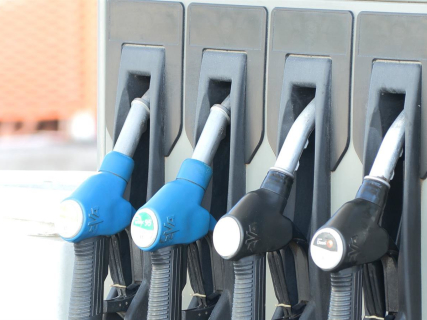

The Spanish Confederation of Service Station Businessmen (CEEES) has urged political parties to establish a regulatory framework based on technological neutrality that will allow all solutions capable of cutting emissions to compete on equal terms, as well as decisive support for ecofuels.
The confederation, which brings together nearly 12,000 service stations in Spain, has sent to the candidate lists presented for the general elections on 29 November a policy document with seven key commitments to tackle the energy transition through realistic policies, legal certainty, and specific support for the small and medium-sized enterprises that underpin this network.
In this list of proposals addressed to political formations, the employers’ association argues that decarbonising transport should not depend on a single technological pathway nor be imposed in an exclusionary manner. For this reason, it advocates a regulatory framework that guarantees equal competition among all technologies that help reduce emissions: "electrification, renewable fuels, hydrogen and any other viable alternative".
Likewise, it calls for putting ecofuels at the core of Spanish energy and industrial policy, in order to achieve an immediate reduction in emissions by making use of the vehicle fleet and the infrastructure that already exists, while at the same time strengthening the country’s strategic autonomy in the face of geopolitical instability.
AVOID INCREASING TAX PRESSURE ON THE SECTOR
CEEES also warns about the significant volume of investment involved in adapting facilities to the energy transition, and therefore calls for tax pressure on the sector not to be increased and for an end to legal uncertainty and ongoing regulatory changes, with the aim of encouraging private investment.
As, for the most part, these are service stations managed by SMEs, the organization also asks for lighter administrative burdens, faster procedures with the Public Administrations, and for proportional regulatory frameworks tailored to the real operating capacity of these companies.
With regard to competition, the employers’ association stresses that independent service stations bring dynamism to the market, create jobs, and offer consumers more competitive prices and services.
For this reason, it calls for the legislation to be kept permanently up to date in light of the rapid transformation of the energy market, in order to avoid competitive distortions and dysfunctions in the sector.
MOBILITY, AS AN ESSENTIAL SERVICE
The confederation likewise insists on the need to protect mobility as an "essential service" and on the structuring role of service stations for territorial cohesion and in response to the demographic challenge, since in thousands of rural municipalities they constitute one of the last basic services that are open and accessible to citizens.
To this end, CEEES calls for any regulatory reform to include prior impact assessments that analyze its effects on families, hauliers, self-employed people, farmers, and businesses, with special attention to rural areas and to the territories most exposed to depopulation.
Finally, the employers' association advocates institutionalizing a stable and continuous dialogue with the sector, so that any reform that affects mobility or energy is designed by listening to those who guarantee daily supply across the entire national territory.
Consequently, service stations request the recognition and strategic position that they believe corresponds to them in the definition of public policies, in view of the daily effort they make to keep the country's economic and social pulse.