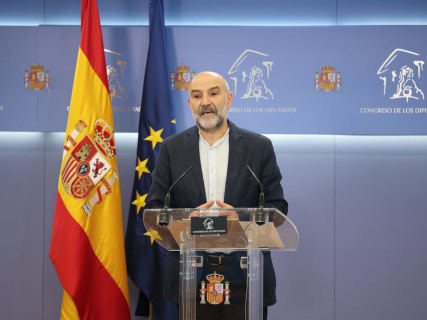

BNG deputy Néstor Rego maintains that the resignation of the Minister of Transport and Sustainable Mobility, Óscar Puente, is "inevitable" after the railway tragedy in Urda (Toledo), and calls for an investigation in "depth" into the accident, which has caused at least 69 deaths.
At a press conference in Congress, prior to Puente's appearance before the Permanent Deputation, Rego recalled that his group avoided demanding political responsibilities in the first hours after the accident. However, he now understands that it is "an inevitable matter" for the head of Transport to assume responsibilities, although he stressed that, in his view, part of the failures of the railway system stem from decades of policies promoted by both PSOE and PP.
In addition to the resignation request, the Bloque representative emphasized that key questions about what happened remain unclear, among them why the failure of the LZB safety systems occurred, why the most advanced ERTMS system remains not fully operational, or why the staff has not been reinforced despite the railway liberalization process that opened the door to the entry of operators such as Iryo and Ouigo.
Rego finally insisted on the need for a thorough investigation of what happened in Urda in order to prevent a repeat of what, in his view, happened after the Angrois accident in 2013, when, according to his complaint, PSOE and PP closed "the so-called Curve Pact" in order to prevent any deep inquiry and for all responsibility to fall exclusively on the train driver.