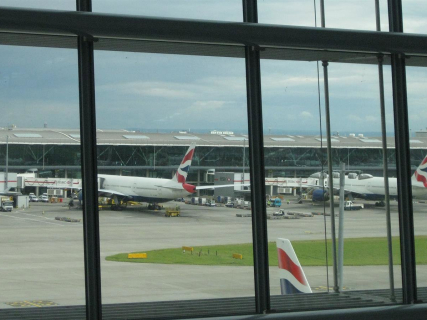

A technical failure in the air traffic control system of the United Kingdom, recorded on September 8 of last year, caused an estimated economic impact of between 48 and 76 million pounds sterling (between 57.5 and 91 million euros) for the British tourism sector and international airlines, after the cancellation of 1,800 flights, in addition to significant delays and diversions.
These figures are included in a recent report from the United Kingdom's Cyber Monitoring Centre (CMC), which classified the incident as a category 1 event on a scale of five levels, where 1 represents the lowest degree of impact and 5 the maximum.
In the domestic sphere, the financial cost was around 33 million pounds (39.5 million euros) and affected more than 70 organizations headquartered in the country.
The overall impact included, in addition, about 800 flights that experienced delays of more than two hours and another 60 that had to be diverted. Although the system breakdown was resolved the same day, disruptions to airline schedules lasted until September 11.
According to the report, more than three quarters of the economic losses fell on the airlines, while National Air Traffic Services (NATS), the agency where the failure originated, sustained a comparatively smaller detriment.
The document also analyzes the consequences for passengers and staff. It highlights that, although operational safety did not come to be at risk, the incident caused "considerable inconvenience" for travelers, some of whom missed connections, had to spend the night in airports, endured long waits inside the aircraft, and were unable to attend meetings, events, or family get-togethers.
It also details that "Airport and airline staff worked overtime to help passengers and restore schedules, and in some cases suffered insults from frustrated passengers," it has added.
"NO EVIDENCE OF CYBER ACTIVITY"
In its assessment, the technical committee of the Cyber Monitoring Centre concludes that the incident was the result of an "accidental" and "not malicious" technical failure, and emphasizes that "there is no evidence of cyber activity".
After its analysis, the authority recognizes that the incident generated a significant operational disruption, but rules out that it posed a threat to air safety. "NATS maintained safe separation between aircraft at all times, and the traffic restrictions imposed were a deliberate measure to preserve safety margins," it has also explained.