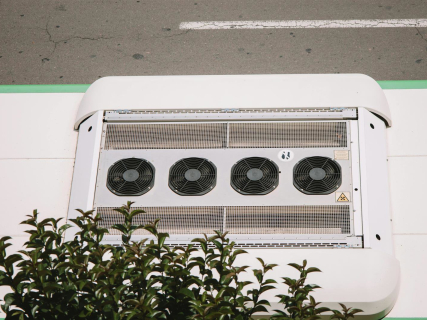

The Ministry for Ecological Transition and the Demographic Challenge (Miteco) has launched a new incentive scheme to promote the replacement of boilers that use fossil fuels with electrically powered heat pumps in homes. With this initiative, the energy savings recognized through Energy Saving Certificates (CAE) may be multiplied by up to four.
The provision, released this Saturday in the Official State Gazette (BOE), sets four multiplying coefficients depending on the type of building and the existing heating system. It also incorporates a specific bonus for homes in which vulnerable consumers, severely vulnerable consumers, or people at risk of social exclusion live.
In this way, computable energy savings will be multiplied by two in single-family homes; by 2.5 in flats or buildings with individual installations; by three in properties with centralized systems, and by four when an individual system is changed to a centralized one.
According to the Ministry, these coefficients may be increased by an additional 50% in interventions carried out in homes with vulnerable consumers, which will make it possible to increase the incentive linked to the replacement of heating equipment.
The specific resolution lays out the heat pump impulse plan with Energy Saving Certificates, included in Royal Decree-Law 7/2026, and is aimed at both single-family buildings and homeowners’ communities. The objective is to facilitate the change or hybridization of combustion boilers fed with fossil fuels by electrically operated heat pumps, whose secondary circuit uses water or water-based fluids.
Technical requirements and implementation schedule
The use of these multipliers will be conditional on compliance with certain technical requirements, including minimum levels of energy efficiency according to the climate zone, as well as installation, maintenance, and information supply requirements. Similarly, limits are set on the volume of energy savings that may benefit from these coefficients.
Actions initiated from March 22, 2026, the date that Royal Decree-Law 7/2026 enters into force, may be eligible until November 30, 2027. For homeowners’ communities, the deadline extends until December 31 of that same year.
The granting of incentives will be carried out following a criterion of temporal precedence, taking into account the resolution date of the application for issuing the CAE. In addition, its application may be requested only once for each energy efficiency action.
The resolution also determines that the maximum volume of energy that can be assigned with these multipliers in 2027 will be equivalent to 15% of the maximum obligation of the set of obligated parties that were able to settle through CAE in 2026, which amounts to a total of 1.287 gigawatt hours (GWh).
At the same time, the Miteco has opened a Prior Public Consultation to analyze the option of extending these multiplying coefficients of the Energy Saving Certificates system to other solutions aimed at reducing demand and consumption of fossil fuels in the residential sector.
The department led by the Ministry recalls that heating and domestic hot water in homes account for 10% of national energy consumption and 7% of greenhouse gas emissions.
The consultation will evaluate the impact of the different climatic zones and the building typology on energy savings, as well as the contribution of these measures to moderating future electrification needs, the demand for electrical power, and the reduction of CO2 emissions, both direct and indirect.