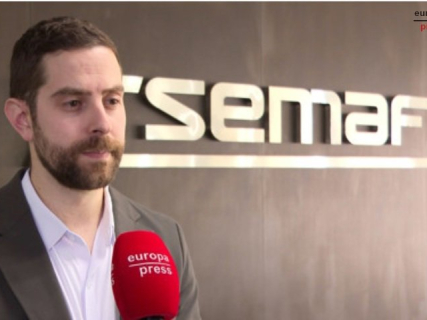

The Spanish Union of Railway Machinists (Semaf) for the moment maintains the strike at Renfe scheduled for the days 10 and 12 November, after a meeting “with no progress” with the First Deputy Prime Minister and Minister of Economy, Trade and Enterprise, Carlos Cuerpo, who provisionally assumes the Transport portfolio after the resignation of Óscar Puente and who has called the union again this Friday.
In a note sent this Thursday, Semaf describes the meeting, which was attended by its general secretary, Diego Martín, as a “first point of contact” in which “no progress has been made on the machinists’ demands.”
For its part, the Ministry of Transport, “within the framework of the industrial action convened by Semaf on its own,” has again cited the union organization for this Friday 6 November, according to what the department itself has reported.
The union stresses that it understands that “the strike is not an end in itself, but a constitutional means to achieve the demands” of the driving staff collective, but insists on the need for measures that are “concrete and verifiable.”
In light of “the situation of railway safety and the fact that we are already facing a breach of previous commitments, the organization does not contemplate stopping the dispute without the approval of concrete, material and verifiable measures,” Semaf stresses.
In addition to joining the joint work stoppage convened by the general company committees of Renfe and Adif, the union has launched its own call for those same dates, calling for a strike on its own in eight rail operators: all Renfe machinists, Iryo, Ouigo, Transfesa, Continental Rail, Tracción Rail, Captrain and Medway.
According to the union’s version, the meeting has served for Cuerpo to learn directly about its demands, which “have led to the current dispute” with the convening of two new strike days at the Renfe Group, 10 November —during the 24 hours— and 12 November —from 06:20 to 09:20 hours, from 14:20 to 17:20 hours and from 21:20 to 23:20 hours—, after the stoppage held on 29 October.
The organization places the origin of the conflict on February 9, 2026, the date on which it signed an agreement with Transportes and with the presidents of Renfe and Adif that made it possible to call off the strikes scheduled for the 10th and 11th of that month. A pact that included the creation of multidisciplinary working groups tasked with drawing up and implementing new standards and operating procedures aimed at strengthening rail safety.
"Since then, the Administration and public companies have repeatedly postponed the calls without making any progress and without even convening the agreement’s follow-up commission," Semaf criticizes.
After the first day of the strike, Renfe argued that it had fulfilled all the commitments undertaken in that agreement and that the pending actions were outside its scope of competence. Even so, it maintained that of the 24 measures outside its competencies, 17 had been carried out and the remaining seven were in an advanced stage of processing.
Meanwhile, Semaf has decided to suspend the strike at Ouigo that was scheduled for this Friday and for the days 9 November and 4 and 8 December of this year.