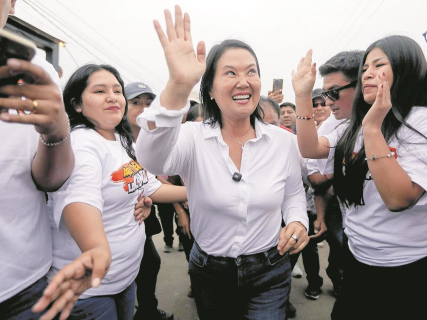

The second round of the Peruvian presidential elections continues without a clear winner despite the constant progress of the official count. The latest updates from the National Office of Electoral Processes (ONPE) place the count above 84% of ballots tallied, maintaining a provisional lead for Keiko Fujimori as the country awaits the definitive results.
According to the data released in the last few hours, the candidate from Fuerza Popular continues to lead the official count, although the gap with Roberto Sánchez has been narrowing as new ballots from different regions of the country are incorporated.
The evolution of the count keeps an scenario open that was already anticipated on election night. The 100% quick count prepared by Ipsos for Transparencia continues to give a minimal lead to Sánchez, with 50.3% of the votes compared to Fujimori's 49.7%. Being within the margin of error, specialists continue to speak of a technical tie.
The apparent contradiction between both results is related to the geographical origin of the ballots being incorporated into the system. The first official data usually comes from Lima and other large urban areas where Fujimori obtains better results, while votes from rural and Andean regions, more favorable to Sánchez, take longer to process.
Precisely for this reason, both electoral authorities and analysts insist that it is still too early to draw definitive conclusions about the election outcome. The ONPE continues to process ballots and reminds that the only legally valid result will be the one that emerges from the complete official tally.
Neither of the two candidates has proclaimed victory. Roberto Sánchez has asked for respect for the electoral process and the will expressed at the polls, while Keiko Fujimori has called for prudence and insisted on waiting for the definitive result before making any assessment of the election's outcome.
A result that could take days to finalize
The extreme equality between both contenders suggests that the Peruvian electoral process will continue in the coming days. In addition to the counting of pending ballots, observations, revisions, or appeals may still occur, which will have to be analyzed by the competent electoral authorities.
Various Peruvian analysts and media outlets recall that previous electoral processes in Peru were also marked by minimal differences and long periods of review before the official proclamation of the winner. On this occasion, the combination of the narrow margin and the high number of ballots still pending maintains uncertainty about who will assume the Presidency on July 28.
For now, the only certainty is that Peru remains immersed in a vote-by-vote scrutiny. With more than 84% of the ballots counted and differences still subject to change, the country continues to await every ONPE update in one of the tightest elections in its recent history.