Albares conveyed to France that Rajoy's words "do not represent" the Government

The head of Spanish diplomacy assures that he conveyed to Paris that the statements of the former President of the Government do not reflect the Executive's position and demands that the Popular Party rectify the controversy generated

3 minutes

c14b0986 833f 4fae 9575 aa552724a9cb

c14b0986 833f 4fae 9575 aa552724a9cb

Add DEMÓCRATA to Google

Ask FREN

Published

Last updated

3 minutes

Most read

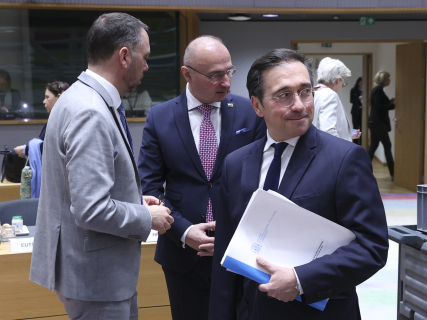
Upon his arrival at the meeting of European Union Foreign Ministers, the Spanish minister, José Manuel Albares, defended France after the words of former Prime Minister Mariano Rajoy, who spoke of a French football team "without Frenchmen". The minister revealed that, on Sunday afternoon, he contacted his French counterpart to ease the diplomatic tensions generated by these statements.

For the Government, the words of the former Popular Party leader "are unacceptable", and the Executive has taken advantage of the controversy to increase pressure on the current leadership of the Popular Party. Albares has called on the leader of the opposition, Alberto Núñez Feijóo, to "disavow Mariano Rajoy, who is a former Prime Minister from your party and a member of your party".
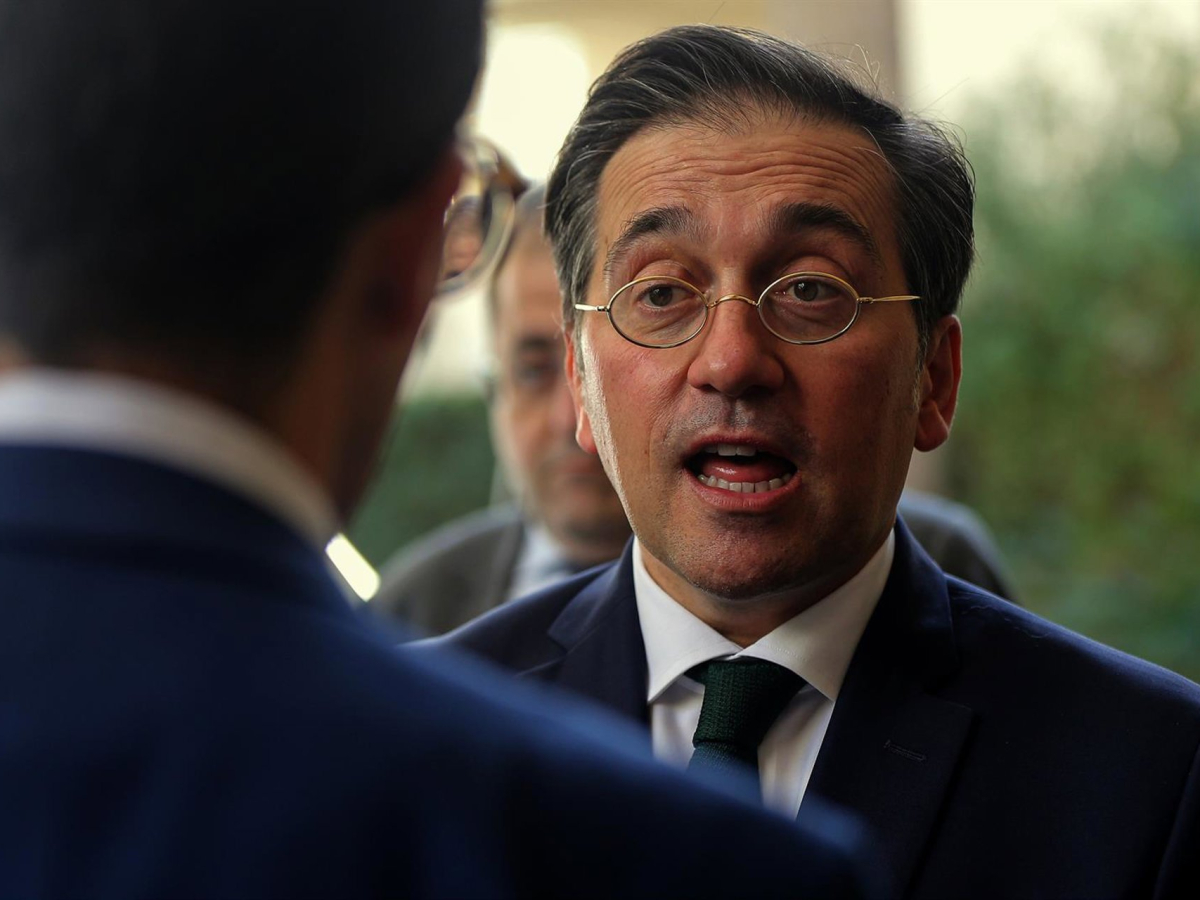
The Minister of Foreign Affairs, José Manuel Albares Marwan Naamani/ZUMA Press Wire/d / DPA
The Minister of Foreign Affairs, José Manuel Albares Marwan Naamani/ZUMA Press Wire/d / DPA -

In the same vein, the minister also focused on the media outlet where the former president published his column about Spain's match in the World Cup, a text that has sparked controversy. Albares has asked it to "publish a rectification, making it clear that it does not share at all what was linked and expressed in that article in that way".

The head of Spanish diplomacy has acknowledged that he himself took the initiative to call the French Foreign Minister, Jean-Noël Barrot. "I conveyed to him that, of course, that is not the position of the Spanish Government," he assured upon arriving at the Foreign Affairs Council being held this Monday in Brussels.

Hate crime?

When asked if the former Prime Minister's words could constitute a hate crime, Albares avoided commenting in legal terms, although he assured that they "cover up something terrible". "We cannot allow racist and xenophobic sentiments to be covered up, directly or indirectly, by phrases like these," he stated.

"Of course, all the players of the French national team are French. Nobody, in their right mind, has any doubt. Likewise, all the players who wear the Spanish national team jersey are Spanish," the minister affirmed.

Rajoy's statements have reopened the debate on immigration and national identity in Spain, an issue that has once again taken center stage on the political agenda. The Government considers that these types of messages fuel a discourse that questions the belonging of French citizens of foreign origin, while the Popular Party, for the moment, has not officially rectified the former president's words.

The President of the Government, Pedro Sánchez, who will travel to France this Tuesday to participate in the events for the French National Day, also reacted to the controversy on social media. "There are those who still measure belonging by surname, place of birth, or skin color. Others measure it by roots in a country and the will to contribute to it. Playing football. Caring for our elders. Or opening businesses," wrote the head of the Executive.
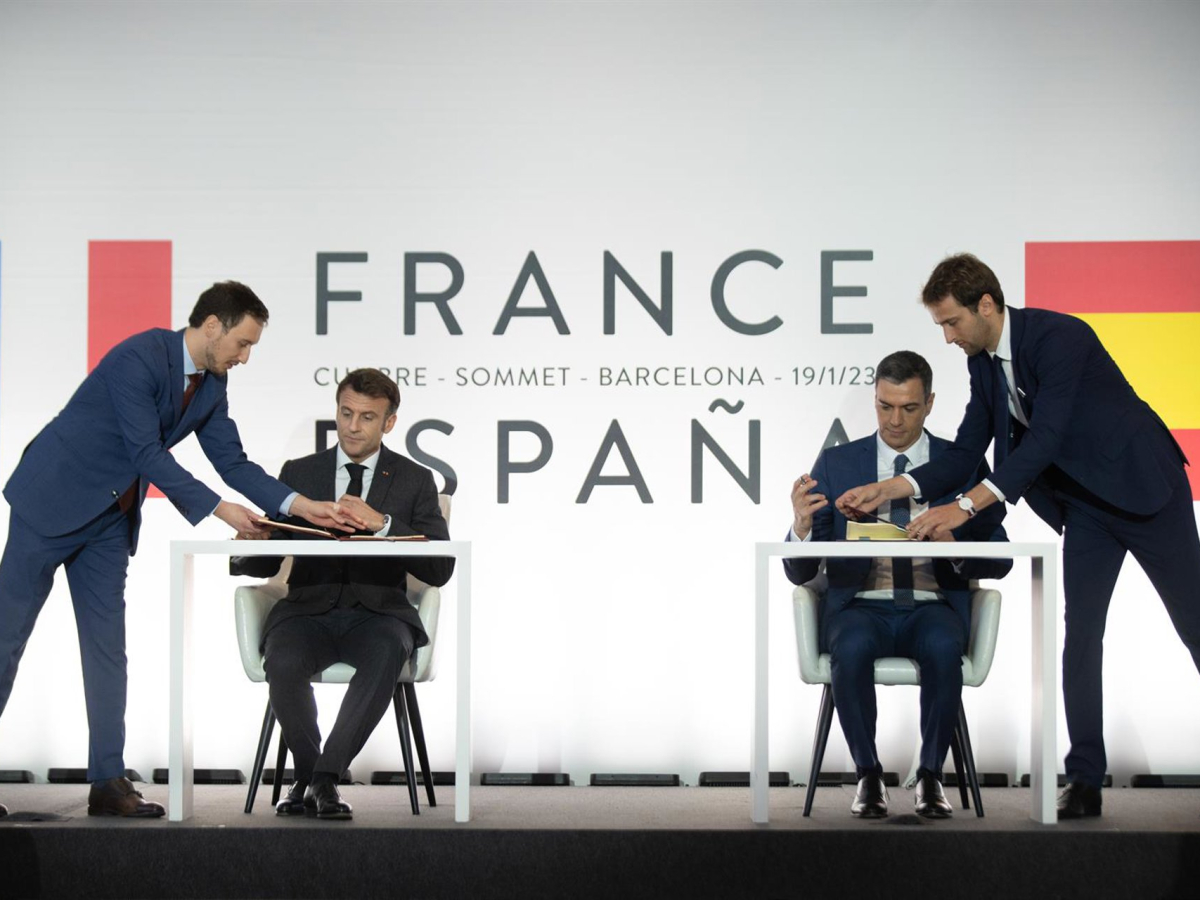
The President of France, Emmanuel Macron (left) and the President of the Government, Pedro Sánchez (right), during the signing of a Friendship Treaty between their respective countries, during the XXVII Franco-Spanish Summit David Zorrakino - Europa Press
The President of France, Emmanuel Macron (left) and the President of the Government, Pedro Sánchez (right), during the signing of a Friendship Treaty between their respective countries, during the XXVII Franco-Spanish Summit David Zorrakino - Europa Press -

The controversy also comes at a time when relations between Spain and France maintain an open political front due to the ratification of the Friendship and Cooperation Treaty between the two countries. The Popular Party has filed an appeal in the Senate before the Constitutional Court against part of the bilateral agreement, which has paralyzed the ratification process.

Specifically, the French diplomatic representation has stated that it will "closely follow the next stages of the ratification process," currently suspended until the Constitutional Court resolves the appeal filed by the Upper House on the constitutionality of article 2.4 of the treaty. This provision contemplates the possibility of a minister from the other country participating in a Council of Ministers meeting, a provision that the PP considers incompatible with the Spanish Constitution.

Thus, the controversy over Mariano Rajoy's statements transcends the sporting sphere and threatens to add a new element of friction to bilateral relations that both governments had sought to strengthen in recent years through a cooperation treaty considered strategic by both Madrid and Paris.

More key points, information and questions with FREN

AI-GENERATED CONTENT

What is the current status of the parliamentary processing of the Treaty of Friendship and Cooperation between Spain and France?

At this moment, the Treaty of Friendship and Cooperation between Spain and France has already been approved by the Congress of Deputies but its processing is still ongoing in the Senate, so the Cortes Generales have not yet completed the final parliamentary authorization. There is no record in the consulted sources of its publication in the BOE as an instrument of ratification, so the parliamentary procedure and subsequent formal ratification are not yet considered completed. Furthermore, this treaty had a first failed processing in 2025 and was subject to prior constitutional review at the initiative of the Senate, which explains the complexity of its path.

Current status of the file in process (110/000074, Congress)

The main ongoing file is 110/000074, in the Congress of Deputies, titled “Treaty of Friendship and Cooperation between the Kingdom of Spain and the French Republic, made in Barcelona on January 19, 2023.” According to parliamentary information, the phases already completed are:

  • Publication of the text in Congress on May 4, 2026.
  • Opening of the amendment period until May 13, 2026, and effective closing on May 20, 2026.
  • Debate in the Foreign Affairs Committee on June 10, 2026 (without votes in that session).
  • Debate and vote in the Plenary of Congress on June 18, 2026, under the item “Reports of the Foreign Affairs Committee on International Agreements,” with the following result: 175 votes in favor, 170 against, and 1 abstention.

After this Plenary, the text was sent to the Senate: on June 22, 2026, the referral was published along with several successive publications in the Senate (June 22 and 24), and on June 25, 2026, Congress approved the report and formalized the referral. The latest available note indicates that the report is already approved in Congress and the treaty is in the senatorial phase, where the Senate can still propose amendments or even a veto.

Therefore, the current status can be summarized as: processing ongoing in the Senate, with no record of a final vote in this Chamber nor subsequent publication in the BOE.

First failed processing in 2025 (110/000045 and (15)610/000052)

The same Treaty had a first referral to the Cortes linked to file 110/000045 in Congress. In this first round:

  • The text was published on February 7, 2025.
  • The amendment period was open until February 17, 2025.
  • The committee report was published on May 12, 2025.
  • On May 14, 2025, it was debated in Plenary and voted with the result: 163 yes, 171 no, and 11 abstentions.
  • On May 22, 2025, Congress rejected the initiative and concluded the processing.

In parallel, the Senate registered file (15)610/000052 on the same Treaty, whose processing appears as concluded on May 22, 2025, consistent with the definitive rejection in Congress.

Prior constitutional review promoted by the Senate

Additionally, the Senate processed a Request for referral to the Constitutional Court regarding this Treaty, file (15)751/000001. In the Plenary of February 12, 2025, this request was voted with the following result: 146 votes in favor, 91 against, and 23 abstentions. On February 17, 2025, the conclusion of this file was published, appearing as processing already closed.

Subsequently, in Congress there is a “Communication that the Senate has referred to said Court (…) regarding the existence or non-existence of contradiction between the Spanish Constitution and article 2.4 of the Treaty…”, with file 231/000001, registered on January 30, 2026. No further details on the Constitutional Court’s response are available in the sources.

Government decisions and executive phase

At the governmental level, the Council of Ministers agreed twice to refer the Treaty to the Cortes and authorize the expression of Spain’s consent:

There is no record, in the available information, of the publication in the BOE of the ratification instrument of the Treaty of Friendship and Cooperation with France, unlike other similar friendship treaties with third countries. Therefore, to date, the information indicates that the Treaty has not yet completed its parliamentary and ratification cycle and remains pending the decisive phase in the Senate.

What specific steps remain in the Senate for the Treaty of Friendship and Cooperation with France to be definitively authorized by the Cortes? Which parliamentary groups supported and which rejected the Treaty in the Congress vote on June 18, 2026? What does article 2.4 of the Treaty, which was referred to the Constitutional Court, consist of and why did it raise constitutional doubts?

What are the powers and functions of the Minister of Foreign Affairs of Spain according to current legislation?

The Minister of Foreign Affairs (currently, of Foreign Affairs, European Union and Cooperation) is the Government member responsible for planning and executing the State’s foreign policy, coordinating the external action and service, and representing Spain in the conclusion of international treaties, including the expression of the State’s consent to be bound by them. Their general functions as minister derive from the Government Law, which assigns all department heads the development of Government action within their scope, the exercise of regulatory power, and the competencies assigned by laws and organizational rules. Additionally, special laws, such as the Law on State External Action and Service and the Law on Treaties and Other International Agreements, specify their central role in directing external action and the legal management of treaties.

General framework: functions of all ministers

The Law 50/1997, of the Government establishes in its article on ministers that, as heads of their departments, they have competence and responsibility in their own sphere and exercise, among others, the following functions:

  • Develop Government action within their department’s scope, according to the Council of Ministers’ agreements and the Prime Minister’s guidelines.
  • Exercise regulatory power in matters pertaining to their department.
  • Exercise the competencies assigned by laws and other provisions, as well as the Government’s organizational and operational rules.
  • Endorse, if applicable, the acts of the King in matters within their competence.

These provisions apply to the Minister of Foreign Affairs just as to other Government members, within the departmental structure defined by ministerial restructuring royal decrees, such as Royal Decree 829/2023 and its amendment by Royal Decree 1230/2023.

Specific competencies in external action

The central piece is the Law 2/2014, on State External Action and Service. The relevant excerpt indicates that:

  • All ministers, as heads of their departments, direct and develop the State’s external action within their competence, using the State External Service.
  • They must coordinate with the head of the diplomatic mission or permanent representation when acting abroad.
  • Ministers may represent the State in treaty conclusion acts, except for the expression of the State’s consent to be bound, which requires plenipotentiary powers granted by the Minister of Foreign Affairs.
  • Specifically, the Minister of Foreign Affairs and Cooperation (legal reference name) “plans and executes the State’s foreign policy, and coordinates the State’s external action and external service” and, in accordance with the Constitution and laws, “represents Spain in all acts of concluding international treaties, including the expression of Spain’s consent to be bound by them.”

The same law assigns them the initiative of the Foreign Action Strategy, which is approved by agreement of the Council of Ministers at the minister’s proposal (after report from the Foreign Policy Council), and the annual presentation to the Cortes of the compliance report of said Strategy.

Competencies regarding international treaties

The Law 25/2014, on Treaties and Other International Agreements details the minister’s role in the legal cycle of treaties:

  • They can validate acts performed by persons without plenipotentiary powers in the treaty conclusion process, so that they have legal effects.
  • The proposal to the Council of Ministers to authorize the initialing, signing, exchange of instruments, or signature ad referendum of a treaty is made at the initiative of the Minister of Foreign Affairs, possibly jointly with the head of the department competent by subject matter.
  • The Prime Minister and the Minister of Foreign Affairs may sign any treaty ad referendum; other representatives require authorization from this minister.
  • The law also establishes that the Council of Ministers, at the proposal of the Minister of Foreign Affairs, may authorize the provisional application of an international treaty and the expression of Spain’s consent to be bound by it, in coordination with the Cortes Generales when necessary.

Support and coordination bodies

At the top of political foreign coordination is the Foreign Policy Council, created by Royal Decree 1412/2000 and successively amended by norms such as Royal Decree 236/2021, Royal Decree 982/2021, Royal Decree 707/2024, Royal Decree 1244/2024, and Royal Decree 1081/2025. According to Law 2/2014, this Council is a collegiate body supporting and advising the Prime Minister on foreign policy, and the Minister of Foreign Affairs has a central role in its operation, including proposing the Foreign Action Strategy and annual reports.

Other related functions

Besides political direction and treaty management, the Minister of Foreign Affairs exercises competencies derived from multiple sectoral provisions related to development cooperation, headquarters agreements, bilateral conventions, and other international instruments published in the BOE (for example, mobility agreements, cooperation or social security agreements such as those included in cooperation agreements, migration agreements, or social security agreements). In many of these, they assume representation of the Kingdom of Spain, promote negotiation or signing, and coordinate execution through the external service and the Spanish Agency for International Development Cooperation, whose organization has been adjusted by royal decrees such as Royal Decree 343/2023.

What differences does Law 2/2014 establish between the State’s external action and the foreign policy directed by the minister? How is the Foreign Action Strategy that the minister proposes to the Council of Ministers practically developed? What role does the Minister of Foreign Affairs have in the appointment and political control of Spanish ambassadors?

What constitutional requirements must be met to allow foreign ministers to participate in the Spanish Council of Ministers?

The Spanish Constitution configures the Government as an exclusively national body and the development legislation requires its members to be Spanish. To be a minister and participate in the Council of Ministers, according to the Government Law, one must be Spanish, of legal age, enjoy suffrage rights, and not be disqualified, in addition to the suitability requirements for senior officials. The participation of foreign ministers as members of the Spanish Council of Ministers is not allowed, neither with voice nor vote. However, the Government Law allows the exceptional presence of other authorities when provided by valid international treaties, which has opened the door to symbolic or observer participation formulas, without integrating those officials into the Government of Spain.

1. Constitutional framework: Government and Council of Ministers

The 1978 Constitution regulates the Government in Title IV (Spanish Constitution). The key provisions are:

  • Article 97 CE: assigns the Government the direction of internal and external policy, civil and military administration, and State defense. The Executive is, therefore, a state body, not shared with other States.
  • Article 98 CE: establishes that the Government is composed of the President, Vice Presidents, if any, and Ministers, and refers to ordinary law for determining other members, their status, and incompatibilities.

The Constitution does not detail personal requirements (nationality, age), but it does define that the Government is the body that exercises executive power in the name of the Spanish people (art. 1.2 CE) and before the Cortes Generales. This configuration implies an “institutional guarantee”: only Spanish bodies can hold that constitutional function.

2. Legal requirements to be a Government member

The legal development is carried out by Law 50/1997, of the Government. The excerpt establishes expressly:

  • Nationality requirement: “To be a member of the Government, one must be Spanish.” This outright excludes that a minister from another State can be a member of the Government of Spain.
  • Other personal requirements: be of legal age, enjoy active and passive suffrage rights, and not be disqualified from holding public office by a final sentence.
  • Additional suitability: it is also required to meet the suitability requirements provided in Law 3/2015 on senior officials of the General State Administration.

Regarding appointment, the Government Law specifies that Ministers are appointed and removed by the King at the proposal of the Prime Minister, again emphasizing that these are Spanish State positions. There is no provision for a treaty or international agreement to grant the status of Government member to foreign authorities.

3. Composition and attendance at the Council of Ministers

The same Government Law regulates the Council of Ministers as a collegiate Government body, enumerates its functions, and determines who may attend its meetings. The relevant provision states:

  • Members of the Council are those who are members of the Government (President, Vice Presidents, and Ministers).
  • “Secretaries of State and exceptionally other senior officials may attend Council of Ministers meetings when summoned, without prejudice to what is provided in valid international treaties concluded by Spain.”

That is, the legislator clearly distinguishes between members (with voice, vote, and political responsibility) and attendees (summoned, without member status). These attendees are, in principle, senior officials of the Spanish Administration; the final clause allows that international treaties may specify the attendance of other persons.

4. Foreign ministers: what does the current legal system allow?

4.1. As members of the Government or Council of Ministers

Under current regulations, ministers from another State cannot:

  • Be members of the Government (they would fail the requirement of being Spanish).
  • Integrate as members of the Spanish Council of Ministers (the composition is closed to Government members).

This is based on the combination of articles 97 and 98 CE and the Government Law article requiring Spanish nationality to be part of the Executive. Allowing members of another Government to integrate as such would distort the constitutional design of executive power.

4.2. As attendees under an international treaty

The clause “without prejudice to what is provided in international treaties” has been used in negotiating the Treaty of Friendship and Cooperation between Spain and France, whose article 2.4 provided for the presence of members of the French Government at meetings of the Spanish Council of Ministers. This provision gave rise to a Senate request and the Declaration 1/2025 of the Constitutional Court, published in the BOE (Declaration 1/2025 of the CC). That declaration indicates that the appeal lost its object, but explicitly states that the provision contemplated “the presence at Council of Ministers meetings of members of the French Government.”

From the combination of the Government Law and that Declaration, it follows:

  • It is legally possible that, by international treaty, foreign ministers attend certain meetings of the Council of Ministers.
  • Such attendance does not make them members of the Government of Spain, nor does it grant them decision-making power: it does not alter the Spanish ownership of executive power nor political responsibility before the Cortes Generales.

In summary: the Constitution and Government Law prevent foreign ministers from being members of the Spanish Government or Council of Ministers. Only their presence as attendees or observers is allowed by international treaty, without vote or political responsibility, provided the constitutional configuration of the Government as an exclusively Spanish body is respected.

What specific constitutional arguments were used in Constitutional Court Declaration 1/2025 regarding the presence of French ministers in the Spanish Council of Ministers? What exact changes did Organic Law 1/2025 introduce in the Government Law provision regulating who may attend the Council of Ministers? Would a constitutional reform be necessary to allow ministers from another State to be full members of the Government of Spain?

Play

Test your knowledge with FREN!

How much do you know about this topic? Answer the following 3 questions.

What did Minister José Manuel Albares do after Mariano Rajoy's statements about the French national team?

Question 1 of 3

Why is the ratification of the Friendship Treaty between Spain and France stalled?

Question 2 of 3

What is the main reason the Popular Party considers article 2.4 of the bilateral treaty unconstitutional?

Question 3 of 3

Hola, soy Fren. ¿Cómo te ayudo?