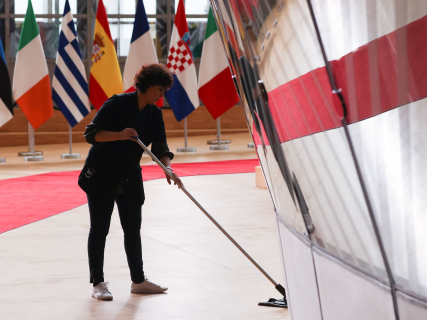

Brussels is a city. But it is a long-duration bureaucratic performance, a mix between contemporary ballet, eternal congress and "escape room" with no exit. A stage that never fully closes, in case someone decides to announce a "historic" agreement at eleven fifty-nine at night, with a look of heroic exhaustion and a crooked tie as proof of sacrifice. The curtain always remains halfway down, like the blind of a bar that hesitates between closing or serving "the last one, really".
Under a meticulously designed gray light -neither depressing nor hopeful, simply standardized- a cast of characters recognizable at first glance parades: accreditations hanging like secular scapulars, daily allowances converted into natural right, sober backpacks and an almost religious devotion to non-papers, those ethereal texts that say nothing, bind no one and, even so, produce an oceanic traffic of emails, versions, meetings and an immediate satisfaction for having done something that commits absolutely to nothing, but that "had to be circulated."
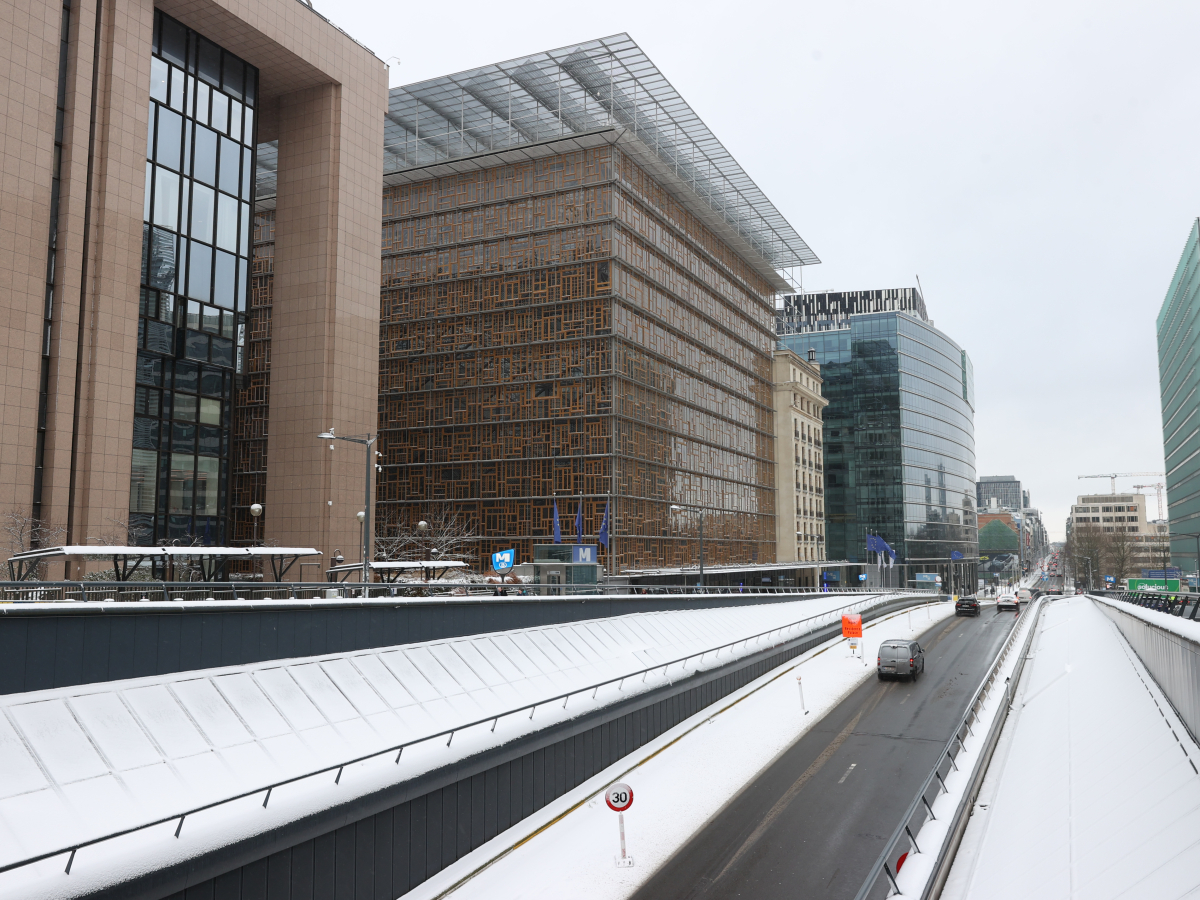
For years I observed this theater from different rows. At first, with youthful faith that every word mattered. Then, with the uncomfortable suspicion that many mattered considerably less. And finally, with the stoic serenity of one who has survived too many “historic moments,” “final texts,” and “last opportunities”, proclaimed before mid-morning coffee and discreetly buried before the evening wine. Brussels has that prodigious talent: everything is transcendental for a few hours and perfectly forgettable the next day, without anyone blushing.
Before the protagonists dare to occupy the center of the stage, it is advisable, by simple instinct of narrative preservation, to put order in the cast of this choral work where divas abound, conscious extras are scarce, and no one seems to have read the complete program.
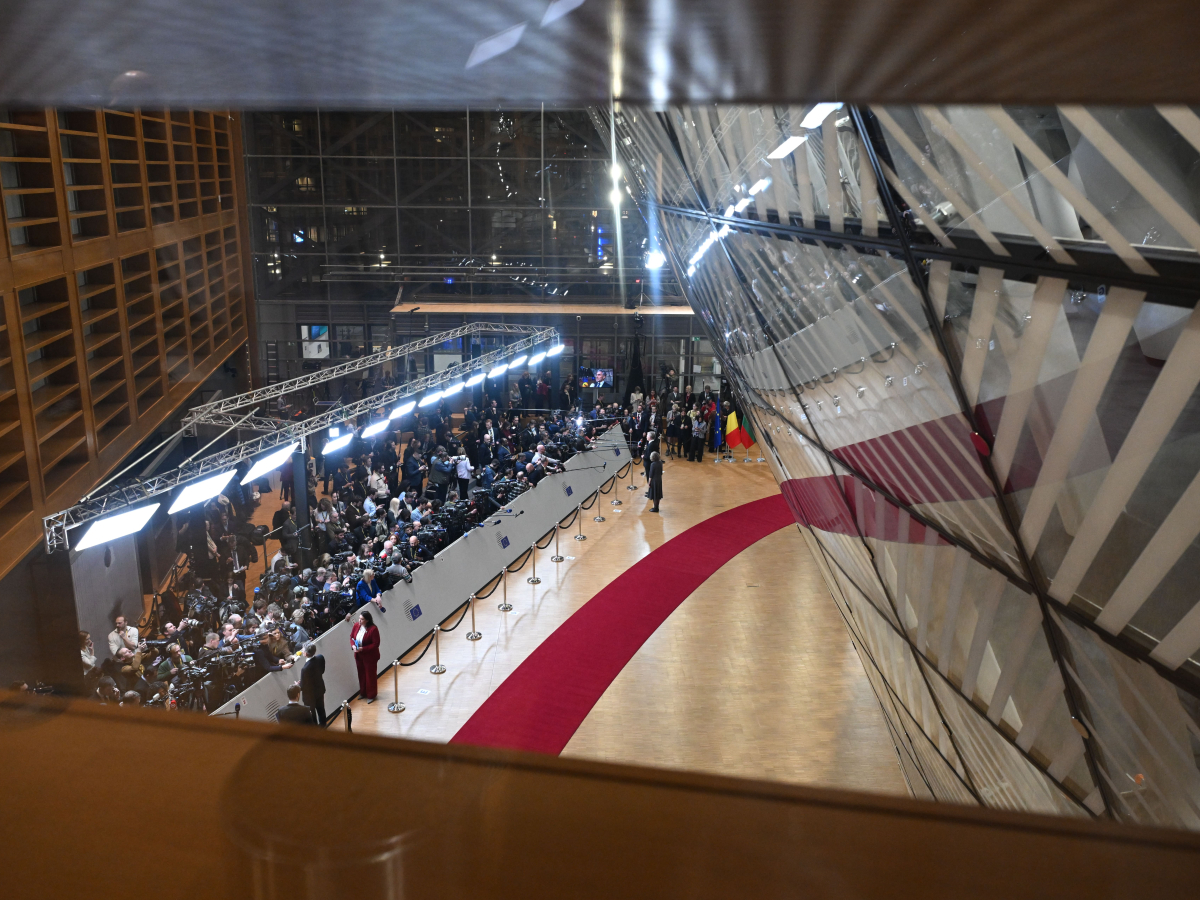
There is the Commission, that space where commissioners interpret with conviction the solemnity of the office while officials bear the set, the script, the continuity and, if applicable, the blame; there is the Council, a red carpet along which ministers parade, stars of an appearance as brief as it is noisy, who arrive in a hurry, with an entourage and a prepared headline, proclaim Europe between two meetings and leave satisfied, convinced of having rewritten the third act, leaving ambassadors, technical advisors and high-ranking national officials the ungrateful task of reconstructing the text, lowering the epic and translating political enthusiasm into legally viable ambiguity; and there is the Parliament, a mobile stage inhabited by parliamentarians persuaded that the spotlight follows them even when the show continues in another room and the audience begins to look at their watch. To confuse them is human; to assume that they all do the same thing, a carefully cultivated Brussels dogma. Having made this necessary classification of egos, functions and misunderstandings, we can now present the true protagonists of the work.
The protagonist
The undisputed protagonist of this work is the permanent eurocrat. He does not usually present himself with a defined nationality; he speaks of “my country” as one who alludes to an old emotional belonging, let's say as one who mentions a distant cousin whom he no longer invites to weddings. He questions Brussels with pedagogical enthusiasm -its slowness, its obsession with procedure, its toxic love for regulation- although the mere idea of abandoning it causes him clinical unease. He lives convinced that he is building Europe, although his concrete contribution most days consists of rewriting the same paragraph for the sixth time, negotiating adjectives as if they were peace treaties and ensuring that no one can claim that someone objected, not even when philosophizing about abstractions as vaporous as the internal market or budgetary stability. He travels by bicycle out of ecological, institutional and slightly moralizing conviction, wears suits of surprising chromatic neutrality and works in stalled offices where the only noise is the hum of emails marked as “urgent” which, with very high probability, are not and yawns when summoned to an Inter-service meeting.
And yet, he defends Europe with a silently heroic ardor and professionalism, makes a face with official dignity and swallows without reply the umpteenth criticism of the passing national official who, from an arrogance as poorly disguised as it is fleeting, criticizes his work and dismisses him with the comfortable contempt of “eurocrat,” without knowing -nor wanting to know- that it is on those discreet, patient, and obstinate shoulders where the Institution is sustained and that, thanks to them, Europe, clumsy and tired, stumbles forward, but advances.
The antagonists
A little further up, on the noble stage, appear the ambassadors. They are characters from classical theater: contained gesture, measured words and an admirable supernatural ability to defend with conviction texts that no one has read completely with the serenity and rigor of someone who knows that, in the capital, the profuse, diffuse and confused are not flaws, but structural virtues. They live installed in a perpetual meeting with themselves. They deal with their counselors to understand -sometimes an impossible mission- technicalities that exceed the capacity of a legal hack and to be able to declaim before their counterparts the incomprehensible and varied matters they have to defend with almost priestly solemnity. They draft kilometer-long telegrams that capitals will read diagonally, receive contradictory and late instructions with professional stoicism and represent their country with religious faith, even when it is not entirely clear what the hell their country expects from them today. Surprise and contradiction, in this profession, are frowned upon and considered a lack of method.
Holding up the entire building -though they are rarely seen- are the advisors. Technical officials transplanted from national ministries, they are simultaneous translators of others' wills, tamers of impossible agendas, and administrative firefighters. Their mission is not to shine, but to prevent the fire, although sometimes it is not clear if the fire is real or part of the ritual. They wander with a somnambulant gaze through working groups where tedium and repetition have been elevated to a system and the comma to a matter of State. There, the placement of a word is discussed for hours with an intensity and eloquence that can only be explained because someone, somewhere, will have to apply what has been written.
The script works with immutable rituals: meetings to prepare other meetings, acronyms that replace thought, and an almost mystical faith that adding one more 'whereas' can, now yes, save the European project. Compared to the fine stylists of European discourse, the counselor is a tough brawler: endures endless sessions, maintains impossible positions, and knows exactly how far one can concede without the edifice collapsing. He masters the supreme art of, if necessary, saying nothing for forty minutes and, when speaking without instructions from the capital -because speaking is imperative in these parts and lack of instructions is common-, doing so with such ambiguity, firmness, and conviction that no one can say there was no position, even if it is not understood what it is.
They draft reports that almost no one will read, but that everyone will urgently demand, because in the capitals the final destination of paper is not to inform or convince: it is to calm consciences and justify the work. To this is added an unknown but fundamental function for their own survival: logistics managers, a mix of an obsequious companion and a permanently distressed official. They are responsible for ensuring that high authorities survive their pilgrimages to the Berlaymont Basilica or meetings in the imperial Europa building always with the feeling that any logistical failure can end in administrative tragedy or, even worse, in a hierarchical scolding.
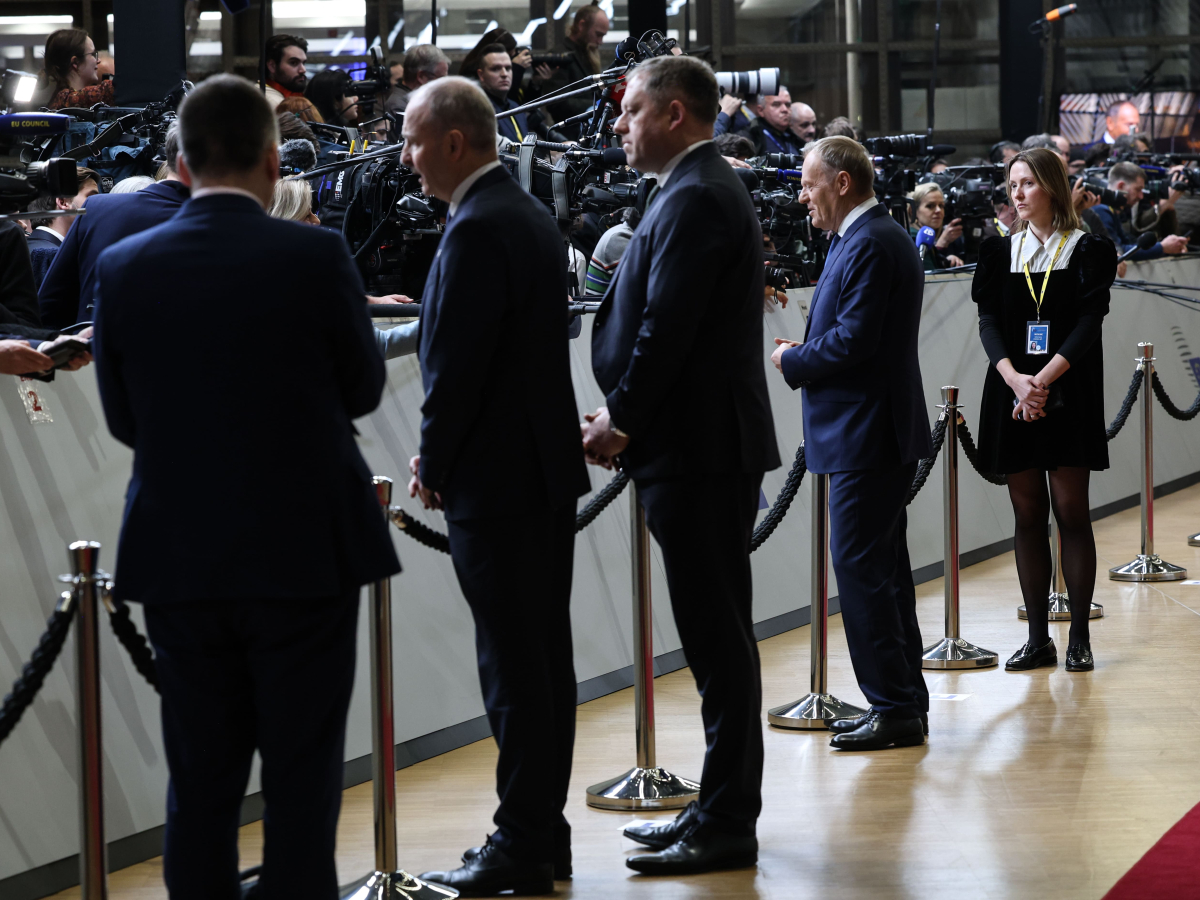
Because in these parts, the assured logistics is more important than the daily work. They manage dinners, cars, rooms, coffees, awkward silences and last-minute crises, fully aware that a mediocre dossier can survive if the car arrives on time. They don't appear in the photos, but without them there would be neither photos nor a meeting: the set would fall apart before the first briefing, the ritual dance of the large German sedans during the European Councils would not find possible choreography, the European quarter would not be able, finally, to recover its calm and that almost childish joy of the advisor who truly revives, inhaling with an almost obscene satisfaction the smell of kerosene from the official plane taking off, that unequivocal perfume that confirms to him that the authority has left, responsibility too, and that the function -for today- has ended.
Then there is the national official passing through, who arrives with an air of epic crusade and leaves convinced of having saved national sovereignty against a technical-level subgroup. He speaks a labored English and scarce French, but with a confidence that would make Churchill himself pale. He returns to his ministry saying that “Brussels understands nothing,” without realizing that Brussels understood perfectly… and took note to use it against you in the next negotiation.
All this cast converges in the COREPER, that place where everything seems to be decided and, nevertheless, nothing is actually closed and, precisely for that reason, everything can be declared consensual. There, consensus is not sought: it is proclaimed, even when the only common thing is the impossibility of agreeing because it is not already agreed upon. The non-consensus, well-groomed and elegantly drafted, ascends to provisional consensus and is elevated with formal naturalness to the superior level. It is a secular liturgy: impeccable ritual, guaranteed solemnity and the conviction that any text that has survived the process deserves to continue its institutional pilgrimage.
The MEP completes the institutional distribution. He is a migratory bird with a precise calendar. He appears on Tuesday convinced that Parliament is the center of the universe, disappears on Thursday convinced that Brussels is incomprehensible, and on Fridays inaugurates something in his constituency. He votes on dossiers of dozens of pages with democratic conviction and an intuition - quite accurate - that someone else wrote a good part of the script. He firmly believes in Europe, although he doesn't always know very well what time the plenary session begins. He moves with institutional gravity surrounded by assistants, postmodernist juniors and master's degree knowledge with a desire to grow and future ambition and true connoisseurs of the topics and parliamentary workings. He tweets on X, gives press conferences, indulges in interviews and makes, like consumer television commercials, small daily sketches for his website with the hope, generally unfulfilled, that someone will follow them.

The Machinations
Outside the institutional focus, the stage machinery unfolds, that parallel world without which the scenery would fall apart. Here lives a stateless aristocracy, without a clear flag, but with an impeccable social agenda. In Brussels, no one stays “to have a drink”: one networks. The cocktail is liquid diplomacy, dinner informal negotiation with dessert and the morning run through the Cinquantenaire, a cardiovascular activity with evident professional benefits. In Brussels, sweating is also part of the curriculum.
The lobbyist -who prefers to call himself a public affairs consultant to sleep better- moves here like a fish in institutional water. He says he works “at the intersection between public policies and stakeholders,” which means he knows who decides, when, and at what time it is convenient to call them. He calls “informal conversations” meticulously prepared meetings and “listening to concerns” defending interests with exquisitely polite perseverance. The NGO one shares methods and causes, although he sleeps somewhat better with a clearer conscience.
The competition lawyer, from solemnly named firms, defends with uninhibited eloquence impossible mergers at astronomical prices with an almost poetic prose and a reverential respect for the Commission, like the sinner before the confessor: with strategy, calculated repentance and tons of annexes.
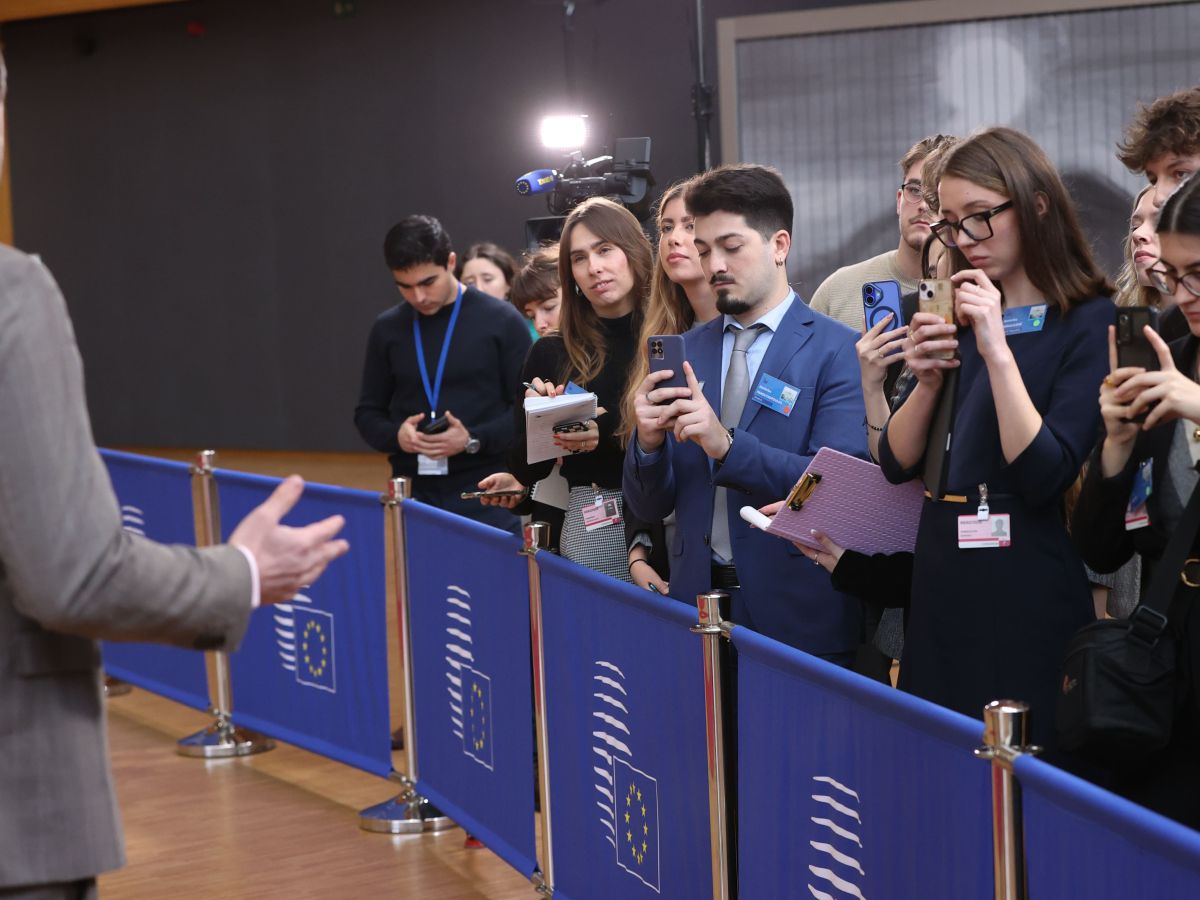
And there are the journalists. Attentive observers, uninhibited inquisitors, somewhat skeptical and permanently caffeinated. They live on rumors, off the record and calls that begin with a "don't quote me". They always have the feeling that something enormous is about to happen, an intuition that Brussels takes it upon itself to deny with admirable constancy. When it happens -because sometimes it happens- it's in the early hours of the morning, it's explained with difficulty and celebrated little. The next day, everything returns to bureaucratic normality. Added to this are the Commission's morning press conferences, daily exercises in institutional prestidigitation in which achievements and initiatives on an astonishing plurality of issues are sold, almost all of them cumbersome, dense and carefully incomprehensible, while uncomfortable questions are parried with choreographed elegance and untimely ones receive the universal comfort of "no comment".
Fall of the curtain
On Friday afternoons the European quarter empties and a peculiar silence remains, as if someone had unplugged the machinery without warning. Brussels without expatriates is almost a normal city. Most, deep down, think it is ugly, gray, and incomprehensible. And, yet, no one leaves. Because deep down, even when we don't admit it, we know that something is decided here. Not always well. Not always clear. But something.
I also stayed. Many years. Now I observe this theater from the stalls, with contained irony and a well-managed nostalgia. Brussels does not make you fall in love: it creates habit. It does not seduce: it structures. Like the European Union itself: imperfect, debated, bureaucratic… and, despite everything, surprisingly difficult to abandon.