The European Commission has proposed to make August 8 the European Day in Memory of Victims of Work Accidents and for the Protection and Dignity of Workers, coinciding with the 70th anniversary of one of the greatest labor tragedies in European history.
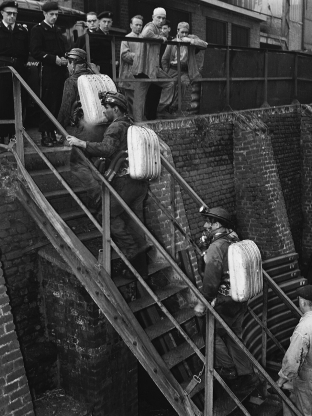
The date commemorates the fire at the Bois du Cazier mine, in Marcinelle (Belgium), where 262 workers of 12 nationalities died on August 8, 1956. Many of them were Italian immigrants who had moved to Belgium to work in coal mines.
The Marcinelle disaster, the origin of the proposal
The fire started in one of the Bois du Cazier shafts and trapped hundreds of miners. Among the victims were 136 Italians, as well as Belgian workers and those from other European countries.
The Commission believes that this accident symbolizes both the labor risks faced by workers during the post-war European reconstruction and the transnational nature of the labor movements that accompanied the birth of the community project.
The Executive Vice-President of the European Commission responsible for Social Rights and Employment, Roxana Mînzatu, already announced in July the support of the community Executive for the initiative. Brussels aims for the day to serve to keep the memory of the victims alive and to strengthen the prevention of accidents and occupational diseases.
The European Parliament has already given its support
The proposal has broad prior support from the European Parliament. The plenary approved on May 21 a resolution that precisely called for making August 8 a European day dedicated to the victims of work accidents.
The text was passed with 395 votes in favor, 12 against, and 41 abstentions. The MEPs proposed that the commemoration be accompanied by prevention and awareness activities in companies, public institutions, educational centers, and workplaces.
The initiative has also been supported by several member states. Italy formally brought the request to the Employment and Social Policy Council held on June 29, along with Belgium and Hungary and with the support of countries such as Spain, Germany, Romania, and Malta. Croatia, Greece, and Poland later joined.
More than 3,000 work-related deaths per year in the EU
The initiative is not limited to the memory of Marcinelle. The European Parliament has used the proposal to demand new advances in workplace safety and health.
In 2023, 3,298 fatal workplace accidents were recorded in the European Union. In addition, around 2.8 million non-fatal accidents forced the affected worker to be off work for at least four days.
The goal of the European institutions is to move towards the so-called "Vision Zero" strategy, which aims to minimize work-related deaths.
Members of the European Parliament have also called for strengthening labor inspections, improving prevention, and addressing new risks arising from the transformation of the labor market.
Artificial intelligence and heat among the new risks
Among those risks is the increasing use of artificial intelligence and algorithmic systems to organize, direct, or evaluate work.
The Parliament has asked the Commission to analyze the consequences that these technologies may have on the health and safety of workers, especially when they cause an intensification of work pace, excessive surveillance, or lack of transparency in decision-making.
It also calls for strengthening protection against factors associated with climate change, such as heat waves, extreme weather events, and air pollution, which particularly affect workers exposed for long periods outdoors.
The Brussels proposal now comes on the eve of the 70th anniversary of the Marcinelle tragedy, which is commemorated this Saturday, August 8. The goal is for the memory of that disaster to be permanently incorporated into the European calendar as a day dedicated to both the victims and prevention.