

The Government seeks on the international stage to normalize the situation in Ceuta and turn the page as soon as possible with its community partners. After the meeting of the Interior officials of the bloc, held days after the start of the migration crisis, the contacts in Brussels have been channeled by the team of the Ministry of Foreign Affairs. However, this Thursday, Minister Fernando Grande-Marlaska will sit again at the table of the Twenty-Seven and will ask for new tools to strengthen border management.
In the minister's team, there are fears that the reform of Frontex's role that the European Commission is working on will serve to reopen the Migration and Asylum Pact again, at a time when the capitals are still beginning to apply its provisions. Therefore, at his own request, Grande-Marlaska will inform his counterparts in the morning about the current state in the autonomous city, to then request an enhancement of cooperation with third countries that allows improving the return levers.
Brussels prepares a reform of Frontex
One of the lessons learned in the European context is the acknowledgment of the need to double down on early warnings. This is where the reform of Frontex will come into play, announced by the President of the European Commission, Ursula von der Leyen, during the State of the Union address (SOTEU). The proposal seeks for the agency to obtain a better understanding of the situation at the external borders, accompanied by "greater operational support in the context of managing the external borders," as indicated by the commissioner in charge, Magnus Brunner.
The issue is particularly relevant for Spain due to the position of Ceuta and Melilla as external borders of the European Union. For the Government, strengthening European capacities must allow anticipating scenarios of migratory pressure and improving coordination among member states, without necessarily implying a revision of the regulatory framework that the capitals have just begun to apply.
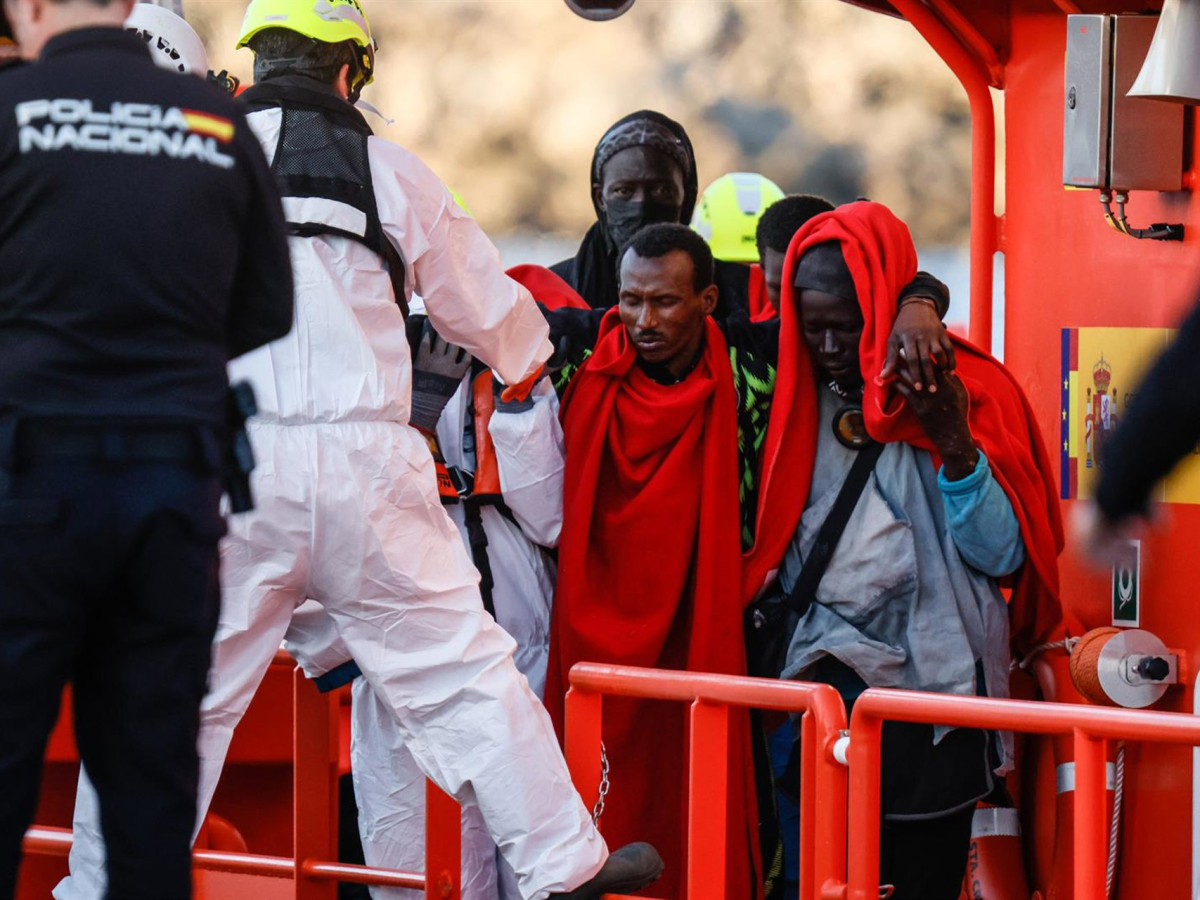
In this context, the Spanish Executive wants the European response to focus on strengthening the available tools, rather than opening a new legislative process that could alter the balance reached during the negotiation of the Migration and Asylum Pact.
In parallel, Brussels also wants to develop a "flexible framework" to take advantage of the tools available under the Digital Services Act (DSA). The idea is to create new protocols that guarantee structured and immediate cooperation, as well as the exchange of information with large online platforms.
The objective is to improve the capacity for anticipation in the face of migratory pressure situations and to allow community institutions and member states to react more quickly to scenarios that develop through the digital environment. The Commission thus wants to integrate existing monitoring and coordination capabilities within a more structured European response.
Brussels wants to accelerate returns
The European Commission also has among its objectives to accelerate the returns of migrants in irregular situations in the region. In fact, sources from the Spanish Government coalition confirmed that in recent days contacts between community institutions and the heads of Foreign Affairs and Interior had intensified to push forward the Royal Decree-law that contained the measure.
In Sumar, they celebrate that the text was ultimately not approved in the last Council of Ministers because they assert that, despite fitting into "the Migration and Asylum Pact," it does not fit "in a progressive Executive." "Spain cannot be the testing ground for this hardening of policies," commented MEP Estrella Galán in an informal conversation with journalists this Wednesday.
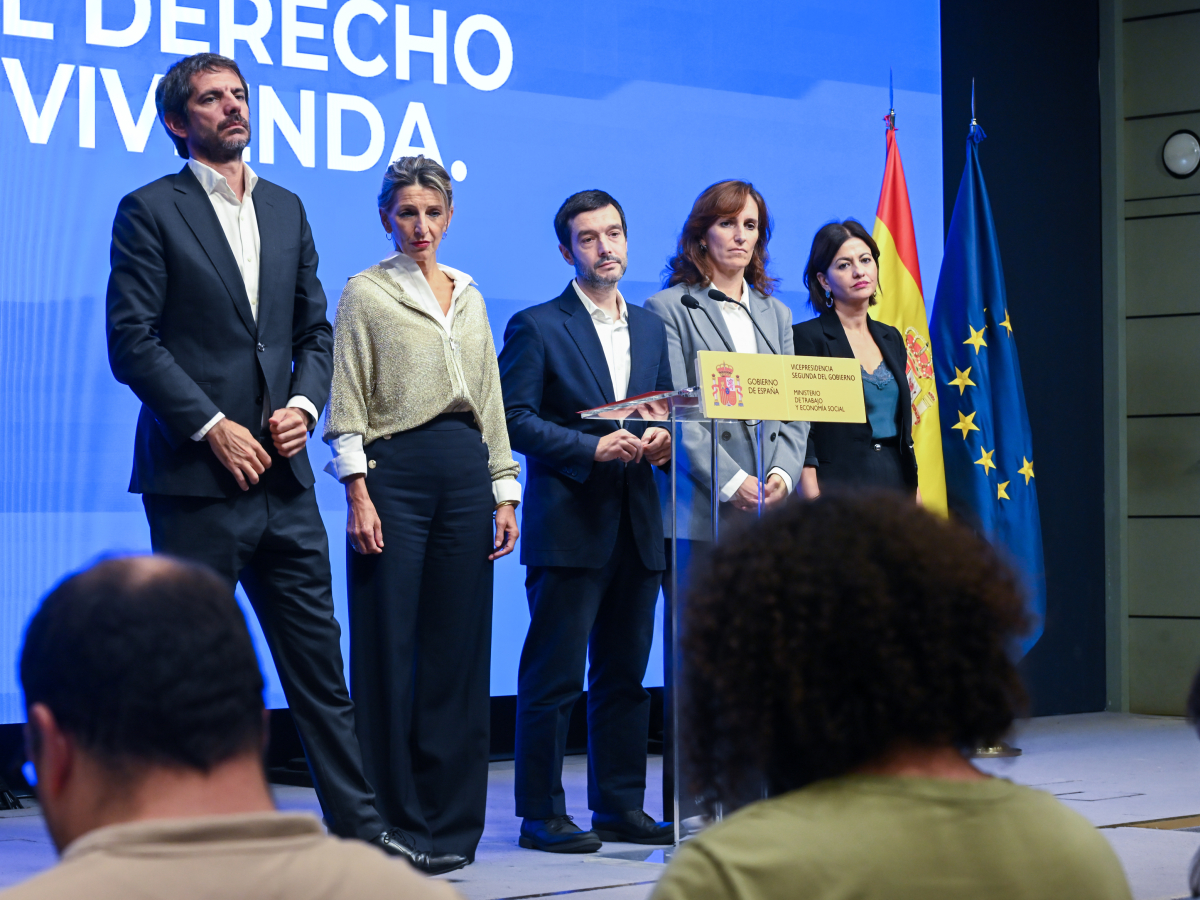
The position of the government partner outlines the second dimension in the debate that the Government has opened: the adaptation of national tools to the new European framework of migration and asylum, but also the political limits within the coalition itself. The discussion occurs, moreover, when member states are beginning to transfer the new obligations derived from the Migration and Asylum Pact to their national regulations and procedures. In this context, any additional modification of return instruments may have implications for the homogeneous application of the European framework.
Germany requests new tools
For its part, the German Government, led by Friedrich Merz, wants new legislative measures that allow to deny entry or carry out returns without individual asylum procedures in the case of migrants "used in a hybrid attack".
This was reflected in the amendments introduced by his party, the CDU, in a resolution during the political convention of the European People's Party. That is to say, they seek to suspend asylum in crises like the one experienced last July. The issue raised the pressure on the European debate. While Spain demands tools to improve the management of external borders and returns without altering the balance of the Pact, Germany proposes to expand the margin of action of States in situations considered as hybrid attacks. Diplomatic sources insist that this request is already regulated in national legislation and provides for the automatic suspension of resources with third countries. "The Migration and Asylum Pact achieves a balance between responsibility and solidarity," they defend in the Executive.

The team of Minister Marlaska defends that it wants to continue "using our asylum procedure", with the endorsement of the European Court of Human Rights, while asking to "provide tools to the Pact without the need for the suspension of the right to asylum".
The Spanish position, therefore, is to strengthen operational and cooperation capacities with third countries without altering the principle of access to the international protection procedure. It is at this point that the Government wants to position its dialogue with the rest of the European partners.
Marlaska seeks to reduce tension among the Twenty-Seven
Marlaska will seek in the meeting to reduce the tension initially experienced among his counterparts due to "the lack of solidarity". Sources from the Ministry believe that one of the conclusions of the management of this crisis has been precisely the lack of support from many European partners. "What it achieved is to show the tremendous weakness of the bloc. The EU can be fragmented with a snap," expresses a diplomat who recalls that this had not happened in crises like that of Lampedusa.
The reference to European coordination is particularly relevant for Spain, which aims to prevent a situation of migratory pressure at an external border from generating uncoordinated national responses. The Government wants the management of Ceuta to be integrated within a common European response, with shared tools and anticipation mechanisms that allow action before the pressure reaches critical levels. "We will ask to look at Schengen broadly on the map," they repeat in the minister's team.
The meeting of the Interior ministers of the Twenty-Seven will thus serve to measure how much room there is to strengthen border management tools, cooperation with third countries, and return, without opening a new negotiation on the Migration and Asylum Pact.
For the Spanish Government, the priority starts with consolidating the framework that the capitals are beginning to apply and taking advantage of the new capabilities that Brussels is preparing, especially in terms of Frontex, early warnings, and operational cooperation. At the same time, the crisis in Ceuta has once again brought to the table a question that runs through the entire European border system: to what extent are member states prepared to respond in a coordinated manner when pressure concentrates on an external border of the Union.