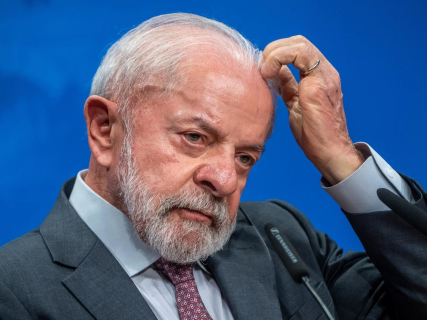
Surveys Brazil elections: Lula leads Bolsonaro in the first round, but the result evens out in the second.

The simple average of the last five polls gives Lula 41.6% and Flávio Bolsonaro 38.5% in the first round, while both are practically tied in a possible second round.

3 minutes

fotonoticia 20260919175527 1920

fotonoticia 20260919175527 1920

Add DEMÓCRATA to Google

Ask FREN

Published

Last updated

3 minutes

Most read

The next October 4 will be held the first round of some crucial elections in Brazil. Again, Luiz Inácio Lula da Silva and Flávio Bolsonaro are vying for the Presidency of their country. So far, the polls from Quaest, Nexus/BTG, Datafolha, Palver, and AtlasIntel show differences in that initial visit to the elections, but all the available simulations of a second round between the two place the distance within the margin of error of each study.

The most recent poll of the five is from Quaest, conducted between September 24 and 27 and released on the 28th. The study, commissioned by Globo and O Globo, places Lula at 39% of voting intentions and Flávio Bolsonaro at 34%. Behind them are Augusto Cury and Ronaldo Caiado, each with 4%, and Renan Santos, with 3%. Zema and Samara register 1% each.

In the second round simulation between Lula and Flávio Bolsonaro, there is a numerical tie, with 42% for each candidate. The poll also records 19% of blank, null votes, or voters who would not go to vote, and 5% of undecided voters. The work was conducted with 2,004 interviews, carried out between September 24 and 27, with a confidence level of 95% and a maximum margin of error of two percentage points.

Nexus/BTG: Lula reaches 42% and Flávio, 37%

The Nexus poll for BTG Pactual, conducted between September 25 and 27, places Lula at 42% and Flávio Bolsonaro at 37% in the first round. Augusto Cury and Ronaldo Caiado appear with 5% each, while Renan Santos obtains 4%. Zema and Samara register 1% each.

In the second round, Lula obtains 46% and Flávio Bolsonaro 44%. The difference of two points coincides with the margin of error of the study, also two percentage points. The poll interviewed 2,000 voters by phone and has a confidence level of 95%. 

Datafolha: Lula has 40% and Flávio, 36%

The Datafolha conducted on September 22 and 23 places Lula at 40% and Flávio Bolsonaro at 36% in the first round. Augusto Cury appears with 5%, Ronaldo Caiado with 4%, and Renan Santos with 3%, while Zema and Samara reach 1%. 

In the second round scenario, Lula obtains 47% and Flávio Bolsonaro 45%. The poll was conducted through 2,002 face-to-face interviews in 125 municipalities, with a margin of error of two percentage points and a confidence level of 95%. 

Palver: Flávio surpasses Lula by one point in the first round

The Palver survey conducted in September places Flávio Bolsonaro at 42% and Lula at 41% in the first round. Renan Santos appears with 11% and Augusto Cury with 2%. The difference between the first two is within the margin of error. 

In a potential second round between Lula and Flávio Bolsonaro, the PL candidate reaches 47% against Lula's 43%. The study also records 9% of blank, null votes, or voters who would not go to vote, and 1% of undecided voters.

AtlasIntel: Lula reaches 45.8% and Flávio at 43.4%

The AtlasIntel/Bloomberg study conducted between September 17 and 22 places Lula at 45.8% and Flávio Bolsonaro at 43.4% in the first round. Renan Santos obtains 4.5%, Augusto Cury 2.1%, and Ronaldo Caiado 1.3%. 

In the second round, Lula reaches 47.7% and Flávio Bolsonaro 47.4%, a difference of three tenths. The survey included 5,015 interviews through random digital recruitment and has a margin of error of one percentage point.

Here are the latest polls for the first round

The five most recent national studies offer a different snapshot regarding the percentages, due to their different dates of execution, samples, and interview methods. Lula appears ahead of Flávio Bolsonaro in Quaest, Nexus/BTG, Datafolha, and AtlasIntel, while Palver records a one-point difference in favor of the PL candidate. 

Survey Fieldwork date Lula
1st round
Flávio Bolsonaro
1st round
Lula
2nd round
Flávio Bolsonaro
2nd round
Quaest September 24-27 39% 34% 42% 42%
Nexus/BTG September 25-27 42% 37% 46% 44%
Datafolha September 22-23 40% 36% 47% 45%
Palver September 20-21 41% 42% 43% 47%
AtlasIntel/Bloomberg September 17-22 45.8% 43.4% 47.7% 47.4%

The table allows for comparing the two main scenarios that the institutes are measuring. In the first round, Lula's advantage ranges between 2.4 points from AtlasIntel and the point of disadvantage recorded against Flávio Bolsonaro in Palver. In the second, the differences are even smaller in the five studies.

The average of the five polls shows an almost absolute tie in the second round

If a simple average of the five latest polls of the elections in Brazil is calculated, Lula obtains 41.6% and Flávio Bolsonaro 38.5% in the first round. The average difference between them is 3.1 percentage points.

Simple average of the 5 polls Lula Flávio Bolsonaro Difference
First round 41.6% 38.5% 3.1 points
Second round 45.1% 45.1% 0.1 points*

This average is an arithmetic operation of the five polls and not a weighted average. It does not take into account the size of the samples, the date of each fieldwork, nor the methodological differences between institutes. Therefore, it serves to summarize the data from these five surveys, but it does not constitute a new survey nor an independent estimate.

More key points, information and questions with FREN

AI-GENERATED CONTENT

What are the next steps in the electoral process after the first round in Brazil?

After the first round of general elections in Brazil (presidential and legislative), the process does not go "on pause," but rather enters a very regulated phase under the supervision of the Electoral Justice, headed by the Superior Electoral Court (TSE). Broadly speaking, four blocks follow in sequence: closing the scrutiny and validating results, a window for challenges and appeals, formal proclamation of elected officials, and, if applicable, the campaign and voting of the presidential runoff.

Closing the scrutiny and validating results

Immediately after the first round voting day (for example, October 4, 2026, according to the official TSE calendar for those elections), the following takes place:

  • The preliminary scrutiny, with the dissemination of provisional results on the same election night, based on data transmission from the electronic ballot boxes.
  • The official count, in which the regional electoral courts and the TSE consolidate the data, incorporate records that may have arrived with incidents, and correct any material errors.

For the presidential election, only if a candidate obtains more than 50 % of valid votes (excluding blank and null votes) in this first round is he or she directly elected. Otherwise, the runoff mechanism between the two most voted candidates is activated.

Deadlines for challenges and appeals

Once the official data of the first round are published, a window for challenges opens within the Electoral Justice itself:

  • The TSE calendar provides deadlines of three days, counted from the publication of the corresponding edict, for parties and coalitions to file appeals related to campaign accountability and certain acts of the process.
  • Other types of controversies (for example, requests to annul polling stations or challenges to decisions of regional courts) follow the specific deadlines and channels established in the Electoral Code and the Election Law, always under the jurisdiction of the Electoral Justice.

In practice, many challenges are concentrated in the first days after voting, because the calendar moves quickly towards the possible runoff.

Official proclamation of results

Once the count is closed and the most immediate appeals are processed, the Electoral Justice proceeds to the official proclamation of the results:

  • For the Presidency, the TSE proclaims which candidacies advance to the runoff (if no one won in the first round) or who has been elected if there was an absolute majority.
  • For the Chamber of Deputies, Senate, and state assemblies, the distribution of seats is proclaimed according to the applicable proportional or majority representation rules.

This proclamation is the reference point from which the second round campaign, debates, and logistics of the new presidential voting are organized.

Campaign for the second round

If no presidential candidate surpasses the absolute majority of valid votes, a second round is held:

  • The calendar decided by the TSE for 2026 sets the first round on October 4 and the possible second round on October 25, that is, three weeks later (TSE electoral calendar).
  • In that interval, the campaign reopens only for the two finalist candidates, with specific rules on the duration of propaganda, access to radio and television, and financing limits.
  • The TSE may adopt specific resolutions on propaganda and social media use, as has been seen with decisions on improperly registered profiles or irregular digital campaigns.

It is also the period when campaign account oversight intensifies and official debates between finalists are prepared.

Holding the second round and final closure

The presidential second round is held on the date set by the TSE (for example, October 25, 2026). The scheme repeats:

  • Voting day and dissemination of preliminary results on the same day.
  • Official count and window for appeals, again with short deadlines for challenges.
  • Proclamation of the elected president and vice president by the TSE and subsequent credential delivery, which serves as the basis for the inauguration at the start of the new term.

For the legislative segment (deputies and senators) there is no second round: their results are definitively established after the first round and any challenges resolved in that initial calendar phase.

What are the main constitutional powers of the president of Brazil?

The president of the Federative Republic of Brazil concentrates, according to the 1988 Constitution, the functions of head of State, head of Government, and head of the federal administration. His powers are mainly detailed in article 84 of the Constitution and are grouped into executive, legislative, foreign relations, State defense, and other relevant powers.

1. Executive functions and direction of the federal administration

As head of the federal Executive Power, the president exercises the superior direction of the administration:

  • Freely appoints and dismisses the ministers of State, who are his main collaborators in each government area.
  • Directs the federal public administration with the help of those ministers, setting the general orientation of public policies.
  • Can organize and restructure federal administration bodies by decree, within the limits set by the Constitution itself and by laws.

In this way, he concentrates strong executive power, comparable to other presidential regimes: he not only coordinates the cabinet but defines the political line of the federal Government.

2. Legislative and normative powers

Although the legislative power corresponds to the National Congress, the Brazilian Constitution grants the president a very relevant role in normative production:

  • Legislative initiative in specific matters, especially in areas that directly affect the federal administration and the organization of the State.
  • Sanction, promulgate, and order the publication of laws approved by Congress, thus completing the legislative process.
  • Veto them totally or partially for reasons of unconstitutionality or public interest. The veto can later be maintained or rejected by Congress, but it functions as a very significant political and legal filter.
  • Issue certain acts with the force of law in constitutionally foreseen cases (such as provisional measures), which must then be reviewed by Congress.

This set of instruments makes the president a central actor in the normative process, capable of promoting, modulating, or halting the legislative agenda.

3. Foreign relations

On the international level, the president personifies the Brazilian State:

  • Maintains relations with other States and international organizations, acting as Brazil's highest external representative.
  • Accredits Brazilian diplomatic representatives abroad and receives diplomats from other countries.
  • Negotiates and signs treaties, agreements, and international acts, which are subject to the referendum or approval of the National Congress to acquire full internal validity.

The daily conduct of foreign policy is supported by the Ministry of Foreign Affairs, but the political leadership of that line of action falls on the Presidency.

4. Defense, security, and states of exception

The Constitution also assigns the president a key role in the defense of the State and the constitutional order:

  • Exercises the supreme command of the Armed Forces, setting the general defense strategy together with the high military command.
  • Can declare the state of defense and the state of siege in the foreseen cases, measures that must involve the participation or control of Congress.
  • Is empowered to decree and execute federal intervention in states or municipalities when required to preserve the constitutional order or comply with federal decisions.
  • According to constitutional terms, declares war and makes peace, always with authorization or referendum from the National Congress.

These powers show that the president not only directs ordinary policy but is also the primary guarantor of the democratic order and territorial integrity of the federation.

5. Other relevant powers

Alongside the previous blocks, the Constitution recognizes several additional high-impact powers for the president:

  • Grant pardons and commute or reduce sentences, within parameters set by legislation, which grants him a clemency function in the penal system.
  • Submit a message and a government plan to Congress at the start of each legislative year, exposing the country's situation and the measures considered necessary.
  • Convene and preside over consultative and coordination bodies, such as the National Defense Council, where strategic responses to internal or external threats are articulated.
  • Propose various measures of public interest within his powers, thus guiding the country's general political agenda.

Together, these powers depict a Presidency with decisive weight in all the core centers of state power: daily government, normative elaboration, external projection, defense, and articulation of federal institutions.

What has been the political and professional trajectory of Luiz Inácio Lula da Silva?

Luiz Inácio Lula da Silva (b. 1945) is one of the great references of the Latin American left and a central figure in Brazilian politics over recent decades. His trajectory combines rising from a very humble origin, union leadership in the metallurgical industry, founding the Workers' Party (PT), three presidential terms interrupted by a corruption conviction later annulled, and a return to power that symbolizes, for many, a "second political chance."

Born in Caetés, in Brazil's impoverished northeast, Lula migrated with his family as a child to the state of São Paulo, following the classic pattern of rural exodus toward industrial hubs. He left school early to work as a shoeshiner, shop assistant, and finally metallurgical worker. This experience in the industrial labor world definitively shaped his political vision and his way of building leadership, strongly supported by direct contact with the grassroots.

In the 1970s, during the Brazilian military dictatorship (1964‑1985), Lula emerged as a prominent union leader in the industrial belt of ABC Paulista. As president of the Metallurgical Workers' Union of São Bernardo do Campo and Diadema, he led massive strikes for wage improvements and recognition of labor rights against an authoritarian regime that combined political repression with tight control of workers' organization. These strikes, harshly repressed, helped erode the regime's legitimacy and positioned Lula as a national figure.

In the late seventies and early eighties, Lula made the leap from union struggle to party politics. In 1980 he was one of the main founders of the Workers' Party (PT), an innovative project seeking to articulate unions, social movements, base ecclesial communities, and sectors of the intellectual left. The PT aimed to be a democratic, plural, and working-class-rooted option against both military authoritarianism and traditional parties.

With the gradual end of the dictatorship, Lula began competing electorally. In 1982 he ran unsuccessfully for governor of São Paulo, and in 1986 he was elected federal constituent deputy, participating in the work on the new 1988 Constitution. However, his projection was mainly consolidated through presidential elections: he was the PT candidate in 1989, 1994, and 1998, losing all—initially to Fernando Collor de Mello, then to Fernando Henrique Cardoso—although each defeat increased his visibility and the parliamentary and territorial weight of the PT.

In 2002, on his fourth attempt, Lula won the presidential elections with a discourse of social change but accompanied by an explicit commitment to macroeconomic stability. He assumed the presidency in 2003 and was reelected in 2006. His first two terms were characterized by a combination of economic growth, increase in the real minimum wage, credit expansion, and social policies with great symbolic and material impact, such as the Bolsa Família program. Millions of people rose out of extreme poverty and there was significant mobility toward what was called a new Brazilian "middle class."

At the same time, Lula's governments promoted a more active role for Brazil on the international stage, emphasizing Latin American integration, multilateralism, and South-South cooperation. Brazil approached other emerging countries—such as China, India, or South Africa—and became a key actor in forums like the G20, articulating the voice of developing economies in debates on trade, climate, or financial regulation.

After leaving the presidency in 2011 due to term limits, Lula maintained enormous political influence inside and outside the PT. However, his trajectory was deeply altered by the Lava Jato operation, an extensive investigation into corruption in the state oil company Petrobras and other firms. In 2017 he was convicted of corruption and money laundering, and in 2018 he entered prison, which prevented him from running in that year's presidential elections. His supporters denounced a political instrumentalization of the judicial apparatus to exclude him from the contest.

In 2019 and 2021, Brazil's Supreme Court progressively annulled his convictions due to jurisdictional defects and violations of procedural guarantees, which rehabilitated his political rights. With eligibility restored, Lula ran again in the 2022 presidential elections and won by a narrow margin against then-president Jair Bolsonaro. He took office for his third term in January 2023, this time leading a more polarized country, with considerable economic and environmental challenges, and with the task of rebuilding institutions after the January 8, 2023 attacks against the seats of State powers in Brasília.

Overall, Lula's trajectory synthesizes the transition from a grassroots union leader to a statesman of global reach, with a biography marked by social mobility, confrontation with authoritarian regimes, management of redistributive policies, and a controversial judicial chapter that, far from removing him from the scene, has reinforced the symbolic weight of his figure in Brazilian and international politics.

How did Lula's social policies influence the reduction of poverty and inequality in Brazil? What role does Lula play in international politics and in building alliances among Global South countries? How has the Lava Jato case affected public perception of Lula and the Brazilian political system in general?

Play

Test your knowledge with FREN!

How much do you know about this topic? Answer the following 3 questions.

On what day will the first round of the presidential elections in Brazil be held?

Question 1 of 3

According to the simple average of the five polls, what percentage does Lula get in the first round?

Question 2 of 3

What was the result of the second round simulation between Lula and Flávio Bolsonaro according to the Quaest poll?

Question 3 of 3