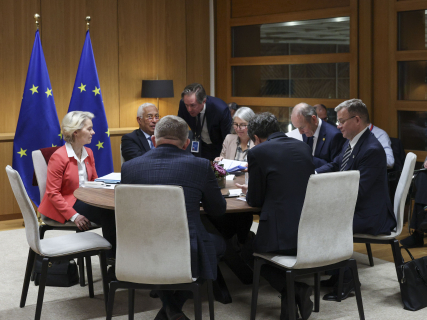
The domestic policy of Europeans conditions the agreement for the next budget

French elections, the fragility of coalitions in the Netherlands and Belgium, and political uncertainty in Sweden and Italy condition the room for maneuver of the Twenty-Seven, who are seeking to reach before December an agreement on the Community budget for 2028-2034

b152c34b e040 4403 ba81 ef0d319d7e19

b152c34b e040 4403 ba81 ef0d319d7e19

Add DEMÓCRATA to Google

Ask FREN

Published

6 minutes

Most read

Hasta el día de las elecciones (29 de noviembre) se muestran los resultados de las elecciones generales anteriores, las del 23 de julio de 2023.

Resultados de las elecciones generales del 29N en directo

Elecciones generales del 23 de julio de 2023 · Congreso de los DiputadosSenado

Escrutado: 100,00 %Votantes: 24.952.447Participación: 66,59 %

Votos

PartidoEscañosVotosPorcentaje
PP1378.160.83733,06 %
PP: 137 escaños. Se presenta con estos nombres:
  • PARTIDO POPULAR (PP)131 escaños
  • PARTIDO POPULAR / PARTIT POPULAR (PP)5 escaños
  • PARTIT POPULAR / PARTIDO POPULAR (PP)1 escaño
PSOE1217.821.71831,68 %
PSOE: 121 escaños. Se presenta con estos nombres:
  • PARTIDO SOCIALISTA OBRERO ESPAÑOL (PSOE)85 escaños
  • PARTIT DELS SOCIALISTES DE CATALUNYA (PSC-PSOE)19 escaños
  • PARTIDO DOS SOCIALISTAS DE GALICIA-PSOE (PSdeG-PSOE)7 escaños
  • PARTIDO SOCIALISTA DE EUSKADI-EUSKADIKO EZKERRA (PSOE)5 escaños
  • PARTIDO SOCIALISTA DE ISLAS BALEARES-PSOE (PSIB-PSOE)3 escaños
  • PARTIDO SOCIALISTA DE NAVARRA-PSOE (PSN-PSOE)2 escaños
Vox333.057.00012,38 %
Sumar313.044.99612,33 %
Sumar: 31 escaños. Se presenta con estos nombres:
  • SUMAR10 escaños
  • SUMAR - EN COMÚ PODEM (SUMAR - ECP)7 escaños
  • SUMAR ANDALUCÍA (SUMAR)5 escaños
  • COMPROMÍS - SUMAR: SUMEM PER GUANYAR (SUMAR - COMPROMÍS)4 escaños
  • SUMAR GALICIA (SUMAR)2 escaños
  • SUMAR CANARIAS (SUMAR)1 escaño
  • SUMAR ARAGÓN1 escaño
  • SUMAR MÉS (MÉS PER MALLORCA-MÉS PER MENORCA-SUMAR)1 escaño
ERC7466.0201,89 %
Junts7395.4291,60 %
EH Bildu6335.1291,36 %
EAJ-PNV5277.2891,12 %
BNG1153.9950,62 %
CCa1116.3630,47 %
UPN152.1880,21 %
PACMA0169.2370,69 %
PACMA: 0 escaños. Se presenta con estos nombres:
  • PARTIDO ANIMALISTA CON EL MEDIO AMBIENTE (PACMA)0 escaños
  • PARTIT ANIMALISTA AMB EL MEDI AMBIENT (PACMA)0 escaños
CUP-PR099.6440,40 %
FO046.2740,19 %
NC-bc045.5950,18 %
PDeCAT-E-CiU032.0160,13 %
RECORTES CERO023.4210,09 %
PUM+J023.2900,09 %
PUM+J: 0 escaños. Se presenta con estos nombres:
  • POR UN MUNDO MÁS JUSTO (PUM+J)0 escaños
  • POR UN MUNDO MAIS XUSTO (PUM+J)0 escaños
  • BIDEZKO MUNDURANTZ (PUM+J)0 escaños
U.P.L.023.2010,09 %
EXISTE020.4400,08 %
EXISTE: 0 escaños. Se presenta con estos nombres:
  • TERUEL EXISTE - COALICIÓN EXISTE (EXISTE)0 escaños
  • ARAGÓN EXISTE - COALICIÓN EXISTE (EXISTE)0 escaños
PCTE013.3820,05 %
GBAI099380,04 %
SY096970,04 %
Adelante091910,04 %
JM+082930,03 %
ESCAÑOS EN BLANCO079860,03 %
XAV073620,03 %
BQEX058070,02 %
CJ056200,02 %
FE de las JONS046830,02 %
PAR041730,02 %
PCTC038750,02 %
ESPAÑA VACIADA031580,01 %
PH029020,01 %
ASTURIAS EXISTE EV023140,01 %
XH019310,01 %
VP019170,01 %
Zsi018430,01 %
VB017740,01 %
POR MI REGIÓN016980,01 %
AHORA CANARIAS-PCPC016740,01 %
PARTIDO AUTÓNOMOS014460,01 %
EVB014420,01 %
CpM012980,01 %
JxG012180,00 %
EV-PCAS-TC011840,00 %
PREPAL09640,00 %
Somos Cc09630,00 %
ALM08740,00 %
PCTG07020,00 %
F.I.A.05060,00 %
3e04840,00 %
Ud.Ca04630,00 %
ESCONS EN BLANC04620,00 %
GITV03660,00 %
PUEDE02690,00 %
EVC02650,00 %
LB02630,00 %
PCTE/ELAK02590,00 %
UNIDOS SI02530,00 %
+RDS+01650,00 %
CCD01530,00 %
FUERZA CÍVICA01150,00 %

Los partidos que se presentan con varios nombres van juntos: pasa por encima del ? para ver el detalle. Porcentajes sobre votos válidos. Resultados definitivos del 23J de 2023.

Escaños (350)

Mayoría: 176
PP: 137 escaños en 2023 (PARTIDO POPULAR: 131; PARTIDO POPULAR / PARTIT POPULAR: 5; PARTIT POPULAR / PARTIDO POPULAR: 1)PSOE: 121 escaños en 2023 (PARTIDO SOCIALISTA OBRERO ESPAÑOL: 85; PARTIT DELS SOCIALISTES DE CATALUNYA (PSC-PSOE): 19; PARTIDO DOS SOCIALISTAS DE GALICIA-PSOE: 7; PARTIDO SOCIALISTA DE EUSKADI-EUSKADIKO EZKERRA (PSOE): 5; PARTIDO SOCIALISTA DE ISLAS BALEARES-PSOE: 3; PARTIDO SOCIALISTA DE NAVARRA-PSOE: 2)Vox: 33 escaños en 2023Sumar: 31 escaños en 2023 (SUMAR: 10; SUMAR - EN COMÚ PODEM: 7; SUMAR ANDALUCÍA: 5; COMPROMÍS - SUMAR: SUMEM PER GUANYAR: 4; SUMAR GALICIA: 2; SUMAR CANARIAS: 1; SUMAR ARAGÓN: 1; SUMAR MÉS: 1)ERC: 7 escaños en 2023Junts: 7 escaños en 2023EH Bildu: 6 escaños en 2023EAJ-PNV: 5 escaños en 2023BNG: 1 escaño en 2023CCa: 1 escaño en 2023UPN: 1 escaño en 2023137121333120232023
  • PP 137
  • PSOE 121
  • Vox 33
  • Sumar 31
  • ERC 7
  • Junts 7
  • EH Bildu 6
  • EAJ-PNV 5
  • BNG 1
  • CCa 1
  • UPN 1

Simulador de Pactos

Pulsa los partidos para sumar sus escaños.Abrir el Simulador de Pactos

Los escaños más ajustados

Quién tiene el último escaño, quién le sigue y los votos que le faltan
  1. GironaJxCAT - JUNTSyPP285 votos

    El último escaño de Girona (el 6.º) es para JxCAT - JUNTS. Le sigue el PP, que necesitaría 285 votos más para quitárselo. Ver Girona ›

  2. CantabriaVOXyPP403 votos

    El último escaño de Cantabria (el 5.º) es para VOX. Le sigue el PP, que necesitaría 403 votos más para quitárselo. Ver Cantabria ›

  3. TarragonaJxCAT - JUNTSyPSC1247 votos

    El último escaño de Tarragona (el 6.º) es para JxCAT - JUNTS. Le sigue el PSC, que necesitaría 1247 votos más para quitárselo. Ver Tarragona ›

  4. AlbacetePSOEyVOX1412 votos

    El último escaño de Albacete (el 4.º) es para el PSOE. Le sigue VOX, que necesitaría 1412 votos más para quitárselo. Ver Albacete ›

  5. SalamancaPPyPSOE1495 votos

    El último escaño de Salamanca (el 4.º) es para el PP. Le sigue el PSOE, que necesitaría 1495 votos más para quitárselo. Ver Salamanca ›

Ver todas las provincias y el mapa

Provincias donde el último escaño cambiaría de manos con menos votos, con lo escrutado hasta ahora. Pulsa una para ver el detalle.

Senado

100,00 % escrutado
PartidoSenadores
PP120
PSOEPSOE: 73 senadoresSe presenta con estos nombres:
  • PSOE48
  • PSC12
  • PSdeG-PSOE4
  • PSE-EE (PSOE)4
  • PSN-PSOE3
  • PSIB-PSOE1
  • PSOE-SUMAR-EUIB-ARA EIVISSA1
73
EH Bildu4
EAJ-PNV4
ERCERC: 3 senadoresSe presenta con estos nombres:
  • ERC-ESQUERRES PER LA INDEPENDÈNCIA2
  • ERC1
3
Junts1
UPN1
A.H.I.1
ASG1

Los partidos que se presentan con varios nombres van juntos: pasa por encima para ver el detalle. Baleares y Canarias eligen sus senadores por islas.

Senadores (208)

Elegidos en las urnas
PP: 120 senadores en 2023PSOE: 73 senadores en 2023 (PSOE: 48; PSC: 12; PSdeG-PSOE: 4; PSE-EE (PSOE): 4; PSN-PSOE: 3; PSIB-PSOE: 1; PSOE-SUMAR-EUIB-ARA EIVISSA: 1)EH Bildu: 4 senadores en 2023EAJ-PNV: 4 senadores en 2023ERC: 3 senadores en 2023 (ERC-ESQUERRES PER LA INDEPENDÈNCIA: 2; ERC: 1)Junts: 1 senador en 2023UPN: 1 senador en 2023A.H.I.: 1 senador en 2023ASG: 1 senador en 20231207320232023
  • PP 120
  • PSOE 73
  • EH Bildu 4
  • EAJ-PNV 4
  • ERC 3
  • Junts 1
  • UPN 1
  • A.H.I. 1
  • ASG 1

Los senadores designados por los parlamentos autonómicos no se eligen en las urnas.

Mapa

Ganador por provincia

    CanariasCeutaMelillaAraba/Álava: PSE-EE (PSOE) 27,7 %Albacete: PP 39,9 %Alicante/Alacant: PP 36,7 %Almería: PP 40,9 %Ávila: PP 43,3 %Badajoz: PSOE 39,2 %Illes Balears: PP 35,6 %Barcelona: PSC 35,7 %Burgos: PP 40,6 %Cáceres: PSOE 38,9 %Cádiz: PP 34,8 %Castellón/Castelló: PP 35,2 %Ciudad Real: PP 40,5 %Córdoba: PP 37,9 %A Coruña: PP 43,1 %Cuenca: PP 39,8 %Girona: PSC 28,9 %Granada: PP 37,0 %Guadalajara: PP 36,3 %Gipuzkoa: EH Bildu 31,2 %Huelva: PP 36,4 %Huesca: PP 38,2 %Jaén: PP 37,3 %León: PP 36,9 %Lleida: PSC 29,5 %La Rioja: PP 45,6 %Lugo: PP 50,2 %Madrid: PP 40,6 %Málaga: PP 38,3 %Murcia: PP 41,2 %Navarra: PSN-PSOE 27,4 %Ourense: PP 50,0 %Asturias: PP 35,7 %Palencia: PP 42,0 %Las Palmas: PSOE 33,2 %Pontevedra: PP 39,7 %Salamanca: PP 46,9 %Santa Cruz de Tenerife: PP 35,4 %Cantabria: PP 42,1 %Segovia: PP 45,0 %Sevilla: PSOE 36,6 %Soria: PP 37,2 %Tarragona: PSC 32,9 %Teruel: PP 35,0 %Toledo: PP 37,8 %Valencia/València: PP 33,6 %Valladolid: PP 40,8 %Bizkaia: EAJ-PNV 26,9 %Zamora: PP 44,7 %Zaragoza: PP 36,0 %Ceuta: PP 38,8 %Melilla: PP 49,2 %

    Pulsa una provincia para ver sus resultados y elegir municipio.

    Mapa

    Partido con más senadores por provincia

    CanariasCeutaMelillaAraba/Álava: PSOE, 3 de 4 senadoresAlbacete: PP, 3 de 4 senadoresAlicante/Alacant: PP, 3 de 4 senadoresAlmería: PP, 3 de 4 senadoresÁvila: PP, 3 de 4 senadoresBadajoz: PSOE, 2 de 4 senadoresIlles Balears: PP, 3 de 6 senadoresBarcelona: PSOE, 3 de 4 senadoresBurgos: PP, 3 de 4 senadoresCáceres: PP, 2 de 4 senadoresCádiz: PP, 3 de 4 senadoresCastellón/Castelló: PP, 3 de 4 senadoresCiudad Real: PP, 3 de 4 senadoresCórdoba: PP, 3 de 4 senadoresA Coruña: PP, 3 de 4 senadoresCuenca: PP, 3 de 4 senadoresGirona: PSOE, 3 de 4 senadoresGranada: PP, 3 de 4 senadoresGuadalajara: PP, 3 de 4 senadoresGipuzkoa: EH BILDU-INDEPENDENTZIA EZKERRETIK, 3 de 4 senadoresHuelva: PP, 2 de 4 senadoresHuesca: PP, 3 de 4 senadoresJaén: PP, 3 de 4 senadoresLeón: PP, 3 de 4 senadoresLleida: PSOE, 3 de 4 senadoresLa Rioja: PP, 3 de 4 senadoresLugo: PP, 3 de 4 senadoresMadrid: PP, 3 de 4 senadoresMálaga: PP, 3 de 4 senadoresMurcia: PP, 3 de 4 senadoresNavarra: PSOE, 3 de 4 senadoresOurense: PP, 3 de 4 senadoresAsturias: PP, 3 de 4 senadoresPalencia: PP, 3 de 4 senadoresLas Palmas: PSOE, 4 de 5 senadoresPontevedra: PP, 3 de 4 senadoresSalamanca: PP, 3 de 4 senadoresSanta Cruz de Tenerife: PSOE, 3 de 6 senadoresCantabria: PP, 3 de 4 senadoresSegovia: PP, 3 de 4 senadoresSevilla: PSOE, 3 de 4 senadoresSoria: PP, 3 de 4 senadoresTarragona: PSOE, 3 de 4 senadoresTeruel: PP, 3 de 4 senadoresToledo: PP, 3 de 4 senadoresValencia/València: PP, 2 de 4 senadoresValladolid: PP, 3 de 4 senadoresBizkaia: EAJ-PNV, 3 de 4 senadoresZamora: PP, 3 de 4 senadoresZaragoza: PP, 3 de 4 senadoresCeuta: PP, 2 de 2 senadoresMelilla: PP, 2 de 2 senadores

    Pulsa una provincia para ver sus senadores y candidatos.

    Resultados definitivos de las elecciones generales del 23 de julio de 2023 (Ministerio del Interior). Mapas: Instituto Geográfico Nacional (es-atlas, CC BY 4.0). Demócrata.

    The domestic politics of the Europeans determines the agreement for the next budget

    "It is not discussed in public, but it is on everyone's mind," recognizes a senior source from the European Commission. There are moments when nobody wants to say a word. Everyone in the room is thinking the same thing, like a ghost that moves through each of the conversations, waiting for the first person to dare to put it into words. Basic manual of European negotiation. It is about domestic policy.

    The leaders of the community bloc are seeing how national matters shape a large part of the tough negotiations over the budget for the next seven years. And, as in so many other European negotiations, there is a main leitmotiv: fear of the outcome of some elections that are just around the corner. The difficulties in maintaining the stability of governments, national budget negotiations, and electoral calendars have become determining factors when setting the positions of each capital.

    The main fear? The French elections.

    Diplomats repeat almost daily the goal of reaching an agreement before the end of this very year. The December date is not random. On the one hand, it would allow the technical work needed for the new Multiannual Financial Framework (MFF) to enter into force in 2028. But, on the other, and perhaps still more importantly, the Twenty-Seven do not want the talks to end up in the hands of a possible future far-right government, with the candidate of Reagrupamiento Nacional, Marine Le Pen, surging in the polls.

    France and the fear of negotiating with a new government

    Sources from the Élysée openly claim in the corridors of the headquarters of the European Council that Macron would not participate in negotiations beyond December, since he believes he would no longer have legitimacy to sign an agreement once that horizon has been passed. The proximity of the French elections thus introduces an additional element of pressure into talks that are already shaped by the deep differences among member states regarding the volume and distribution of community resources.

    "The European Commission would be maneuvering to force the conclusion of an agreement on the next budget, as we have been denouncing for months," the French leader said this same Thursday on social media. Le Pen wants to adjust the budget because, as she maintains, "her country is on the brink of suspension of payments and a social explosion."

    The French position illustrates to what extent European negotiations are exposed to domestic political debates. The Community calendar intersects with uncertainty about the political future of one of the Union's most influential member states, which adds pressure to António Costa's efforts to bring the positions of the Twenty-Seven closer before the end of the year.

    But France is not the only country where internal circumstances are conditioning the ability of governments to negotiate in Brussels.

    Netherlands and Belgium: national accounts complicate the European front

    Beyond the French situation, other European governments have also been caught up in internal crises during the past few weeks. Dutch Prime Minister Rob Jetten, opposed to the Multiannual Financial Framework in its current terms due to the overall volume of the budget, was forced to extend the internal negotiations of his Executive on national accounts. The reason was his party's support for a "tax on millionaires," proposed by opposition parties in the Netherlands.

    The internal tax discussion thus adds another dimension to the Dutch position in Community talks. Resistance to taking on higher contributions to the European budget coexists with a national debate about how to distribute the tax burden and what scope there is to increase tax pressure on certain sectors of the population.

    A similar situation runs through Belgium. Its prime minister, Bart De Wever, presented to the king at the beginning of the month his resignation for not having reached an understanding among the formations that make up the Government coalition on its national accounts. However, the monarch dismissed the ultimatum and urged the leader to try to gather the necessary support before the end of the year.

    It has been this week when the prime minister has formally entered the coalition of countries calling themselves “modernizers”, which opposes increasing national contributions to the Community budget, as well as calling for a significant outlay of funds for European defense.

    The Belgian position reflects one of the central tensions of budget negotiations: the desire to limit national contributions while demanding greater capacity for common spending in areas considered priorities, such as security and defense. A set of equations that other governments also share and that complicates the search for a balance between the different priorities of the next budget.

    Sweden, pending the closing of its new Government

    Meanwhile, Sweden is finalizing the formation of its new Government. After a shift by the Centre Party this Thursday, popular Ulf Kristersson could confirm his position at the head of the Executive next week. A piece of news that the leader had been negotiating for a month and that finally came to him while he was taking part in one of the group meetings on the Financial Framework.

    That said, it would be a minority Government, which would only add 136 seats compared with the 151 of social democrats, socialists and ecologists.

    Swedish political uncertainty introduces another element into the negotiation board. The composition and stability of the Executive also determine the margin with which the country can commit itself in a long-running budget negotiation. The Twenty-Seven negotiate not only on figures and spending priorities: they also do so with governments that need to ensure their own political survival at home.

    Meloni rejects that the calendar determines the agreement

    Now, faced with French urgency, there is the determination of Italian prime minister Giorgia Meloni, who could submit to the verdict of the ballot boxes this very spring, after the extraordinary meeting that the Twenty-Seven will hold in March in Rome.

    “We are years away from solving this problem,” she said in Brussels, emphasizing the idea that her country “will not allow timing to determine the outcome” of the talks. The leader wanted to remind journalists that she does not have a temporary red line; rather, what there are are “conditions”.

    “When the agreement is an agreement that I consider valid and fair for Italy, then I will sign. Before that, I am not willing to sign anything,” she concluded.

    Meloni’s warning provides a counterpoint to those who consider it a priority to close the agreement before the year ends. While France fears that the negotiations may stretch out until a political scenario that could completely alter its position, Italy rejects the idea that the need to meet deadlines ends up imposing itself over its budgetary demands.

    The electoral calendar, therefore, does not push all governments in the same direction. For some, reaching the agreement as soon as possible is a way to prevent national political uncertainty from complicating the talks even further. For others, time pressure cannot be turned into an argument for accepting a division of resources that they consider unfavorable.

    Costa seeks to know how much each capital can give way

    "Everyone is converging slowly toward the need to reach this agreement before the end of the year," explained a source from the cabinet of the President of the European Council, António Costa. After meetings held this Thursday, in different formats to bring positions closer, his team stated that "the vast majority of the leaders have recognized that the moment has come to reach this agreement".

    The thesis is supported by another source close to the President of the European Commission, Ursula von der Leyen, who says that "there is a sense that everyone understands the importance of reaching an agreement." "Although some explicitly say that they will not allow themselves to be pressured, as Meloni has done," this diplomat notes, who does point to next year’s electoral context as a major "question mark".

    Now, in order to reach a consensus in December, everyone recognizes the need to "make concessions" in these earlier phases. That was, in fact, the objective of this week’s summit: to find out each leader’s room for negotiation and determine "how far they are willing to go," adds a diplomat.

    "If you make me give way on this, which is my red line, then I need to get something in return. It is part of the process," a voice familiar with the course of the talks explains.

    From that perspective, in Costa’s office they celebrate that negotiations in small groups of countries have been fruitful, insofar as they would have made it possible to identify "what is truly important and then ask the price for giving it up".

    The negotiation of the next European budget takes shape in two simultaneous planes: that of the Community priorities and that of the political needs of each capital. Differences regarding the size of the financial framework, national contributions, and the distribution of the funds remain at the core of the debate, but each leader’s capacity to make concessions also depends on what happens in his or her own country.

    The December goal remains on the table, although the path until then will be conditioned by governments that not only negotiate how much money the Union should spend, but also how much political room they have to accept the result at home.