
The parliamentary groups of the PP and Vox have voted against a proposal by the PSOE that called for the launch of an extraordinary call for direct aid to support the economic viability of companies and professionals in public freight and passenger transport affected by the increase in fuel prices.
The initiative, debated in the Assembly plenary this Thursday and which only received support from the socialists and Unidas por Extremadura, also proposed maintaining a system of support calculated by company and by vehicle, updating the amounts set in 2022.
For the calculation of these aid, it was proposed to take into account the proven evolution of the price of fuel since the start of the conflict in Iran, the estimated consumption and professional mileage according to each type of vehicle, as well as the type of authorization, the nature of the activity and the size of the company, with special attention to self-employed workers, microenterprises and small firms.
Another of the measures included in the proposal, finally rejected, consisted of ensuring that the amounts approved by the autonomous community were sufficient and included specific supplements for vehicles and activities with higher consumption intensity or especially closely linked to mobility in rural areas and the provision of essential services.
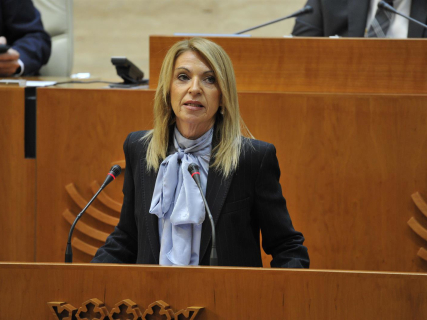
PSOE deputy Piedad Álvarez has defended the text and emphasized that public freight and passenger transport is "essential" for mobility, supply and economic activity in Extremadura.
Álvarez has detailed that, since the start of the armed conflict in Iran, on February 28, 2026, instability in energy markets has caused a sharp increase in the cost of fuel, with Gasóleo A going from around 1.438 euros per liter at the end of February to exceeding 1.94 euros during March.
For this reason, she has pointed out that, although public measures have offset the price escalation "partially," the extra cost hits self-employed workers and small businesses more harshly, reaching several thousand euros for those that have fleets or provide services with very intensive use of the vehicle.
In this line, it has recalled that to date only the State has put forward aid to mitigate the situation through two Royal Decrees. "In total, the sum of the fiscal shield, the discounts on diesel fuel, and the direct transport aid add up to more than 6,800 million euros," it has stated.
Positioning of the groups
During the turn to establish positions, PP deputy Isabel Cortés has said that when diesel fuel goes up, they end up paying for it "everyone, everywhere," and she has regretted that families and companies are "juggling" to make ends meet.
At the same time, she has reproached the PSOE for demanding solutions from the Regional Government regarding what, in her view, the central Government "has not done," describing the two Royal Decrees approved by the Executive as "disastrous," "paltry," and "unproductive," as they were processed "behind schedule, badly, and never."
In this regard, she has defended that governing does not consist of getting citizens used to living on subsidies, but rather in ensuring a "prosperous" future in which the money remains in their pockets.
On behalf of Vox, deputy Marta Garrido has criticized that the total amendment to the accounts for 2027 recorded by the socialists does not include "not a single word" related to the proposal being debated.
She has also attacked the PSOE, which she has labeled a "mafia," and has criticized that, after demonstrating "lack of management," it now intends for the Regional Government to resolve this situation, when, as she has emphasized, 45 percent of the final diesel fuel price are taxes of a state nature.
"The real suffocation of transport for our livestock farmers and for the countryside has very clear names: climate fanaticism, globalist agenda, and runaway inflation—every one of those diabolical political films you roll out," she has said.
For its part, Unidas por Extremadura deputy Alba Soto has justified her group’s favorable vote, considering that the content of the proposal matches another initiative registered by her party six months ago.
Back then, Unidas was asking the Regional Government of Extremadura for it to complement the state aid in the face of the increase in fuel resulting from the war in Ukraine and Iran, noting that other autonomous communities were already adopting similar measures, although the proposal was then rejected by PP and Vox.
Soto has stated that, since May, the situation has worsened and that, despite the measures deployed by the State, these are not enough on their own to offset the increase in the price of fuels. “The Board cannot continue to exempt itself from its responsibility. It has the powers to act and must take them on,” he has stated.