
The Asociación Nacional de Empresas de Sanidad Ambiental (ANECPLA) stresses that protecting people's health necessarily involves also controlling animal health and the state of the environment, since "people's health, animals' health and the environment's health are closely connected."
Coinciding with the observance this Tuesday, November 3, of World One Health Day, the organization warns that, despite this comprehensive approach, health threats continue at times to be addressed from watertight compartments, when their prevention requires growing cooperation among different disciplines.
In this vein, ANECPLA emphasizes that "Prevention starts long before a risk becomes a health problem. We need to know the vectors, monitor their evolution, study the environmental conditions that favor their presence and share that information with the areas of human and animal health. Environmental health provides technical knowledge and capacity for action that are fundamental in that strategy."
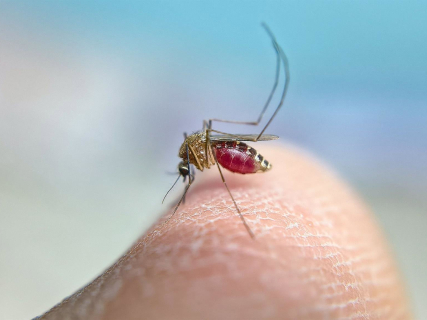
The association likewise considers this approach key to tackling other public health challenges, including diseases transmitted by mosquitoes and other vectors, the increase of harmful organisms in cities, the emergence of resistance to biocides, or the dangers linked to water and air quality.
ANECPLA also underscores, moreover, that "collaboration between administrations and specialized professionals is essential to avoid fragmented responses," since the data collected on the circulation of a pathogen in animals can serve to guide vector surveillance and assess its possible consequences for human health.
It also warns that environmental and climate transformations are altering the distribution and behavior of certain species, which makes it necessary to continuously review and adjust surveillance and prevention systems.
Therefore, the general director of ANECPLA argues that "One Health cannot remain a statement of intent or be limited to a commemorative day. It has to be translated into effective cooperation, data sharing, continued surveillance and resources for prevention. Investing in environmental health is investing in the capacity to anticipate and in protecting public health."