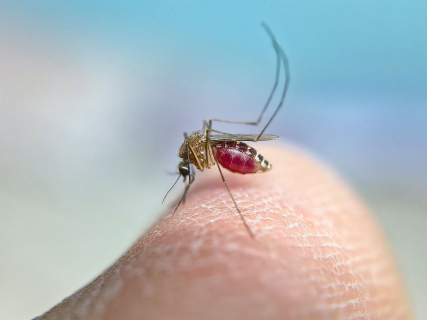

The general director of the National Association of Environmental Health Companies (ANECPLA), Manuel García Howlett, has emphasized that "the best tool" against infection from the bite of the mosquito that transmits the West Nile Virus "remains prevention." For this reason, he insists on adopting measures in the domestic environment, including preventing the accumulation of stagnant water in various points of the home.
As he has explained, "the West Nile Virus reminds us that the best strategy against vector-borne diseases is not only to act when the first cases appear, but to maintain constant vigilance and reduce mosquito populations to the maximum before they can become a public health problem," a statement he makes following the recent death of a person in Andalusia due to this disease.
In this regard, it is recommended to avoid the presence of non-renewed water in garages, basements, cisterns, spaces under slabs, gardens, patios, terraces, and plots. Common elements such as swimming pools, small pools, barrels, fountains, gutters, buckets, pots, or plates can also become breeding grounds for mosquitoes if not managed properly.
Additionally, it is advised to frequently change the water in animal drinking troughs, ornamental fountains, and other outdoor containers, as well as to place mosquito nets on doors and windows, especially in homes close to rivers, wetlands, rice fields, or areas with abundant vegetation.
Among the recommendations is the use of authorized repellents, always following the application instructions and taking extra precautions with children, the elderly, and vulnerable groups. It is also suggested to wear long-sleeved clothing and long pants, preferably in light colors, during the hours of greatest mosquito activity, as well as to reduce outdoor presence as much as possible at dusk, at night, and at dawn.
Finally, ANECPLA considers it essential to keep swimming pools, ponds, and irrigation systems in good condition; to collaborate with the surveillance and control efforts carried out by the administrations and specialized companies; to inform the town hall of the existence of significant mosquito breeding sites; and to always turn to companies expert in Environmental Health.
Shared responsibility in prevention
"The prevention of the West Nile Virus is a shared responsibility," emphasized García Howlett, who also pointed out that "the involvement of citizens, combined with the coordinated work of the Administrations and Environmental Health professionals, constitutes the best guarantee to protect public health." Given that this disease has become a seasonal problem in certain areas of Spain, the person in charge of ANECPLA insists again on the importance of prevention.
He also recalled that, in the case of the West Nile Virus, which is mainly transmitted through the bite of mosquitoes of the genus Culex, most infections are asymptomatic or manifest with mild symptoms. Only "in a small percentage of cases" "serious neurological complications may appear, especially in elderly people or those with pre-existing conditions," he concluded.