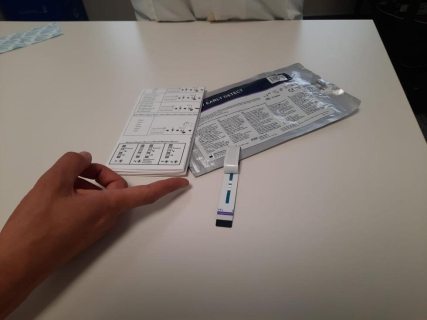

The campaign "Leave Your Mark", promoted by the Spanish Society of Emergency and Urgent Medicine (SEMES) together with Gilead Sciences, has made it possible to locate 3,262 new HIV diagnoses in Emergency services after 366,429 serologies were carried out, which represents approximately one case for every 100 tests performed.
Since SEMES explain that these data, which account for around 20 percent of the new HIV infections identified across the whole country, reinforce the role of Emergency services as a key point for discovering an infection that, in many patients, can go unnoticed.
It is estimated that each early diagnosis prevents between 2 and 4 additional transmissions, so it is calculated that, during the 5 and a half years the program has been operating, between 6,524 and 13,048 new HIV infections would have been prevented. In Spain, around 7.5 percent of the people living with the virus still do not know that they are infected.
In the first half of 2026, "Leave Your Mark" has managed to identify 255 people with HIV who were unaware of their situation, which would translate into the possible prevention of up to 1,020 new infections.
The project is carried out in a wide network of hospitals that includes centers located both in large cities and in rural areas. With the involvement of 185 Emergency services from 16 autonomous communities and the participation of more than 360 healthcare professionals, it is calculated that the program has achieved population coverage of 82.2 percent in Spain, according to a review collected in "Frontiers in Public Health".
Likewise, 70 Emergency services from 11 communities have introduced modifications in electronic medical records to automate alerts, so that the emergency physician receives an alert when faced with a clinical picture compatible with HIV that requires considering the indication for the test. This implementation in different types of centers allows the screening strategy to be adapted to care realities with very diverse resources and needs.
"Each consultation is an opportunity to detect an HIV infection that the patient may be unaware of, even if they go to the Emergency Department for another reason. If there are indications of a possible infection, offering the test can make the difference. Our responsibility is to incorporate that perspective into daily practice and make it easier for diagnosed people to access the care they need," says Juan González, coordinator of the INFURG-SEMES Group and of the program "Deja Tu Huella".
The role of Nursing in the detection of HIV
The active involvement of Nursing teams can be decisive in strengthening the identification of HIV cases in routine Emergency Department care. An experience developed across several services in Catalonia showed that, after delivering specific training on how to suspect an undiagnosed infection and when to request serology, the number of patients who were tested increased, with an increase of more than 20 percent.
"Nursing has to join this strategy. Its ongoing contact with the patient allows recognizing signs that advise offering the test and activating coordination with the team. To make use of that capability, we need specific training and defined participation in the protocols and in the program’s coordination," said Tato Vázquez, president of SEMES.