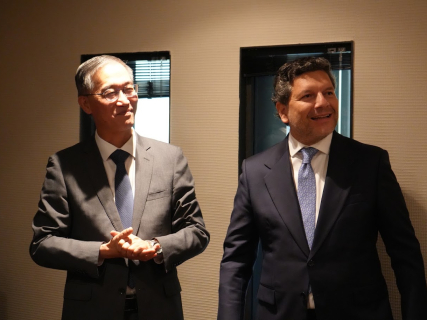

The economic relationship between China and Europe must be examined from the mutual benefit, taking into account not only trade, but also investments, their returns, and the destination of the benefits. That was one of the messages conveyed by the Chinese ambassador to Spain, Yao Jing, during the meeting organized jointly by DEMÓCRATA and the Embassy of the People’s Republic of China last October 20 at the Hotel Urban in Madrid.
The diplomat argued for the possibilities of cooperation with Spain in areas such as trade and investment, innovation, green development and digital transformation. The quote brought together political, diplomatic, institutional, and business representatives around an issue with consequences for both economies: how to turn the rapprochement between Spain and China into projects, market opportunities, and investments capable of thriving in the long term.
Under the title Cooperation between China and Spain within the framework of China-EU relations: trade, investment and market access, the breakfast combined the ambassador’s remarks with a question-and-answer session with a panel of six speakers. The debate linked the diplomatic perspective with the experience of companies and organizations that work in the relationship between both countries.
David Córdova, chair editor and founder of DEMÓCRATA, opened the event. The panel was moderated by Adrián Lardiez, director of Parliamentary Information of the outlet, and featured Juan Antonio Sagredo, Marta Montoro, Antonio Miguel Carmona, Li Jun, Pedro Luis Uriarte, and Ignacio Herrero Ruiz. Lardiez also handled the conclusions.

Yao Jing: looking beyond trade figures
The ambassador put forward a broad reading of the economic relations between China and the European Union. Yao argued that its assessment should take into account the evolution of exchanges, the trade structure, the returns on investments, and the flows of benefits.
His approach places the discussion beyond an isolated comparison between exports and imports. The position set out by the ambassador also incorporates the impact of investment and the opportunities generated by business cooperation.
In the Spanish case, the diplomat valued the results of economic cooperation and pointed to green development and digital transformation among the areas of collaboration.
"It is a very useful space to better understand the points of view on business cooperation between China and Spain," Yao highlighted when assessing the meeting for DEMÓCRATA and the possibility of hearing Spanish perspectives.
The ambassador thanked this outlet for organizing the event and linked that exchange of opinions to the identification of new opportunities: "By sharing business cooperation opportunities, we can show better future prospects for China and Spain."
David Córdova: investments that can transform Spanish competitiveness
The prepared welcome address by David Córdova placed the meeting within a diplomatic relationship of more than half a century and in a stage marked by new investments, business exchanges, and scientific, university, and cultural cooperation.
The editor-in-chief of DEMÓCRATA highlighted the scope of Chinese projects in sectors such as automotive, energy, logistics, transportation, and telecommunications. His speech emphasized that these are "investments that can substantially modify the economic structure and competitiveness of Spain for the coming decades."
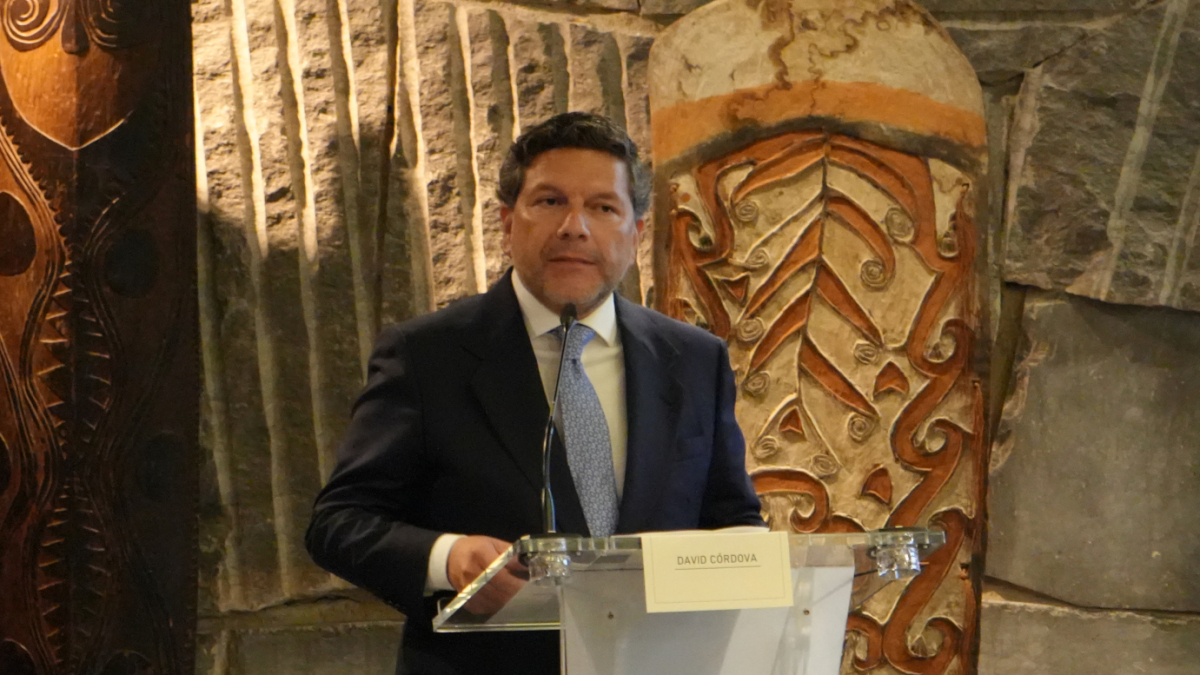
Córdova placed emphasis on the work necessary for those opportunities to materialize. The bilateral relationship, he argued in his address, poses both the challenge of successfully developing Chinese investments in Spain and the one of expanding opportunities for Spanish companies in the Chinese market.
That collaboration requires a perspective that goes beyond announcements and addresses the execution of projects. It also requires trust, knowledge of the respective realities, and the ability to build lasting agreements.
"Geopolitics forces us into a different, growing, and sustained relationship between Europe and China," he said. A relationship that, he added, must incorporate "a long-term outlook, a minimal shared reading, balanced, fair agreements, and adequately structured."
The founder of DEMÓCRATA linked this purpose with the pro-European vocation of the media and with an editorial line based on "giving a voice to everyone who makes political, economic and social decisions". The celebration of the event responds to that desire to connect the institutional debate with those who face its consequences in business activity.
Ignacio Herrero: new models of collaboration between Europe and China
Ignacio Herrero Ruiz, CEO of China Three Gorges in Europe, defended the need to develop cooperation formulas that take advantage of the strengths of both economies.
"Collaboration between Europe and China has to be based on new models, not so much on competition, but on new models that are based on competitive advantages," he explained.
His intervention introduced one of the central issues of the day: how to identify complementarities that allow for the development of shared projects. The executive’s approach focuses on the capabilities that each part can contribute and on the necessary conditions to combine them.
Herrero described the meeting as "tremendously interesting" and valued the participation of speakers of recognized prestige, as well as the opportunity to compare perspectives on the future of economic relations.
Antonio Miguel Carmona: more investment and business presence in China
Antonio Miguel Carmona, President of the Spain-China Friendship Association, Executive Chairman of Advanced Microsystems, Professor at the University of Beijing and Advisor to Air China, called for a more intense economic relationship between Spain and China.
"We need to reconcile the European economic structure with the Chinese one, boost relations and ensure that relations between Spain and China are more intense," he said.
Carmona linked this greater collaboration to the growth of investment, the creation of jobs and the international expansion of Spanish companies. He argued for the need to "believe in free trade" and to ensure that "our companies have greater presence in China".
Her intervention aimed at cooperation in both directions: attracting projects to Spain and expanding the possibilities of Spanish companies in the Chinese market.
"I think we can do many more things than we do until now," she concluded, after evaluating DEMÓCRATA's initiative as an instrument to promote that approach.
Marta Montoro: overcoming lack of knowledge to build trust
Marta Montoro, executive chairwoman of the Fundación Cátedra China, addressed a prerequisite for strengthening economic relations: improving mutual understanding.
"We understand that part of China's lack of knowledge generates suspicion," she explained. From that perspective, she argued that "opening spaces for dialogue like this one that Demócrata has opened are very important for relations between China and Spain."
His reflection incorporated into the debate barriers that do not depend solely on commercial or investment conditions. Understanding the other society and the possibility of comparing points of view also influence the confidence with which the projects are put forward.
Montoro highlighted the usefulness of meetings in which one can openly discuss cooperation and relations between China, Spain and the European Union. In his view, these spaces foster understanding and make it possible to address possibilities for collaboration with greater knowledge.
Juan Antonio Sagredo: a relationship that is also built between cultures
Juan Antonio Sagredo Marco, mayor of Paterna and spokesperson for Commerce in the Senate during the XV Legislature, defended the continuity of spaces for meeting between institutions and companies from both countries.
"This type of forums does what it does is delve into that strengthening of relations between China and Spain," he said, after thanking DEMÓCRATA and the Chinese Embassy for organizing the breakfast.
Sagredo asserted that the bilateral relationship should not be limited to the exchange of goods or to investment projects. Economic rapprochement, he maintained, must be accompanied by links between societies.
"The most important thing is that we continue collaborating and growing, not only economically, but also with those ties between cultures," he said.
His intervention thus connected the commercial dimension of the gathering with the need to consolidate a sustained relationship based on mutual knowledge.
Li Jun and Pedro Luis Uriarte: the perspective of Huawei España and of Juan Ying Business Solutions
Li Jun was also on hand at the event, Huawei España’s advisor, who took part in the roundtable along with institutional and business representatives.
Likewise, Pedro Luis Uriarte attended, president of JuanYing Business Solutions, who completed the panel of six speakers that analyzed economic cooperation between Spain and China.
DEMÓCRATA brings together the institutional perspective and business experience
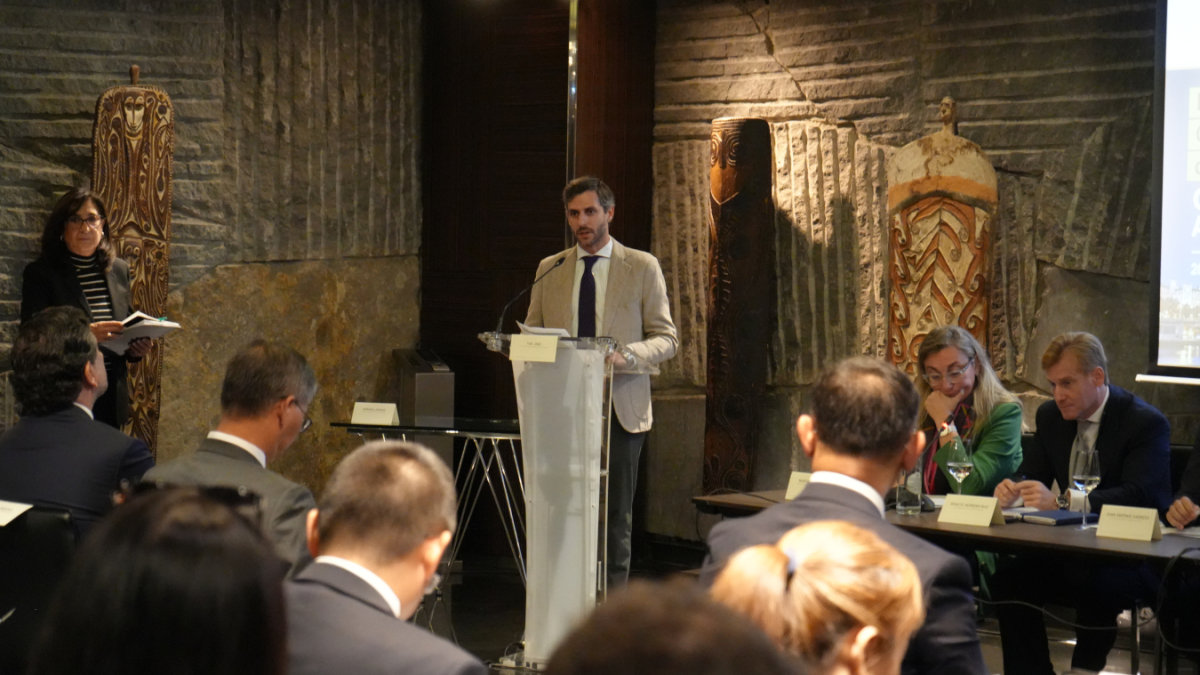
The format of the meeting made it possible to combine the presentation of China’s diplomatic position with questions and contributions from the participants. Trade, investment, and market access served as the axes for bringing together institutional priorities and business experience.
The event was aimed at representatives from different political formations, financing and internationalization bodies, companies, and business organizations. Among the entities included were COFIDES, ICEX/Invest in Spain, ICO, ICBC, Empresarios Agrupados Internacional, CRCC, ZTE España, CEPCO and the Club de Exportadores e Inversores Españoles.
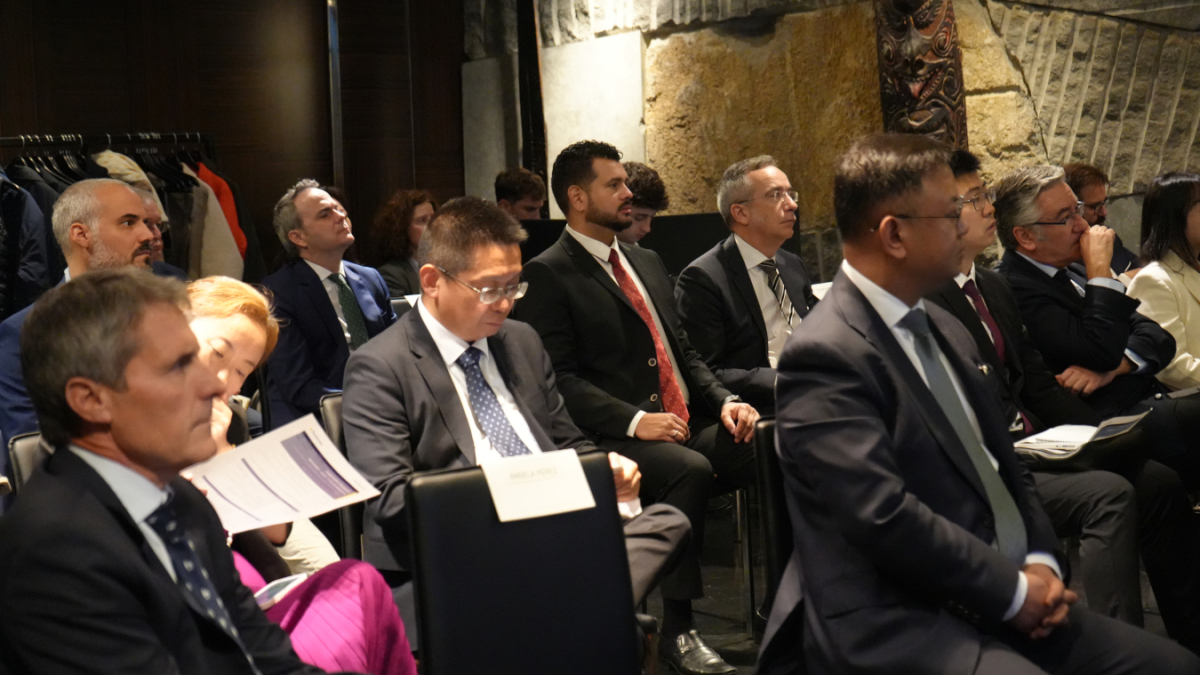
The Chinese Embassy later compiled the celebration of the day in an institutional summary, in which it highlighted the participation of political representatives, think tanks, media outlets, and Spanish and Chinese companies.
The meeting left in place several lines of work: to develop new cooperation formulas, facilitate the presence of Spanish companies in China, take advantage of economic complementarities, and reduce the knowledge barriers that hinder trust.