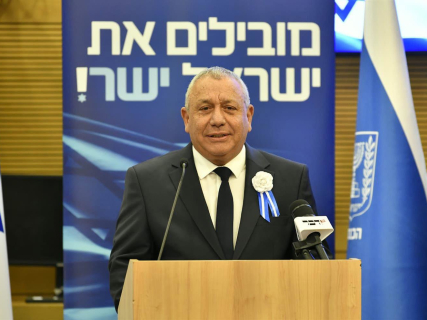

The designated candidate to try to shape the next Government of Israel, Gadi Eisenkot, has sent an official letter to the acting prime minister, Benjamin Netanyahu, in which he demands the utmost "caution and responsibility" and warns him against the possibility of making decisions on security matters or ordering deployments of the Armed Forces driven by "outside interests" or political calculations during the transition period.
In this missive, sent this Wednesday under the heading 'Security and national obligations at this time,' Eisenkot emphasizes to Netanyahu that he currently acts as head of government on an interim basis "without having the confidence of the Knesset," after having obtained the support of only 46 deputies in in-person consultations, compared with the 67 endorsements gathered by Eisenkot's own candidacy.
"The deployment of security forces in the absence of a direct, immediate and urgent threat could have devastating consequences for Israeli democracy and for public confidence in the institutions," the former chief of the General Staff of the Israeli Army and leader of the Yashar party said, warning of the risks of misuse of executive power in this area.
Eisenkot has asked Netanyahu to "exercise moderation" and stop "dangerous maneuvers" that could hinder the formation of a new cabinet. At the same time, he has demanded of the acting prime minister that he avoid placing senior military commanders and intelligence service personnel in a "legal conflict" between obeying the orders received and his duty to safeguard the security of the State.
This exchange of reproaches between the two leaders takes place just a few days after Israel's president, Isaac Herzog, formally tasked Eisenkot with the job of trying to articulate a parliamentary majority following the elections held on October 27. Despite this presidential mandate, Netanyahu maintains his claim to head a "unity government" led by his party, Likud, relying on support from ultra-Orthodox and far-right parties.