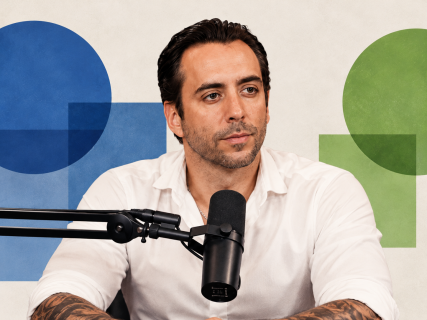
Jordi Wild ahead of the 29N: when his interviews come out and what he thinks of left and right

Jordi Wild will publish on Friday, November 13, four interviews with Pedro Sánchez, Alberto Núñez Feijóo, Santiago Abascal and Ada Colau. They will last between 60 and 90 minutes and will have two fact-checkers. In an interview in Crónica, by El Mundo, the creator of The Wild Project explains the format’s conditions, announces greater scrutiny of the Prime Minister, and defines his political position: open in the social sphere, more libertarian in the economic sphere, and with no party that represents him

Retrato editorial de podcast geométrico

Retrato editorial de podcast geométrico

Add DEMÓCRATA to Google

Ask FREN

Published

Last updated

4 minutes

Most read

Elecciones 29N · Encuestas

La media de las encuestas

Media a 8 de noviembre de 2026 · 11 institutos

  • PP30,8 %
  • PSOE26,2 %
  • Vox19,5 %
  • Frente Amplio6,8 %
  • ERC2,6 %
  • Podemos2,0 %
01020304050ene 2024jul 2024ene 2025jul 2025ene 2026jul 2026

Media del último estudio de cada instituto en 30 días y su evolución semanal desde el 23J. Partidos con al menos un 2 %.

Todas las encuestas

Elecciones generales del 29 de noviembre · Demócrata

Jordi Wild will lead the general election campaign at The Wild Project with four individual interviews with Sánchez, Feijóo, Abascal and Colau. As he explains in an interview published by Crónica, from El Mundo, the conversations are recorded over these days and will be published together on Friday, November 13.

The format will allow listening separately to the four guests. There will be no joint debate or direct replies among them: each candidate will have to respond to Wild for a similar amount of time and with fact-checkers available to intervene.

The creator promises uncomfortable questions and rejects turning the conversations into promotional events. He also anticipates a difference in his level of demand: he believes that whoever governs must answer for their management with greater depth than those who aspire to replace them.

When the interviews come out and how long each one will last

The announced date is November 13, the first day of the campaign. The text from El Mundo does not specify a time for publication.

Each conversation will last between 60 and 90 minutes. Wild explains that the candidates’ teams preferred meetings of about 40 or 50 minutes and that he negotiated to broaden that range.

His purpose is to avoid big differences in time between the participants. "I want everyone to play with the same cards," he says in El Mundo. The length will be comparable, although he does not promise second-by-second timed interviews.

The joint publication will allow viewers to compare the answers without waiting several days between one conversation and another.

Two fact-checkers and questions that will go beyond the program

Wild confirms that there will be two fact-checkers with computers during the interviews. As he explains, they will be able to step in if they consider an intervention necessary, although he believes they may not end up doing so.

The Crónica interview does not detail their identities or the procedure they will follow to verify the claims. It also does not announce that they will interrupt each response or issue a final assessment of the candidates.

Wild plans to address security, immigration, housing, and the rail situation. Along with those matters, he wants to introduce personal questions and issues about each guest’s trajectory.

Among the examples he previews are Abascal’s military service, the photograph for which Feijóo is asked, and Ada Colau’s political return. With Sánchez, he intends to ask him how he lives with the insulting chants directed at him.

Why he announces a tougher interview with Sánchez

"The toughest one will be with Pedro Sánchez," Wild assures El Mundo. He justifies it by the time he has been in government and by the responsibility of having to give explanations for his decisions.

The creator argues that he would apply the same criterion if the person who had remained so many years in power belonged to the PP or Vox. He presents the difference as a matter of accountability, not as a partisan preference.

The rail crisis will take up part of that conversation. Wild is critical of the management and considers Óscar Puente’s resignation to be belated. These are his assessments, not technical conclusions about the causes of the accidents.

Despite his public criticisms, he says that the interview with Sánchez is still going ahead and that his team has not passed on reproaches to him for them.

Is Jordi Wild left-wing or right-wing?

Wild accepts as quite accurate the description of "progressive liberal, not dogmatic" that El Mundo puts to him. He identifies with the defense of abortion, euthanasia, and sexual freedom, but rejects being fully identified with a political bloc.

"I’m very open socially and more libertarian economically, without reaching extremes," he explains.

His response separates social positions from economic ones. He also expresses rejection of dogmas and of a relationship with political parties that he compares to loyalty to a football team.

Wild recalls that he comes from a humble family and that his father was linked to a trade union. At the same time, he considers that his current economic situation makes it inconsistent for him to present himself as someone situated on the far left.

Regarding taxes, he acknowledges that paying them is costly for him, but explains that he prefers to live close to his people in Spain. He says he uses public healthcare, which he declares himself proud of, although he also has private coverage to speed up certain processes.

He says he would vote blank, but admits his opinion could change

"Today I would vote blank because no big party represents me or fits with my ideals," he declares in the Crónica interview.

It is his position at the time of the conversation, not an irrevocable commitment for 29N. Wild recognizes that other guests on his podcast have made him reconsider his opinions, and he leaves open that possibility in the face of political interviews.

When the interviewer tries to get him to confirm that he will not vote for Sánchez, he avoids doing so. He says that he wants to maintain a certain cross-partisanship and not reveal that decision now.

He also does not accept that his conversations will, by themselves, decide the elections. He believes they can help some undecided voters compare candidates, but he attributes greater influence to events such as the tragedy in Urda.

After this election cycle, The Wild Project will resume its usual content. Wild tells El Mundo that it does not intend to turn the show into a politics podcast and that it will return to interviewing popularizers, scientists, historians, and creators.

More key points, information and questions with FREN

AI-GENERATED CONTENT

What is the usual procedure for data verification in political interviews in Spain?

In Spain, there is no single “official procedure” for verifying data in political interviews, but rather fairly standardized professional practices among serious media outlets. Verification combines three levels: prior preparation, real-time cross-checking during the interview, and post-interview verification for complementary pieces or corrections.

1. Preparation before the interview

Before a political interview, newsrooms usually conduct intensive documentation work to anticipate the topics that will arise and possible doubtful data:

  • Review of archives and previous statements: previous interviews, press releases, parliamentary interventions, and social media of the politician or their party are consulted to detect contradictions or changes in position that should be questioned or clarified.
  • Consultation of official sources: statistics from the INE, Bank of Spain, ministries, budgets, official bulletins, or reports from regulatory bodies are used to have “reference data” on economy, employment, health, education, etc.
  • Cross-checking with specialized reports: on complex topics (energy, pensions, taxation), studies from think tanks, universities, international organizations, or NGOs are reviewed to understand how the same data is interpreted from different perspectives.
  • Script of follow-up questions: based on this, the team prepares sheets with key figures and possible corrective follow-up questions (“that unemployment rate is from such year, the current one is different,” “that data includes/excludes X…”), which the interviewer can use live.

2. Verification during the interview

During the interview itself, the ability to verify in real time depends on the format (radio, television, live digital) and the program’s resources:

  • Informed interviewer: the first filter is that the journalist carries the “cheat sheet” with prepared data. When the politician gives an inaccurate figure, they can correct or clarify it immediately (“the latest data says…”).
  • Parallel verification team: in some programs, editors are connected to databases and official sources while broadcasting; if they detect objectively false or outdated data, they pass the correction to the presenter to mention live or at the end of the segment.
  • Distinction between fact and opinion: the journalist usually marks the difference between verifiable facts (rates, dates, amounts, approved regulations) and political assessments, which are not “verified” in the same sense but are contrasted with other arguments or viewpoints.
  • Practical limits: in very dynamic interviews, not everything is corrected immediately. Often it is noted that “that data does not match official records” and it is announced that it will be clarified later.

3. Post-interview fact-checking

After the broadcast, many media outlets prepare specific verification pieces on the most relevant statements from the interview:

  • Selection of verifiable statements: phrases with verifiable content (figures, temporal comparisons, attribution of decisions to other parties, scope of a law, etc.) are identified.
  • Systematic source search: official documents, statistics, parliamentary session records, and regulations are consulted to validate each statement. Usually more than one independent source is used.
  • Labeling of results: each phrase receives a rating (“true,” “misleading,” “incomplete,” “false,” depending on the media), accompanied by a detailed explanation and links to sources.
  • Corrections and updates: if a manifestly erroneous statement remained uncorrected in the interview, some media publish a clarifying note or include the correction in subsequent programs.

4. Ethical frameworks and legal limits

Although there is no specific law on verification in interviews, there are frameworks that influence it:

  • Journalistic codes of ethics (FAPE, professional associations) that require cross-checking information, differentiating facts from opinions, and diligently correcting errors.
  • Editorial responsibility: media can be criticized or even sued if they disseminate harmful false data without any reasonable attempt at verification, especially in matters of honor or reputation.
  • Electoral periods: during campaigns, the Electoral Board can intervene regarding fairness and informational neutrality of public media, although it does not delve into each data point but rather the overall balance.

5. Recent trends

In recent years, specialized fact-checking units have grown (both within media and independent platforms) that analyze debates and political interviews in detail. They publish verifications with explicit methodology, cited sources, and transparent criteria; their work complements but does not replace the basic responsibility of each newsroom to prepare interviews well and correct erroneous information when detected.

Can you provide concrete examples of data verifications carried out after recent political interviews in Spain? What differences exist between data verification in public and private media in Spain? How is the work coordinated between the interviewer and fact-checking units in televised electoral debates?

What competencies and functions does the President of the Government have according to the Spanish Constitution?

The President of the Government is the highest authority of the executive power in Spain and occupies a central position in the constitutional system designed by the 1978 Constitution. His competencies and functions are mainly dispersed in articles 92, 97, 98, 99, and 100 of the Constitution, as well as derived from other provisions and the laws that develop it.

Firstly, the President of the Government is the head of the executive power. Article 97 establishes that the Government directs domestic and foreign policy, the civil and military administration, and the defense of the State, and that it exercises executive functions and regulatory authority. Within this collegiate body, the president is the one who directs the Government's action and coordinates the functions of the other members, being ultimately responsible for the general political orientation.

Linked to this leadership, an essential competence is to set the guidelines of general policy and ensure their compliance. The president defines the major lines of government action, arbitrates among ministers when there are conflicts of competencies or criteria, and guarantees unity of action in areas as relevant as the economy, social policy, foreign policy, or security and defense.

Another key function is his role in the relationship with the King and the Cortes Generales. The President of the Government is the main political interlocutor of the King: he proposes the appointment and dismissal of ministers (according to article 100, the other members of the Government are appointed and removed by the King at the president's proposal), informs him of State matters, and endorses many of his acts in governmental matters. At the same time, he is politically accountable before the Congress of Deputies, which can demand his responsibility through a motion of censure (article 113) or deny him confidence in a vote of confidence (article 112).

Regarding the formation of the Government, the president is the result of a specific constitutional procedure. Article 99 establishes that, after each renewal of the Congress (and in other cases), the King proposes a candidate for the Presidency of the Government, who must obtain the confidence of the Congress through an investiture vote. Once elected, the president has the power to configure his team: he proposes the number, denomination, and basic structure of ministries and proposes the appointment and dismissal of all ministers.

The president also has the important competence to dissolve the Cortes Generales or one of its Chambers and call elections, through a decree formally issued by the King but always at the president's proposal and under his responsibility. This power is subject to certain temporal and material limits set by the Constitution itself but constitutes a politically significant instrument to unblock parliamentary deadlocks or reorient majorities.

In the normative field, the President of the Government participates in exercising the Government's regulatory authority and has legislative initiative, since the Government can present bills before the Cortes Generales. Although the initiative belongs to the Government as a collegiate body, it is the president who drives, decides, and coordinates major legislative reforms and the presentation of certain initiatives. Additionally, the Government can issue royal decree-laws in cases of extraordinary and urgent need, and the president usually assumes a central role in deciding to resort to this instrument.

Regarding foreign policy and defense, the President of the Government is the highest responsible for directing international policy and coordinating the external action of all ministerial departments. Likewise, he assumes the political direction of national defense, within the framework established by the Constitution and laws, and in coordination with the Armed Forces, whose supreme command corresponds to the King, but whose political orientation comes from the Government.

From the point of view of political and legal responsibility, the president answers to the Congress for the Government's direction and can be subject to a constructive motion of censure, which only succeeds if a new president is simultaneously elected. At the criminal level, the Constitution provides a specific liability regime for the president and other Government members for treason or crimes against State security in the exercise of their functions, with a reinforced procedure involving the Congress and the Supreme Court.

In summary, the President of the Government concentrates functions of political leadership, internal coordination of the Executive, institutional representation before the King, the Cortes, other State powers, and abroad, as well as decisive competencies in cabinet configuration, relations with Parliament, and the use of normative instruments. All this makes the figure of the president the true political center of the parliamentary system designed by the Spanish Constitution.

Could you explain the investiture procedure of the President of the Government step by step? What differences exist between the competencies of the President of the Government and those of the King according to the Constitution? What does the motion of censure against the President of the Government consist of and what requirements does it have?

What results did the main parties obtain in the last general elections in Spain?

The last general elections held in Spain were on July 23, 2023. In the Congress of Deputies, the PP came first, with 137 seats, followed by the PSOE with 121; Vox obtained 33 and Sumar 31. No candidacy reached the 176 deputies needed for an absolute majority on its own. (Official results of 23J).

The four main results

The following summary refers to the Congress, not the Senate. Percentages are rounded to one decimal place to facilitate reading and avoid minor differences between result publications.

  • People's Party: 137 deputies and around 33.1% of the votes. It was the most voted candidacy and the one with the most representation. Its advantage over the PSOE was 16 seats, although it was 39 short of an absolute majority. (Official results of 23J).
  • PSOE: 121 deputies and approximately 31.7%. It occupied second place both in votes and seats. The percentage difference with the PP was about 1.4 points, while its distance to the absolute majority was 55 deputies. (Official results of 23J).
  • Vox: 33 deputies and approximately 12.4%. It was the third candidacy in votes and parliamentary representation. It obtained two more deputies than Sumar, despite both candidacies registering very close vote percentages. (Official results of 23J).
  • Sumar: 31 deputies and approximately 12.3%. It came in fourth place. Podemos ran integrated within this candidacy, so it is not appropriate to attribute a separate electoral result to it in those elections. (Demócrata reference).

Other candidacies with representation

Besides the four above, seven other candidacies obtained deputies. Their representation completed the 350 seats of the Congress:

What the seat distribution meant

The main numerical conclusion is that winning the elections did not mean obtaining a sufficient majority alone. The PP was first, but its 137 deputies did not reach 176. Neither did the sum of PP and Vox: together they gathered 170 seats, six less than that threshold. (23J balance at Demócrata).

On the other hand, PSOE and Sumar added 152 deputies, 24 below the absolute majority. The other seven candidacies jointly gathered 28 seats. Thus, the result left a Congress in which neither of those two sums reached 176 representatives on their own. These figures describe the original electoral distribution, not subsequent changes in the composition of parliamentary groups. (Official results of 23J).

Play

Test your knowledge with FREN!

How much do you know about this topic? Answer the following 3 questions.

When will Jordi Wild's interviews with the main candidates be published?

Question 1 of 3

What format will the interviews have on The Wild Project during the campaign?

Question 2 of 3

How does Jordi Wild describe his political position in the interview?

Question 3 of 3