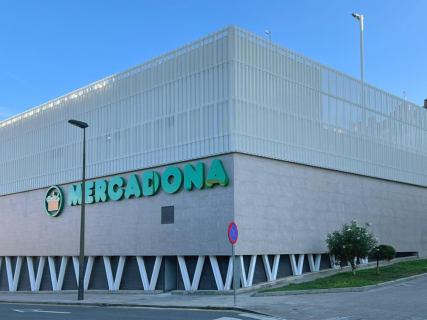
Does Mercadona open today due to the general strike? The stores may be able to operate, but with possible changes

The call does not imply the closing of commercial establishments. Activity and opening hours will depend on how many workers take part in the strike at each store.

fotonoticia 20260826173659 1920

fotonoticia 20260826173659 1920

Add DEMÓCRATA to Google

Ask FREN

Published

Last updated

2 minutes

Most read

Elecciones 29N · Encuestas

La media de las encuestas

Media a 10 de noviembre de 2026 · 15 institutos

  • PP31,5 %
  • PSOE26,8 %
  • Vox19,1 %
  • Frente Amplio6,2 %
  • ERC2,5 %
01020304050ene 2024jul 2024ene 2025jul 2025ene 2026jul 2026

Media del último estudio de cada instituto en 30 días y su evolución semanal desde el 23J. Partidos con al menos un 2 %.

Todas las encuestas

Elecciones generales del 29 de noviembre · Demócrata

Mercadona supermarkets may open this Wednesday, November 11, during the general strike called in Spain. The call does not oblige commercial establishments to close and the chain has not announced a general suspension of its activity for this day.

The forecast is that the shops will keep their usual hours, although it cannot be guaranteed that all supermarkets will operate normally. The opening, the schedule, and the services available will depend on how the strike is followed by workers at each establishment. If part of the workforce joins the work stoppage, reductions in hours, fewer staff to serve customers, or even occasional closures could occur.

Article 6 of Royal Decree-Law 17/1977, on labor relations, recognizes the right of workers to take part in the strike and establishes that the freedom of those who decide not to join must be respected. 

A strike focused on access to housing

The mobilization of November 11 has as its main focus the housing access crisis. The Tenants’ Unions have presented a set of proposals that proposes changes in different regulations, from the Constitution to legislation on rentals, taxation, and real estate ownership.

One of the main lines of action is to increase housing available for residential use. To do this, they propose creating a state registry of vacant homes and establishing mechanisms for mandatory transfer so that they are incorporated into the public housing stock. They also propose banning tourist flats and short-term rentals in municipalities with more than 3,000 inhabitants that meet the requirements to be considered tense zones, even if they have not formally received that declaration.

The document includes tax measures to penalize the accumulation of housing, such as a tax on real estate wealth starting from the third property, a progressive IBI according to the number of properties, and the elimination of tax benefits for socimis. It also proposes modifying the expropriation system to limit compensation when properties are incorporated into the public housing stock.

In terms of rentals, the unions propose the automatic extension of contracts, except in cases of proven need by the landlord or serious breach by the tenant. They also argue for prohibiting evictions when there is no dignified housing alternative.

To contain prices, they propose a territorial index of maximums linked to the population’s income, with a limit of 25% of median rent per unit of consumption. They also demand that the State or town councils be able to promote the declaration of stressed areas when the autonomous communities do not do so despite the necessary conditions being met.

More key points, information and questions with FREN

AI-GENERATED CONTENT

What is the parliamentary status of the proposals from the Tenants' Unions regarding housing?

As of November 11, 2026, the proposals from the Tenants' Unions do not constitute a single law pending approval. It is necessary to distinguish between the new program "Homes to Live In", which is still a platform of demands, the previous initiatives on temporary rentals and rooms, and the housing decrees that Congress rejected in October.

1. "Homes to Live In": proposals without a joint legislative initiative

The Confederation of Tenants' Unions presented this program on November 9. According to Demócrata on November 11, its measures, unlike previous proposals, are not structured around a specific legislative initiative. Therefore, they should not be described as a law in committee or pending in the Senate.

The program identifies the regulations it intends to change and proposes these blocks:

  • Vacant housing and tourist uses: mandatory transfer of unoccupied homes to the public housing stock and prohibition of tourist apartments in certain municipalities.
  • Taxation and public housing stock: taxes on housing accumulation, changes in Wealth Tax and Personal Income Tax, elimination of benefits for SOCIMIs, and funding to expand the public housing stock.
  • Residential stability: automatic contract renewals and prohibition of evictions without a dignified housing alternative.
  • Prices: a new territorial system of maximum rents and mechanisms to declare tension zones when the autonomous community does not act.
  • Collective rights: statute of tenants, collective bargaining, and legal recognition of rent strikes through rent escrow.
  • Other guarantees: measures against discrimination and extrajudicial evictions, as well as a constitutional reform to strengthen the right to housing.

Its status is, therefore, that of public proposals requiring regulatory translation, not of reforms already approved. This was also how the plan was presented in the November 9 report.

2. Seasonal rentals and rooms: initial rejection and subsequent progress

The first proposal promoted by the unions, file 122/000119, aimed to extend the guarantees of regular rentals to temporary and room contracts. Congress rejected its consideration — the vote to decide whether to start processing it — on September 17, 2024. That proposal was closed without going to committee, as recorded in the Plenary documentation.

But that rejection does not summarize all subsequent developments. Demócrata reported the start of the drafting work of a new proposal on temporary rentals and rooms on November 18, 2025, also linked to union demands. The drafting committee is the group of deputies preparing the text within the committee (information about the drafting committee).

With the dissolution of the Cortes for the November 29 elections, the ordinary parliamentary proposals still pending expired. Therefore, that progress does not equate to a reform currently pending approval: it must be resumed in the new legislature.

3. "Maricarmen Decree" and October decrees

The so-called "Maricarmen decree" was a demand text presented to parliamentary forces: contracts with automatic renewals, rent freezes, control of temporary rentals, and protection against evictions. It was not an official approved regulation by itself (September proposal).

The two housing decrees subsequently approved by the Executive, which should not be confused with the union text, were rejected by Congress on October 2, 2026 and became void. They are neither pending a vote nor in force due to that initial approval (parliamentary rejection).

What are the legal competencies of unions in calling this type of strike in Spain?

In Spain, the role of unions in calling and conducting strikes is mainly determined by Article 28.2 of the Constitution (right to strike) and Royal Decree-Law 17/1977 on Labor Relations, interpreted and nuanced by abundant case law from the Constitutional Court and the Supreme Court. Although the right to strike belongs individually to workers, in practice unions organize and coordinate most strikes.

1. Ownership and role of unions in the call

The right to strike belongs to workers, not to unions as legal entities. However, unions have key competencies and functions:

  • Initiate and decide the call: unions can agree to call a strike in a specific scope (company, sector, territory) if they represent the affected workers or have sufficient support. Usually, this decision is made within the union's internal bodies (executive committees, branch bodies, etc.).
  • Act as "collective" legitimized subjects: the most representative unions, and generally those established in the affected area, are legitimized to promote sectoral or general strikes beyond a single company.
  • Call strikes on behalf of workers: the formal call is usually signed by the promoting union(s), which clarifies who assumes leadership of the conflict and with whom the company or employers' association must negotiate.

2. Formal obligations of unions in the call

When a strike is called by a union, it has several key legal obligations:

  • Prior communication (notice): the strike must be notified with a minimum advance notice (generally 5 calendar days; 10 in essential public services), indicating:
    • Personal and territorial scope (which workers and centers are affected).
    • Start date and, if known, duration or indefinite nature.
    • Specific reasons for the strike (demands).
    • Unions or persons calling it.
    Failure to comply with the notice may lead to the strike being declared illegal.
  • Constitution of the strike committee: once called, a strike committee (maximum 12 people) must be appointed to represent workers in the conflict. It is usually composed of union representatives and members of the works council or staff delegates.
  • Duty to negotiate: the strike committee, promoted and supported by unions, is obliged to negotiate in good faith with the company or employers during the strike to seek a negotiated solution (agreement, preliminary agreement, arbitration, etc.).

3. Competencies during the strike

During the strike, unions perform several relevant functions:

  • Conflict management: they guide the strategy (strike duration, possible partial or total stoppages, scope expansions, etc.) and channel collective decisions of workers in assemblies.
  • Information and legal support: they inform about the scope of the strike, the rights of those who join or do not join the stoppage, and advise on sanctions, reprisals, or violations of the right to strike.
  • Informational pickets: they organize pickets whose legitimate function is to inform and persuade, not coerce. The limit is the freedom to work of those who decide not to join the strike; coercion or violence may generate criminal and labor liabilities.
  • Intervention in minimum services: in essential services, the competent authority sets minimum services and the company designates the personnel to cover them. Unions do not set these, but:
    • They can challenge before the courts minimum services they consider abusive or disproportionate.
    • They can advise designated workers and monitor that the company does not use minimum services to undermine the right to strike.

4. Legal responsibilities and limits of unions

The exercise of these competencies is subject to limits:

  • Legality of the strike: strikes called for illicit purposes (e.g., violating the union freedom of others, or with purely political objectives unrelated to labor matters) can be declared illegal. In such cases, unions may assume civil liabilities (damages) if illicit and culpable conduct is proven.
  • Respect for freedom to work: unions cannot forcibly prevent access to work nor coerce those who decide not to join; case law clearly distinguishes between legitimate informational pickets and coercion.
  • Proportionality and good faith: both in the call and during the strike and negotiations, acting in good faith and proportionally regarding demands and means used is required.

5. Representation capacity and signing agreements

Finally, unions that call the strike and are part of the committee are legitimized to:

  • Negotiate and sign agreements or preliminary agreements with the company or employers that end the strike, provided they have the support of the affected workers (usually through assemblies and internal votes).
  • Assume monitoring and control of commitments reached in those agreements (deadlines, implementation of improvements, guarantees of no reprisals, etc.).

In summary, unions are not holders of the right to strike, but in practice concentrate the functions of calling, organizing, representing, and negotiating, within the limits set by the Constitution, Royal Decree-Law 17/1977, and case law.

What specific formal requirements must the strike notice meet to be valid in Spain? How is a legal strike differentiated from an illegal or abusive strike in Spanish practice? What labor and salary consequences does a worker face for joining a strike called by a union?

What requirements does the regulation establish for a municipality to be declared a tension zone in housing matters?

To declare a municipality a residential market tension zone, at least one of the two economic thresholds of Article 18 of Law 12/2023, on the right to housing must be proven. Additionally, the risk of insufficient affordable housing supply must be justified and a formal declaration processed: meeting a threshold does not automatically produce the declaration.

1. Meeting one of the two thresholds is sufficient

Article 18.3 requires a report with objective data proving one of these circumstances. They are alternatives, not cumulative requirements:

  • Economic effort exceeding 30%. The law requires that "the average burden of mortgage or rent costs [...] plus basic expenses and utilities, exceeds thirty percent of the average income or average household income." Therefore, only the monthly rent or mortgage payment is not calculated. The threshold must be exceeded: being exactly at 30% is not enough by this criterion.
  • Prices growing above the CPI. The purchase or rental price must have experienced, during the five years prior to the declaration, an accumulated growth "at least three percentage points higher" than the accumulated growth of the consumer price index of the corresponding autonomous community.

The second comparison is made with the regional CPI, not with salaries or the national CPI. As an illustrative example, if that CPI increased by 15% in five years, the purchase or rental price would have to have increased by at least 18%.

2. The access problem to housing must be justified

The report cannot be limited to stating that prices are high. It must substantiate a special risk of insufficient supply of affordable housing for the resident population, also considering the formation of new households.

Additionally, the resolution must explain market deficiencies in meeting the demand for habitual housing at a reasonable price, according to the socioeconomic situation of the population, demographic dynamics, and territorial characteristics.

3. Studies and public information are mandatory

Article 18.2 establishes these requirements:

  • Preparation of the file: obtain indicators of rental and sale prices, their evolution, household disposable income, and economic effort to access housing.
  • Public information: make available to the public the data and studies supporting the declaration, including those related to population, households, supply, prices, and types of housing.
  • Motivated resolution and state communication: justify the delimitation and communicate it to the state housing department. The law provides for a quarterly ministerial resolution listing declared zones.
  • Specific plan: establish measures to correct detected imbalances and a development schedule.
4. Who declares, what territory it covers, and duration

The declaration corresponds to the housing competent authority, according to the distribution of powers and its regulatory framework. A municipal request does not substitute this declaration.

It does not have to cover the entire municipality: the law allows delimiting territorial areas and expressly contemplates municipalities with one or more declared areas. Article 18 does not require a minimum population.

The initial validity is three years. It can be extended annually through the same procedure if circumstances persist and public measures adopted to improve the situation are justified.

Play

Test your knowledge with FREN!

How much do you know about this topic? Answer the following 3 questions.

What right does Article 6 of Royal Decree-Law 17/1977 recognize for workers in the context of a strike?

Question 1 of 3

What is one of the proposed measures to increase housing available for residential use?

Question 2 of 3

What condition do the Tenants' Unions propose to limit rent prices?

Question 3 of 3