
The Executive of Venezuela, headed by the acting president Delcy Rodríguez, has officially communicated this Friday to the Secretary-General of the United Nations, António Guterres, its "firm and irrevocable" decision to abandon the Rome Statute and initiate its "definitive" withdrawal from the International Criminal Court (ICC).
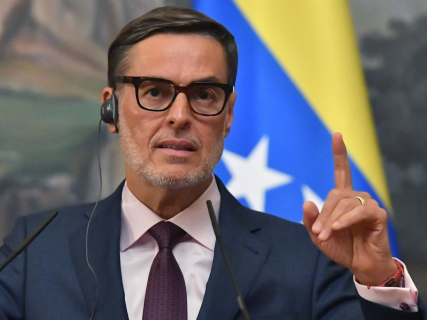
The Minister of Foreign Affairs, Félix Plasencia González, has pointed out in a message disseminated on social networks that "Venezuela considers that the court's actions respond to a demonstrated geographical bias, which has disproportionately concentrated its work in African and Latin American countries, to the detriment of the Global South."
In the same vein, he has noted that this "pattern" of behavior by the court evidences "an international justice that, far from being applied equitably, has been instrumentalized to deepen inequalities among peoples and disregard their right to self-determination and sovereignty."
Plasencia has added that "this bias is not a mere procedural coincidence, but the reflection of an institution that has put its mechanisms at the service of interests foreign to justice and to the peoples it claims to protect," emphasizing that the decision is made under the protection of Article 127 of the Rome Statute.
As a consequence, the Government of Caracas has rejected this "dimension of lawfare, which perpetuates the persecution against the Venezuelan people and exacerbates the inequalities that international justice should correct." "We reiterate our commitment to genuinely equitable justice, respectful of the sovereignty and self-determination of peoples," he concluded.
From international civil society, the Director of Research, Advocacy, Policies, and Campaigns of Amnesty International, Erika Guevara-Rosas, has warned that this decision "does not erase its obligations nor put an end to the pursuit of justice," reminding that "no State can use its withdrawal from the ICC as a shield against justice."
Guevara-Rosas has described the measure as "another alarming sign of the Venezuelan Government's ongoing rejection of international scrutiny and now joins authoritarian efforts to weaken one of the main mechanisms of accountability for the most serious crimes of International Law."
Likewise, he has insisted that "this type of decision does not annul existing legal obligations nor does it affect the processes and responsibilities arising from events that occurred while the State was a party to the Rome Statute."
In his statement, he emphasized that "the victims of crimes against humanity committed by the Government have the right to truth, justice, and reparation. That right does not disappear due to a political decision. On the contrary, this announcement reinforces the importance of protecting the independence of the ICC and ensuring that those responsible for international crimes are held accountable," calling on the international community to "respond firmly and make it clear that impunity can never be the answer."