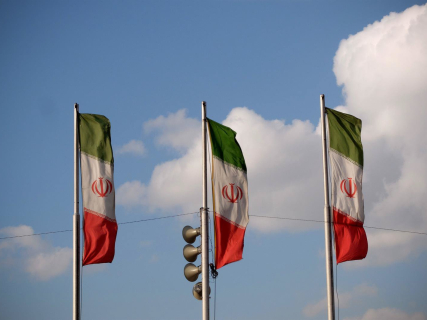

Iranian authorities have revealed this Monday that several courts in the country have issued rulings ordering the United States to pay 290 billion dollars, close to 265 billion euros, as compensation for the harm arising from the offensive launched in February alongside Israel against the Islamic Republic.
The head of the judicial apparatus center for advocacy, Hasán Abdolianpur, has indicated that, so far, "rulings have been obtained by Iranian courts for the payment of 290 billion dollars in damages against the United States." "We will apply these verdicts," he said.
Along these lines, he explained that Teheran authorities "have seized several vessels belonging to the United States" with the aim of securing part of these compensations, according to what the Iranian public television network, IRIB, reported, which offered no further details.
Abdolianpur added that in recent months lawsuits have been filed against Jordan and other States in the region so that they assume compensation for "allowing the use of their territory by the United States" as part of the attacks launched against Iran during the aforementioned offensive.
"We are addressing this matter seriously and we have filed lawsuits against the countries of the Persian Gulf and Jordan in relation to the recent war," he said, stressing that some of these States "played a specific role by collaborating with the aggressors of Iran, and therefore they bear international responsibility."
In this regard, he insisted that these nations "cannot evade that responsibility nor question Iran's right to legitimate defense," referring to the retaliation actions carried out by Iranian forces against U.S. facilities and interests in the region.
The senior judicial official also recalled that the President of the United States, Donald Trump, "explicitly thanked some Gulf countries, and there is documentation to that effect," before emphasizing that Tehran "has evidence that some countries in the Persian Gulf have attacked Iran directly." "We have presented that evidence to the competent courts," he concluded, without offering additional information.
Iran reiterates that its demands "are not preconditions or new ones"
Meanwhile, the Iranian Government reiterated this Monday that the United States must lift the naval blockade in the Strait of Hormuz and remove the sanctions campaign in order to be able to close a definitive agreement with Washington that puts an end to the war, stressing that these demands "are not preconditions or new ones" and again referring to the memorandum of understanding signed in June with mediation from Pakistan.
"To say that Iran maintains its firm commitment to complying with its obligations and that the other party respects the relevant conditions means that we take very seriously the defense of our rights and of the conditions that we have put forward," said the spokesman for the Ministry of Foreign Affairs, Esmail Baqaei, in remarks disseminated by the IRIB network.
He has underlined that, if Washington fulfills its commitments, "it will be possible to restore security in the region and in the Strait of Hormuz in the shortest time possible," after Tehran has proposed a two-phase mechanism to reopen the maritime route in a matter of days.
"Iran knows what it wants and what the rights of the Iranian people are, and it will not back down in this regard," he reiterated, insisting that Tehran's demands "are nothing extraordinary."
"These are issues to which Iran is entitled, such as the lifting of illegal and inhuman sanctions or the end of the naval blockade. They are not demands that could be considered preconditions or new ones. They form an integral part of Iran's rights," he summarized.
These statements come at a time of stalemate in the indirect talks with Tehran and after Trump threatened to resume the offensive against the Islamic Republic if a diplomatic understanding is not reached before New Year's.