
NATO has launched this Thursday an online purchasing platform for anti-drone systems with which it seeks to accelerate the incorporation of these technologies by its member states. Through this portal, governments will be able to directly access a catalog of solutions previously selected by the Atlantic Alliance, avoiding opening new tenders, a process that under normal conditions can be extended by nearly a year.
The project, named in English "Counter-UAS Marketplace," works as a digital marketplace in which allies consult the specifications of the available equipment, its prices, and the acquisition conditions according to their operational needs. All of this after NATO organized a competition among defense sector companies to screen the most suitable technologies.
With this system, the Alliance wants to bypass one of the main bottlenecks when it comes to adding new military capabilities: the extensive public procurement processes, which require drafting tender documents, receiving bids, and analyzing them before awarding a contract—an itinerary that usually lasts almost a year.
"The problem we have faced is that the procurement process is very long," explained the chief scientist of the NATO Communications and Information Agency (NCIA), Cristian Coman, during an information session held this Thursday in Brussels, in which he detailed that a conventional procedure can require "between nine and twelve months" merely to reach the signing of a contract.
As he indicated, these timelines are not due to a lack of agility on the part of the purchasing managers, but to administrative requirements, which oblige companies to be granted deadlines to prepare their proposals and, afterward, to evaluate each of them.
For this reason, NATO opted to "do things differently" and advance the competition among suppliers even before the countries put forward their specific demands. "We don't want to wait until we are presented with an operational requirement," Coman said, defending that this model significantly cuts response times when an ally needs to acquire equipment.
A digital catalog with 16 anti-drone systems
To roll out the platform, the NCIA organized a competition in which more than a hundred companies showed interest and more than 80 offers were received. After about four months of evaluation, 16 solutions developed by five companies were selected.
The chosen firms are Alta Ares (France), Axon Enterprise (USA), Northrop Grumman (USA), OSL (United Kingdom) and Quantum Systems (Germany). Their systems have already been used in military operations or maneuvers, including deployments in Ukraine and in other allied countries.
Claudio Palestini, head of Innovation and Technology Adoption of the Investment Division in Defence, Innovation and Armaments of NATO, has detailed that the goal is to offer governments a purchasing experience similar to that of e-commerce, with a platform where they can review the available technologies and start the acquisition process in just a few steps.
"The idea is to move the competition to an earlier phase, sign all these contracts," Palestini said, stressing that this scheme allows countries to know in advance the capabilities, the delivery timelines of the technologies they need and the prices, which range between 1.6 and 25 million euros per unit.
Another innovative element is that states will be able to obtain these systems both through direct purchase and through lease contracts, which will give them temporary access to these capabilities without integrating them permanently into their arsenals. In addition, NATO has earmarked 3.1 million euros to fund tests of the equipment before the allies decide to acquire them with their own budgets.
"Any country can submit its needs starting today," Coman also pointed out, specifying that once the contract has been signed, the planned delivery timelines range from 90 to 180 days, depending on the system chosen.
From military bases to borders and critical infrastructure
The catalogue brings together systems designed to protect military bases, airports, logistics nodes, critical infrastructure and border sections, as well as mobile solutions capable of accompanying military convoys and detecting threats while moving.
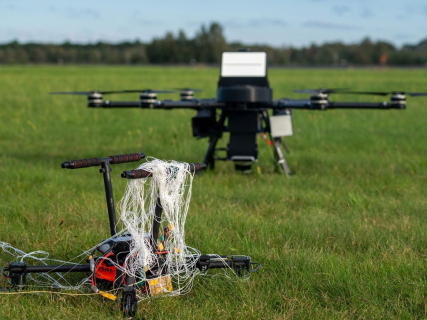
Among the technologies offered are radars, cameras and electromagnetic sensors to locate and track unmanned aircraft, as well as electronic jamming equipment to cut their communications, interceptor drones to neutralize other devices, and systems that incorporate machine guns or small missiles.
Although the tool has been designed initially with the needs of the Armed Forces in mind, NATO has confirmed that member states’ police forces will also be able to make use of it, especially when they take on the protection of borders or strategic facilities.
Palestini has revealed that the Alliance has already received samples of interest from police bodies in several countries and from operators of critical infrastructure, including from the energy sector. At the same time, he has specified that the platform is aimed at anti-drone systems intended to neutralize threats posed by other aircraft, and not at tasks of monitoring people or controlling migration flows.
For now, no ally has yet closed purchases through this new mechanism, although several governments have already expressed their interest in the catalog, which is integrated into the “Drone Edge” program, presented during the Ankara (Turkey) summit in July 2026, in which the NATO members pledged to jointly invest more than $40 billion in anti-drone capabilities over the next five years.