
The authorities of Qatar have stated this Tuesday their "hope" in view of the commitment shown by the United States and Iran in the contacts held in recent days to reach a peace agreement, stressing that, if there were no real prospect of an accord, the talks would already have been interrupted.
"If there were no hope, there would be no negotiations. As long as all parties are committed to working together, that means there is hope," said the spokesperson of Qatar's Ministry of Foreign Affairs, Mayed al Ansari, in statements collected by the Al Jazeera network about the rounds of contacts in recent days.
Al Ansari has detailed that Qatar has been facilitating these contacts "in real time" within the exchange of proposals to put an end to the conflict, and has stressed that both Washington and Tehran "remain committed to the negotiation process".
In recent days signs of greater optimism have been perceived around a dialogue that had remained blocked for weeks, after the US vice president himself, JD Vance, spoke of "advances" in the negotiation with Iran through mediators.
Before, Iranian President Mashud Pezeshkian indicated that the Iranian supreme leader, Mojtaba Jamenei, had authorized the Executive to a "certain capacity" to negotiate the end of the open war with the United States and Israel.
"We are trying to resolve the problem through dialogue. In that sense, the Supreme Leader of the Revolution has also granted us a certain capacity," Pezeshkian said during a meeting with regional governors and mayors of large cities.
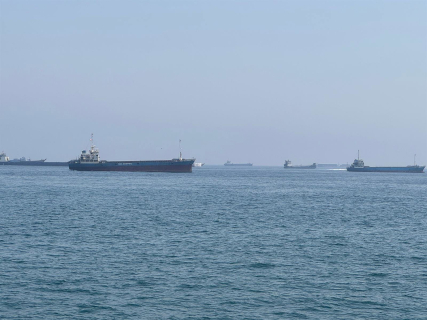
During the weekend, the talks have focused on a "two-day plan" aimed at facilitating the reopening of Hormuz if Washington attends to Tehran's demands. However, despite these indirect contacts, the United States has carried out new attacks against the island of Qeshm, which it has described as a limited and defensive action in the area.
Intense diplomatic activity in the region
These statements about the indirect contacts between Washington and Tehran come at a time when the countries of the region have intensified their diplomatic efforts, a context in which the Egyptian Foreign Minister, Badr Abdelatty, has held a conversation with his Omani counterpart, Badr Albusaidi.
As explained by the spokesperson for the Egyptian Ministry of Foreign Affairs, Nader Zaki, in a statement, both officials analyzed regional and international efforts to curb tensions, with special attention, in the case of Egypt and Oman, to preventing the region from suffering the economic and humanitarian consequences of the conflict.
"The ministers agreed to continue consultations and adopt the necessary measures to prevent the resumption of military operations, while channeling the crisis toward a political solution and negotiations between the parties involved," Egypt said regarding the contacts with Oman.