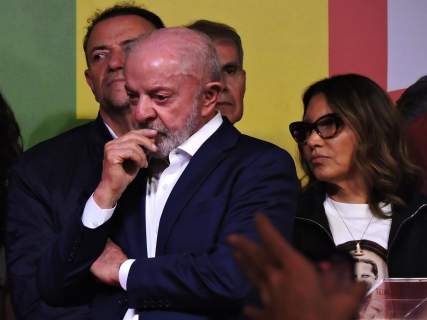

The presidential campaign in Brazil has opened a new judicial front against Meta, the company that owns Facebook, Instagram, and WhatsApp, just a few days before the second round of elections on October 25. The team of Luiz Inácio Lula da Silva accuses the company of digitally favoring Flávio Bolsonaro, son of former president Jair Bolsonaro, through restrictions on his posts, algorithmic recommendations, and differences in the functioning of its artificial intelligence tools.
The Superior Electoral Court (TSE) has intervened to demand that the tech company ensure the same conditions for both candidates. Meta, for its part, has acknowledged incidents that affected Lula's campaign but attributes the problems to technical errors and denies that there is a strategy to benefit Bolsonaro.
The conflict intensified after the Brazilian newspaper Folha de S.Paulo published internal communications from Meta employees acknowledging harmful incidents for the accounts of the Brazilian president. The information also included algorithmic recommendations of content from the conservative candidate on Instagram and WhatsApp.
Why Lula's campaign accuses Meta of favoring Bolsonaro
The candidacy of the Brazilian president believes that the incidents cannot be analyzed in isolation, as they affect different functions of the platforms and could have reduced the visibility of their messages during the campaign.
One of the main complaints refers to Meta AI, the artificial intelligence tool integrated into WhatsApp. According to the examples presented by Lula's team, the system rejected certain requests to generate images related to the president, while allowing the creation of similar content linked to Flávio Bolsonaro.
The campaign also questions whether the recommendation systems have facilitated access to profiles and channels of their opponent. Their lawyers believe that these differences could constitute unequal treatment prohibited by Brazilian electoral regulations.
Meta's response
Meta admits that the advertising account of Lula's campaign was mistakenly deactivated for just over an hour. The company also acknowledges incidents in its advertising and image generation tools, although it claims that they affected users of different political positions.
In a public explanation disseminated on October 16, the company attributed the advertising block to an automated fraud prevention system. Regarding Meta AI, it explained that it had implemented restrictions to prevent the generation of electoral content, but that some combinations of names and candidacy numbers were not correctly identified.
The company denies that its algorithms distribute content based on political ideology and claims that it applies the same rules to all candidates. It also maintains that the reported incidents do not demonstrate that there was intentional intervention in the electoral process.
What the Brazilian electoral Justice has ordered
The Superior Electoral Court has adopted several decisions to prevent Meta's platforms from applying unequal restrictions to candidates. On October 16, the full court unanimously confirmed the obligation to ensure equitable treatment in the distribution of publications, recommendations, and search results.
The resolution also extends to artificial intelligence tools. Meta must prevent its systems from allowing certain functions to one candidacy while unjustifiably restricting them to the other.
The judicial intervention has intensified in recent days:
- October 16: the TSE confirms the obligation of equal treatment and contemplates a daily fine of 500,000 reais for non-compliance.
- October 19: Judge Marco Aurélio Bellizze grants Meta another 24 hours to provide evidence of the measures taken, after considering the documentation presented insufficient. The anticipated fine rises to one million reais daily.
- October 20: Meta responds to the court assuring that its mechanisms guarantee non-discriminatory treatment to both candidacies.
The company also defends an important distinction: the equality required by electoral legislation affects the rules and criteria it applies, but it does not mean that the publications of both candidates must achieve identical audience results.
Why Lula is asking to investigate Bolsonaro's candidacy as well
The controversy has shifted from a complaint against the operation of the platforms to a dispute over possible electoral responsibilities.
According to the information published this Tuesday by Folha de S.Paulo, Lula's campaign has filed an electoral judicial investigation action before the TSE requesting the annulment of Flávio Bolsonaro's candidacy for alleged abuse of economic power and improper use of the media.
The initiative aims to determine whether the alleged algorithmic advantages irregularly benefited the candidate of the Liberal Party. Lula's lawyers also demand access to technical information and internal communications from Meta that would allow verifying the operation of its systems.
What consequences could it have for the elections on October 25
The controversy comes in the last week of the presidential runoff, scheduled for Sunday, October 25, in which Lula seeks reelection against Senator Flávio Bolsonaro.
Social media constitutes one of the main spaces for disseminating political messages and electoral mobilization. Therefore, the differences in the reach of publications, the promotion of ads, or automated recommendations can acquire special relevance when candidates compete for the attention of voters.
However, there is no conclusive evidence that the incidents acknowledged by Meta have altered electoral preferences or the result of the first round. It has also not been demonstrated that the observed differences respond to a deliberate decision by the company.
The question that Justice must resolve is whether the incidents constitute isolated technical failures, as Meta argues, or if there are elements that allow proving discriminatory treatment with legal consequences.
What is the next step?
The Superior Electoral Court must examine the documentation presented by Meta and verify whether the measures described by the company comply with the obligations imposed before the runoff.
This Tuesday, in addition, a meeting was scheduled between representatives of the company and the two electoral campaigns, convened at the TSE to address the conflict and the guarantees of equality.
In parallel, the new action promoted by Lula's campaign opens the possibility of a broader investigation into the functioning of algorithms and potential electoral responsibilities. The controversy is no longer limited to verifying whether a publication was improperly blocked or recommended, but extends to the transparency of the systems that decide which political content users receive.