
The Patriotic Union of Kurdistan (UPK), considered the second major political force in Iraqi Kurdistan, has announced its withdrawal from the current regional executive, has declared the new Parliament illegal, and has warned that it could set up a parallel administration, amid the intensification of the institutional crisis unleashed after the new legislature was set in motion.
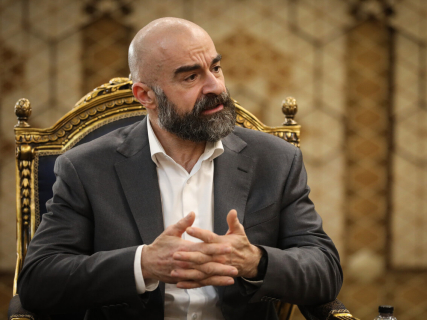
The announcement was made by the UPK leader, Bafel Talabani, son of the historic Iraqi president Yalal Talabani, through a televised message in which he proclaims the “failure” of the cabinet led by Masud Barzani, the top leader of the traditional rival of the UPK, the Kurdistan Democratic Party (PDK).
Tensions spiked with the election, last Wednesday, of a new president of Parliament in this semi-autonomous region, more than two years after the most recent elections were held. The UPK decided not to take part in the session, but the vote went ahead thanks to a very tight quorum, achieved, according to the party’s complaint, “through bribes, threats, and psychological pressure” on deputies from small parties and even on three parliamentarians from the UPK itself who broke internal discipline.
In response, Talabani has proclaimed that “this government has failed” and has detailed that the first measure of his party after the controversial vote is “the immediate withdrawal of this failed government that calls itself the Government of Kurdistan.” The leader added that “we will use all the force and power at our disposal” to ensure that the population of Suleimaniya and Halabja receives “everything they need.” The UPK’s influence in these two provinces is so extensive that they are often considered almost a separate entity within Kurdish territory.
For decades, both formations have shared political control of Iraqi Kurdistan, one of Iraq’s key oil regions. In recent years, the Kurdistan Democratic Party has typically concentrated the presidency and the post of prime minister, while the UPK calls for a much greater role in the highest-responsibility positions — up to demanding half of the cabinet portfolios — which has deeply deteriorated the relationship between partners.
This internal drive is also conditioned by a complex network of external support that goes back to the civil war that pitted both parties against each other in 1994. Then, the Democratic Party of Kurdistan had the backing of the Iraqi regime of Saddam Hussein, while the UPK relied on Iran, an alliance that remains in force to this day and continues to shape the balance of power in the region.