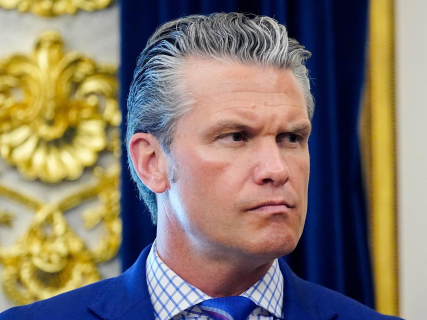

Pete Hegseth arrived at the Pentagon with an unusual profile to lead the largest military machinery in the world. Before becoming Secretary of Defense, he was a military man, conservative activist, author of political books, and television face of Fox News, where he built an image of a combative communicator, close to Donald Trump and very aligned with the discourse of the American right.
His appointment was already surrounded by controversy. Hegseth was confirmed by the Senate with a very tight vote, after several Republicans distanced themselves from the party line. The tie-breaking vote from Vice President JD Vance proved decisive for him to assume the position.
Since then, his time at the Department of Defense has been marked by three traits: absolute loyalty to Trump, mastery of television language, and an obsession with transforming the Army into a more aggressive force, less conditioned by debates on diversity, international legality, or political limits.
Trump's man to change the Army
Hegseth does not present himself as a technical manager of the Pentagon. His discourse is much more political. He has argued that the U.S. Armed Forces must regain what he calls "lethality" and leave behind, according to his vision, years of political correctness, bureaucracy, and operational restrictions.
This approach fits with Trump's return to the White House. The president needed someone willing to execute an ideological transformation of the military apparatus, not just to manage budgets, deployments, and chains of command. Hegseth offered exactly that: a mix of military veteran status, television fame, and political loyalty.
His style has strained the relationship with part of the military establishment. Dismissals, internal purges, changes in priorities, and clashes with commanders have accompanied his arrival at the Department of Defense. For his supporters, he is cleaning up an institution that is too bureaucratized. For his critics, he is subjecting the Pentagon to a partisan agenda.
The cultural war enters Defense
One of Hegseth's most controversial points has been his position on women in the Armed Forces and on diversity policies. For years he opposed women holding combat positions, a stance that reopened the debate in Washington when Trump chose him to lead Defense.
Already in office, he has promoted a language centered on physical strength, masculinity, and combat readiness. This week he took a further step by announcing annual testosterone tests for military personnel over 30 years old, arguing that it is to detect hormonal deficiencies and improve troop performance.
The measure summarizes the character well. Hegseth does not speak of the Army only as a national defense institution, but as a space to project a certain idea of man, discipline, strength, and authority. The Pentagon, under his command, is not foreign to the cultural war: it is part of it.
A secretary marked by controversies
Hegseth's career also carries personal and political controversies. During his confirmation process, his positions on women in combat and an accusation of sexual assault from 2017 were recalled, which he denied and that ended with a financial agreement to avoid a trial that could harm his television career.
His lack of prior experience in high administration was also subject to criticism. Unlike other secretaries of Defense, Hegseth did not come from a major institutional, diplomatic, or military responsibility at the highest level. His main capital was another: he knew Trump's language, knew how to move on television, and represented without nuances the new American right.
This combination explains both his rise and the doubts he generates. Hegseth is not just a Secretary of Defense. He is a symbol of how Trump has placed media and ideological figures at the forefront of key areas of the State.
Iran, strength, and absence of nuances
His role has become even more visible with the military escalation against Iran. Hegseth has defended a hardline stance and has used language very far from traditional diplomacy. In a statement about the U.S. offensive, he summarized his approach with a revealing phrase: without “stupid rules of engagement,” without nation-building, and without democracy exercises.
This vision breaks with decades of U.S. doctrine on foreign interventions, at least in its public formulation. Hegseth does not promise to stabilize countries or build institutions. He promises to strike, destroy enemy capabilities, and prevent the Army from getting trapped in long reconstruction operations.
For Trump, that speech has political utility. It presents the United States as a power that no longer asks for permission, does not apologize, and is not held back by international organizations or internal debates. For his critics, it opens the door to a harsher, less controlled, and more dangerous military policy.
Why Hegseth matters
Pete Hegseth matters because he does not lead just any ministry. He is at the head of the Pentagon, with the capacity to influence wars, alliances, military spending, strategic doctrine, and the internal functioning of the U.S. Armed Forces.
His case also shows a change of era in Washington. Technical experience is no longer always the main requirement to occupy the most sensitive positions. In the second Trump Administration, personal loyalty, the ability to communicate, and the willingness to wage cultural battles from within the State weigh more.
Hegseth embodies that mix: soldier, commentator, ideologue, and political executor. His career at the head of the Pentagon cannot be understood solely as an individual biography. It is a photograph of the new Trumpism in power: more television-oriented, more ideologically disciplined, and less willing to separate national security from cultural war.