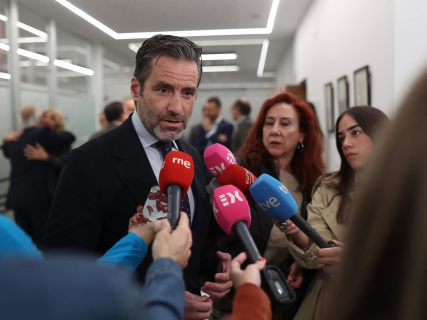

The national spokesperson of the PP, Borja Sémper, stated this Friday that there is a "correlation" between the "poor management" of public services and the direct impact it has on citizens, with "delays, management inability, but also in accidents". In this context, it has been questioned what has happened at Adif so that "for so many years" "what is important" has been relegated, referring to the maintenance of the Spanish rail system.
Sémper also referred to the detention of the "ex-driver" of Pedro Sánchez, Cristian Corvillo, as part of an investigation linked to the 'case Koldo' plot over alleged kickbacks in public works contracts. On this matter, he has ironized by pointing out that "there is no one left already from Pedro Sánchez's circle who has not been investigated or detained".
"And this also concerns us and calls on us to ask ourselves what has happened at Adif so that for so many years, through kickbacks and corruption, what is important in Adif, what is important on the trains, which is the maintenance of our tracks, has been set aside," the Popular Party leader emphasized.
In statements to the media this Friday in Cáceres, before intervening in an information breakfast organized by La Portada de Extremadura, the PP spokesperson reiterated that everything that is coming to light must drive in society "a deep debate" about the "level of responsibility when there are no budgets".
"When you don't govern well, in the end it's the citizens who end up paying for it, and something of all this is what we are also seeing at the end of this legislature," Sémper said, who warned that the country is facing "an extraordinarily important moment".
According to the PP national spokesperson, in the elections of next November 29 "the Spanish people are going to have to position themselves on very deep issues, probably the most important since our transition," he indicated, stressing that the dilemma will be "to continue as we are or bet on a change?".
"They will understand that I have come here to defend change, the need for Spain to take another path, which is a political project led by Alberto Núñez Feijóo so that it can get Spain out of this pit of inability to manage, this pit of continuous scandal, of permanent uproar, and to speak and open a new process of understanding between Spaniards, but also of good politics," he emphasized.
That “deep change” to which Sémper alludes will be based, as he has explained, on management and “on speaking about what we do with the money that citizens pay through their taxes, with their effort and how it is managed by politicians”.