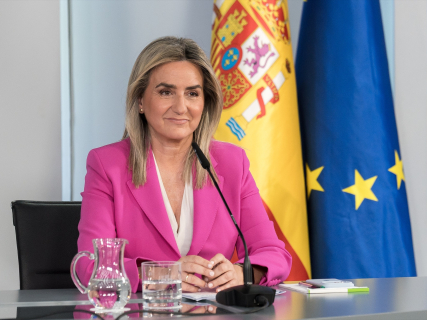
The Council of Ministers approved this Tuesday the draft Law that lowers the ratios and sets a legal cap on the teaching hours of teachers. A rule, which if approved in the terms provided by the Government, sets by law a maximum of 22 students in Primary and 25 in Secondary Education, reduces the teaching load of teachers and requires the adaptation of staff and resources until 2032. This is a binding state limit, which all autonomous communities must apply, and which means lowering the current caps (25 and 30, respectively).
The text, which was approved in the first round in the Council of Ministers last November, also includes a reduction in the teaching day for teachers:
- Infant and Primary: maximum of 23 hours weekly
- Secondary and later stages: maximum of 18 hours
From the Government they point out that the objective is to free up time for class preparation, coordination, and individual student attention. Another of the keys of the norm is that students with special educational needs (SEN) will count as two places for ratio purposes. This will oblige, in practice, to create more groups, increase teaching staff, and adjust educational resources.
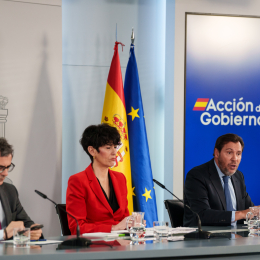
In the press conference following the Council of Ministers, the minister of the sector, Milagros Tolón defended a "more personalized and quality education". Regarding the novelties of the norm, Tolón assured that it "will undoubtedly improve the quality of teaching and the time available to work with each student". "It is a commitment to give teachers more time to better prepare their classes, to attend to their students, and to carry out their work in dignified conditions," she added.
Furthermore, he defended that the reduction of teaching hours for teachers is key to "dignify the teaching profession and improve the conditions in which our teachers teach".
And now what?
After its approval in the Council of Ministers, the rule will be sent to the Courts in the coming days. There, the first obstacle will be the debate of totality in Congress. Awaiting the decision of PP and Vox, Junts already announced that it would present a total amendment to all government projects. If the bill is admitted, its processing will continue in the Education Commission. Once the work is concluded, it will return to the Plenary and then it will be the turn of the Senate.
Regarding its parliamentary processing, the Minister of Education expressed her confidence that the Cortes Generales "will know how to rise to the occasion".
If the Executive manages the necessary support and in the times it expects, the new regulations would begin to be applied progressively from the 2026-2027 academic year until the 2031-2032 academic year. This calendar seeks to give communities room to adapt infrastructure, personnel, and budget.