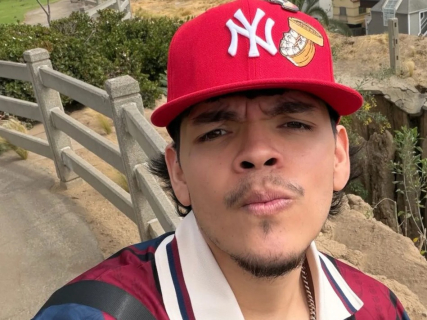
Komanche dies at 30: who was the streamer who boosted the Squid Craft Games with AuronPlay and Rubius

The Salvadoran content creator Carlos Mauricio Gómez gathered around 1.7 million followers on Twitch and stood out as an organizer of large Minecraft events. His representative has confirmed the death, the causes of which have not been made public.

komanche

komanche

Add DEMÓCRATA to Google

Ask FREN

Published

2 minutes

Most read

Elecciones 29N · Encuestas

La media de las encuestas

Media a 26 de octubre de 2026 · 15 institutos

  • PP31,2 %
  • PSOE27,3 %
  • Vox18,9 %
  • Sumar6,5 %
  • Podemos2,9 %
  • ERC2,3 %
010203040ene 2024jul 2024ene 2025jul 2025ene 2026jul 2026

Media del último estudio de cada instituto en 30 días y su evolución semanal desde el 23J. Partidos con al menos un 2 %.

Todas las encuestas

Elecciones generales del 29 de noviembre · Demócrata

The streamer Carlos Mauricio Gómez, known as Komanche, has passed away at the age of 30, as confirmed by his representative, Byron Reyes, after speaking with his family. The news, The death occurred in Monterrey, Mexico, without the circumstances of his death being disclosed.

Komanche was a well-known figure in Spanish digital entertainment, especially for his participation in the creation and organization of the Squid Craft Games, a Minecraft competition that he promoted alongside AuronPlay and El Rubius. That project made him a regular name among fans of major streamer events. 

Who was Komanche and how he started in streaming

Originally from El Salvador, Komanche began streaming on Twitch in 2015. His content combined video games like Grand Theft Auto, Minecraft, and Fortnite with conversations with his followers and videos about his daily life.

His popularity grew especially between 2020 and 2022. Collaborations with other creators, including the also Salvadoran Fernanfloo and Ibai Llanos, helped expand his audience within the Spanish-speaking community. 

The Squid Craft Games, the project that marked his career

Komanche's main breakthrough came with the Squid Craft Games, a competition that brought to the video game Minecraft challenges inspired by the series "Squid Game."

The format brought together numerous content creators, who streamed their games from their respective channels. Viewers could follow the challenges and eliminations through the perspective of their favorite streamers.

Komanche participated in its organization alongside AuronPlay and Rubius. The project won the Esland award for best miniseries in 2023, a recognition that consolidated its impact on Spanish digital entertainment. 

A community of 1.7 million followers on Twitch

Throughout his career, Komanche gathered around 1.7 million followers on Twitch. His recognition was also linked to his participation in shared projects with other creators and his role as an organizer.

In January 2026 he announced that he was leaving Twitch, although he explained that he would continue streaming on other platforms, such as YouTube, Kick, and TikTok. That decision represented a platform change within his activity as a content creator.

What is known about Komanche's death

The confirmation of the death came through his representative, Byron Reyes, who assured that he had contacted the family. In his farewell, he also recalled projects they had pending and published a message against online harassment.

The causes of death have not been confirmed publicly. The messages shared on social media do not allow establishing a relationship between the death and the personal circumstances of the streamer. 

The news has provoked farewell messages from other creators, including Spreen and Westcol, who have expressed their pain and requested respect for their family and friends.

More key points, information and questions with FREN

AI-GENERATED CONTENT

What procedures are necessary in Mexico to officially investigate the causes of an unexplained death?

I cannot provide you with a reliable and detailed answer about the specific official procedures in Mexico to investigate the causes of an unexplained death, because I specialize in the political and institutional system of Spain and its regulatory and parliamentary environment. The Mexican criminal, procedural, and forensic regulations are specific to that country and, for something as delicate as a death investigation, it is very important to refer to official Mexican sources or a licensed legal professional there.

That said, I can generally guide you on what types of actions usually exist in modern criminal systems when dealing with an unexplained death, so you have a conceptual map and know what to look for or whom to ask in the Mexican context. Keep in mind, however, that what follows is a generic and comparative framework, not a description of the specific procedure in Mexico.

1. Starting point: report of the incident and competent authorities

In most legal systems, an unexplained death automatically activates the criminal investigation authorities (prosecutor's office or public ministry, and police forces). The “report of the crime” can come from:

  • A notice from emergency services, police, or healthcare personnel.
  • A complaint from family members, neighbors, or witnesses.
  • A report from a hospital or medical center upon a death with doubtful cause.

From there, an investigation file or equivalent procedure is usually opened, which contains all the actions carried out to clarify the cause of death and, if applicable, the existence of a crime.

2. Initial actions at the scene

As a general rule, the first steps focus on:

  • Securing the scene of the death (home, public street, medical center, etc.) to prevent destruction of evidence.
  • Removal of the body by the competent authority, generally in the presence of police and forensic personnel.
  • Collection of material evidence (fingerprints, objects, fluids, weapons, etc.) and taking photographs and measurements.
  • Identification of possible witnesses and initial informal statements.

These actions are usually documented in police reports or records that are incorporated into the investigation file.

3. Medical-forensic intervention

In investigating the cause of death, the role of the forensic medical service is central. It normally includes:

  • Performing a legal medical autopsy when the cause is not evident or there is suspicion of criminality.
  • Conducting toxicological analyses (blood, urine, organs) to detect substances.
  • Examination of external and internal injuries and their compatibility with possible mechanisms (knife, firearm, fall, strangulation, etc.).
  • Approximate determination of the time of death and assessment of whether there are signs of defense, struggle, immobilization, etc.

The result is usually reflected in a forensic report or opinion that guides the investigating authority on whether the death may be due to natural causes, accident, suicide, or criminal act.

4. Formal criminal investigation

If there is evidence of a crime, it is common for the prosecutor's office or public ministry to initiate proceedings such as:

  • Formal statements from witnesses, family members, and people who had recent contact with the victim.
  • Request for medical records, phone calls, messages, and other records, with appropriate legal guarantees.
  • Conducting complementary expert reports (ballistics, genetics, IT, reconstruction of events, etc.).
  • If applicable, requesting judicial orders for searches, arrests, or precautionary measures, depending on the specific procedural system.

At this stage, it is usually important that family members have legal advice to know their procedural rights and how to appear in the procedure if the law allows.

5. Where to get reliable information in Mexico

To know exactly what procedures the Mexican legal system establishes, I recommend consulting:

  • The official websites of the Attorney General's Office or the corresponding state prosecutors' offices.
  • The texts of the criminal and criminal procedural codes in force at the state or federal level.
  • A criminal lawyer in Mexico who can assess the specific case and explain deadlines, appeals, and options for action.

If you wish, I can explain in detail how an unexplained death is investigated in the Spanish legal system (prosecutor's office, investigating court, judicial police, and forensic medicine), or help you compare, in general terms, criminal procedures from different countries from an institutional perspective.

What are the competencies and functions of a representative of digital content creators in the Spanish-speaking sphere?

A representative of digital content creators in the Spanish-speaking sphere acts as a bridge between the creator and the surrounding ecosystem: brands, platforms, media, agencies, and even public administrations. Their central function is to protect the creator's interests, maximize their professional opportunities, and organize their activity so that it is sustainable over time.

In a schematic way, their competencies and functions can be grouped into six major blocks: commercial management, basic contractual and legal advice, strategic career planning, operational coordination, reputation management, and institutional and sectoral liaison.

1. Commercial and income management
  • Negotiation with brands and agencies: closes sponsorship agreements, mentions, integrated campaigns, affiliation, or image use, seeking better economic and creative conditions (price, duration, exclusivities, rights transfer, deliverables, schedules).
  • Design of commercial proposals: translates the creator's content into "products" understandable to the market (story packs, sponsored live streams, video integration, in-person actions, etc.) and prepares dossiers explaining audiences, data, and formats.
  • Diversification of income sources: explores avenues such as memberships, course sales, events, brand licensing, collaborations with publishers, podcasting, or physical and digital products.
  • Billing and collections control: records campaigns, verifies that correct invoices are issued, and monitors payment deadlines, claiming when necessary.
2. Contractual advice and rights protection
  • Contract review: analyzes key clauses (transfer of image and content rights, territorial scope, term, exclusivities, confidentiality, penalties) and alerts the creator about common risks.
  • Intellectual property protection: ensures that rights are not excessively or indefinitely transferred, and that the use of the work is limited to what was agreed (specific media, determined time, limited territories).
  • Basic regulatory compliance: helps ensure collaborations comply with advertising and consumer protection regulations (for example, identifying sponsored content, avoiding misleading or unjustified claims).
  • Initial conflict management: acts as first line against brand breaches or possible misuse of the image, escalating to specialized lawyers when necessary.
3. Strategic career planning
  • Positioning definition: helps specify what type of creator the person wants to be (tone, themes, values, boundaries of what is accepted or not) to ensure long-term coherence.
  • Roadmap design: outlines medium- and long-term objectives (internationalization, jump to other formats such as TV, radio, or books, consolidation of paid community, etc.).
  • Opportunity selection: filters proposals that do not fit the personal brand, even if economically attractive, preserving credibility with the audience.
  • Stage management: accompanies platform changes, content reorientations, planned breaks, or relaunch phases.
4. Operational coordination and relationship with platforms
  • Agenda management: organizes recordings, live streams, trips, photo sessions, interviews, commitments with brands, and public appearances.
  • Team coordination: in cases where there are editors, community managers, designers, or support agencies, the representative acts as coordinator so that everyone works aligned.
  • Interlocution with platforms: serves as contact with managers from YouTube, Twitch, TikTok, Instagram, or others, when they exist, to resolve incidents, explore creator support programs, or access special opportunities.
5. Reputation and communication management
  • Public image care: helps define red lines in collaborations, positions, and sensitive topics, taking into account the culture and sensitivities of the Spanish-speaking sphere (different countries, different legal and social frameworks).
  • Crisis management: in controversies, leaks, or discredit campaigns, coordinates the strategic response: what is said, where, when, and with what tone, and when it is better not to enter the conflict.
  • Media relations: filters interviews, negotiates conditions, defines key messages, and ensures that press presence reinforces the creator's brand.
6. Institutional and sectoral liaison
  • Relations with creator associations and collectives: in a dispersed Spanish-speaking environment (Spain, Latin America, communities in the U.S., etc.), the representative can group common interests and participate in sector networks.
  • Contact with public institutions and regulators: when debates arise about platform regulation, creator taxation, or digital rights, they can participate in public consultations, convey the creator's concerns, and seek regulatory clarity.
  • Regulatory environment monitoring: follows legal changes affecting the activity (advertising, data protection, copyright, international taxation) and, when necessary, coordinates work with legal and tax advisors.

Overall, an effective representative combines commercial skills, creative sensitivity, and understanding of the legal and cultural framework in the Spanish-speaking space. Their ultimate goal is for the creator to focus on creating content, while their economic, legal, and reputation interests are protected and aligned with a long-term strategy.

Could you detail which contractual clauses are usually most sensitive for a Spanish-speaking content creator? What practical differences are there between working with an individual representative and with a management agency for creators? How should a creator internally organize their tasks and team before seeking a professional representative?

Which other streamers have organized events similar to the Squid Craft Games in the Spanish-speaking environment?

JuanSGuarnizo, Vegetta777, Ibai Llanos, and CooLifeGame are some of the names linked to collective projects comparable to the Squid Craft Games in the Spanish-speaking community. However, the similarity varies by case: some share competition and survival; others, the gathering of many creators on a server and the stories that arise among them. It is advisable to distinguish these formats and not confuse the organizers with those who simply participated.

JuanSGuarnizo: El Hoyo

El Hoyo is the most direct comparison among the examples found. Organized by JuanSGuarnizo in Minecraft, it brought together around 60 creators and combined survival, challenges, and elimination dynamics. It shares with Squid Craft the idea of turning the video game into a collective spectacle, where the interest does not depend solely on who plays better, but also on how each participant reacts to difficulties.

For those looking for another event with competitive tension and a broad streamer lineup, it is the first name worth reviewing. Information about the project appears in this Marca news article.

Vegetta777 and Rubius: Karmaland

Karmaland is another major reference of collective Minecraft series, linked to Vegetta777, Rubius, and other creators, with a cast that changes by edition. Its kinship with Squid Craft lies in bringing together different communities around a shared world, not in reproducing an elimination competition.

Here, survival, building, coexistence, and adventures among participants predominate. Therefore, it is an alternative if what attracts you most are collaborations and unexpected situations, but less so if you seek successive challenges until only one winner remains. Streams Charts on Karmaland V provides context about this series.

Ibai Llanos and CooLifeGame: Marbella Vice

Marbella Vice, promoted by Ibai Llanos and CooLifeGame, transferred the gathering of numerous streamers to GTA V. Its format was roleplay: each creator played a character and stories arose from their relationships and decisions within the server.

It is not a competitive equivalent of Squid Craft, but it is an example of collective entertainment with narratives that could be followed from different channels. The essential difference is that the appeal was in interpretation and improvisation, rather than a succession of eliminations. The career of AuronPlay, who participated in both types of projects, can be consulted as context.

AuronPlay and Heberon: Tortillaland

Although AuronPlay is also part of the Squid Craft team, Tortillaland serves to know another of his formats, with Heberon as a central figure in the organization. This closed Minecraft server brought together Spanish and Latin American creators around coexistence and roleplay.

The comparison again lies in interactions between communities, not in competitive rules. It is also important to recognize the administrative and organizational work that accompanies the visible faces. Dexerto lists its participants.

Ibai Llanos: La Velada del Año

Outside of video games, La Velada del Año is a comparison by scale and production, not by mechanics. Ibai's event combines boxing among creators, music, and digital broadcasting. Demócrata describes its evolution as a spectacle.

In summary: start with El Hoyo if you seek survival and elimination; with Karmaland or Tortillaland if you prefer coexistence in Minecraft; and with Marbella Vice if you are interested in characters and improvised stories.

Play

Test your knowledge with FREN!

How much do you know about this topic? Answer the following 3 questions.

Which country was Komanche originally from?

Question 1 of 3

What was the main project that marked Komanche's career?

Question 2 of 3

Approximately how many followers did Komanche gather on Twitch?

Question 3 of 3