El Asador Etxebarri crowns itself as the best restaurant in the world in 2026

The Vizcaya establishment, led by Bittor Arginzoniz, replaces the Peruvian Maido. DiverXO, Enigma and Elkano complete the Spanish representation

Add DEMÓCRATA to Google

Ask FREN

Published

Last updated

2 minutes

Most read

Elecciones 29N · Encuestas

La media de las encuestas

Media a 4 de noviembre de 2026 · 15 institutos

  • PP31,0 %
  • PSOE26,3 %
  • Vox19,5 %
  • Frente Amplio6,5 %
  • ERC2,5 %
  • Podemos2,2 %
  • SALF2,2 %
01020304050ene 2024jul 2024ene 2025jul 2025ene 2026jul 2026

Media del último estudio de cada instituto en 30 días y su evolución semanal desde el 23J. Partidos con al menos un 2 %.

Todas las encuestas

Elecciones generales del 29 de noviembre · Demócrata

asador etxebarri
asador etxebarri

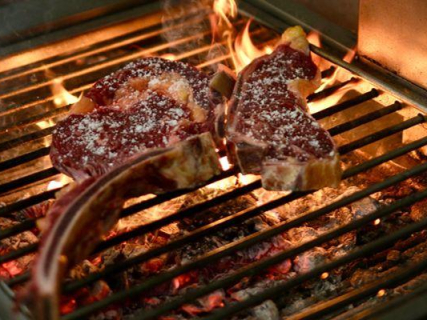
The best restaurant in the world is in Spain. There’s nothing new about that. It is the Asador Etxebarri, located in Axpe (Bizkaia) and run by the chef Bittor Arginzoniz. The Basque establishment takes first place in the The World’s 50 Best Restaurants list, presented during a gala held in Lima (Peru), and replaces the Peruvian Maido, winner of the previous edition.

The recognition caps a career spanning more than a decade among the top ten positions in the ranking. Etxebarri had finished second in the last two editions and this year finally manages to reach number one. In addition, it revalidates the title of best restaurant in Europe.

Arginzoniz’s proposal has, on the fire, its main hallmark. The restaurant works with different embers and grilling techniques to prepare a 14-course menu in which the product takes center stage. The organization highlights precisely the mastery of wood-fired cooking and the establishment’s ability to transform simple ingredients through this technique.

The fourth Spanish restaurant to reach number one

With this victory, Etxebarri becomes the fourth Spanish restaurant to top the world ranking. Before this, elBulli achieved it, which held first place on five occasions; El Celler de Can Roca, winner in 2013 and 2015; and Disfrutar, which reached the top in 2024.

Spain has three other establishments among the top 50 of the 2026 edition. DiverXO, the Madrid restaurant by Dabiz Muñoz, occupies ninth position, after having been fourth in the previous three editions. Enigma, by Albert Adrià, is in 29th place, while Elkano, in Getaria (Gipuzkoa), appears at number 33.

The ranking is led by Etxebarri, followed by the Thai Gaggan, in Bangkok, and the Danish Alchemist, in Copenhagen. The Mexican Quintonil takes the fourth spot and the Hong Kong Wing the fifth.

A gala held in Lima for the first time

The 2026 edition was announced at the Teatro Municipal de Lima. The Peruvian capital hosted the ceremony for the first time, which recognizes restaurants from six continents and 28 territories. The list is compiled based on votes from an international community of professionals and specialists from the food and gastronomy sector.

The previous number one, Maido, has moved to become part of the group Best of the Best, reserved for restaurants that have already won the ranking and, therefore, stop competing in subsequent editions.

The Asador Etxebarri award returns Spain to first place in international gastronomy and recognizes the career of a restaurant from Axpe that has built its identity around an ancestral technique: cooking with fire.

More key points, information and questions with FREN

AI-GENERATED CONTENT

What requirements must restaurants meet to be included in The World’s 50 Best Restaurants list?

The The World’s 50 Best Restaurants list does not operate as a guide with a fixed set of technical requirements (square meters, number of tables, Michelin stars, etc.), but rather as a ranking based on votes from a large international panel of experts. Still, there are a series of formal conditions and operational criteria that a restaurant must meet to appear on the list.

1. Basic conditions to be eligible

In summary, a restaurant must meet at least these minimum requirements:

  • Be a regularly operating restaurant: it must be open to the public on a stable basis, not a temporary pop-up or a one-off project. If it closes during part of the year (for example, seasonal restaurants), it must be operational long enough for voters to visit it within the reference period.
  • Be open to the general public: it cannot be an exclusively private dining room, for members only or "closed door." It is allowed to work with reservations and waiting lists, but any customer should, in theory, be able to book and dine there.
  • No requirement on type of cuisine or format: it can be contemporary haute cuisine, traditional, informal, or signature cuisine, as long as it offers a complete gastronomic experience (usually excluding, for example, basic cafeterias or bars without a defined culinary proposal).
  • There is no registration or application system: restaurants do not "apply" for the award. They only need to exist, be open, and be visited by voters. Inclusion on the list depends on enough panel members choosing them in their votes.

2. How the voting system works

The real "condition" to enter the list is to be considered exceptional by the voting panel. The system works, broadly speaking, as follows:

  • Panel of over 1,000 experts: the list is based on votes from chefs, food journalists, critics, restaurateurs, and frequent gastronomes spread worldwide. They are organized by regions, each with a president overseeing the process.
  • Recent direct experience: each voter can only cast votes for restaurants they have personally visited within a certain timeframe (usually the 18 months prior to the voting closure). This implies the restaurant must be operational and offering service during that interval.
  • Independent and anonymous voting: votes are individual, confidential, and based on the overall experience (food, service, atmosphere, perceived value for money, uniqueness, etc.). There is no published "official scoring scale"; the voter's overall assessment prevails.
  • Geographical diversity: voters are asked to distribute their votes among restaurants from their region and others, to avoid the list concentrating in very few countries. This favors restaurants from different continents entering if they generate enough interest.
  • Economic independence: official rules state that voters cannot receive incentives for voting for a particular restaurant and must pay (fully or mostly) for their own meals, precisely to reduce conflicts of interest.

3. What is NOT formally required

It is equally important to understand what things are not formal requirements:

  • Michelin stars are not required nor is appearing in other guides.
  • No specific price level is demanded: there are restaurants with very high average tickets and others relatively more accessible.
  • No evaluations of reports, dossiers, or applications: the organization insists that marketing campaigns do not replace real visits by voters.
  • There is no public checklist of technical criteria (number of tables, minimum wine cellar, etc.). Everything depends on the panel's perception of excellence.

4. In practice, what do they usually have in common?

Although not published as legal requirements, restaurants that enter The World’s 50 Best Restaurants usually share certain traits:

  • Very defined culinary proposal: a cuisine with its own identity, whether by technique, local product, innovation, or reinterpretation of traditions.
  • Coherence throughout the experience: not only the dish matters, but the menu narrative, dining service, pairing, space design, and hospitality.
  • Ability to attract gastronomic travel: many voters travel internationally; locals that generate "pilgrimage" usually have more chances to be voted.
  • Visibility in the gastronomic community: appearances in specialized press, collaboration in events, guest chef residencies, etc., facilitate more voters knowing and visiting the restaurant.

In summary, a restaurant does not enter The World’s 50 Best Restaurants by complying with a closed regulation, but by becoming an exceptional gastronomic destination in the eyes of a broad and diverse panel of experts who have experienced it firsthand in the months prior to voting.

How exactly are the voters who make up The World’s 50 Best Restaurants panel chosen? What are the key differences between The World’s 50 Best Restaurants list and the Michelin guide? What strategies do restaurants usually follow to gain visibility and increase their chances of entering the list?

What are the competencies and attributions of chef Bittor Arginzoniz according to professional regulation in Spain?

Bittor Arginzoniz does not have exclusive legal attributions by virtue of being a chef. In Spain, cooking or managing a kitchen is generally not a regulated profession whose practice is reserved for those with a qualifying degree. His functions must be distinguished from the competencies described in official Vocational Training titles and from the health, labor, and business obligations of the restaurant sector.

What this means in his case

The title "chef" does not by itself grant special legal powers. Neither gastronomic recognition, awards, nor experience create an exclusive activity reservation: that is, tasks that only that professional can legally perform. The consulted sources do not show any singular regulation attributing to Arginzoniz competencies different from the general regime.

Therefore, an educational competency list should not be presented as if it were a personal qualification of his. Nor can one deduce what degrees he holds, what contractual functions he performs, or what his specific business responsibilities are without documentation proving it.

Reference professional competencies

Educational regulations do describe what a person trained in cooking should be able to do. These profiles help understand sector tasks but do not equate to exclusive attributions:

  • Culinary execution: pre-processing raw materials, preparing, preserving, presenting, and serving dishes. Royal Decree 1396/2007, which establishes the title of Technician in Cooking and Gastronomy, covers this area and professional outlets such as cook and station chef.
  • Kitchen management: organizing and directing culinary production and service. Royal Decree 687/2010, related to the title of Higher Technician in Kitchen Management, includes occupations such as kitchen director, production chief, head chef, and sous chef.
  • Gastronomic management: managing culinary production units, designing gastronomic offers, and directing preparation processes are areas described in the qualification of Kitchen Management and Production.

The distinction is explicit: the higher degree regulation states that its elements do not constitute the regulation of the practice of a licensed profession. Therefore, describing a training profile does not mean requiring that degree to perform any chef position.

What obligations accompany the practice

The absence of a general qualifying degree does not mean absence of regulation. Depending on the functions actually assumed, culinary work and restaurant operation are subject to obligations regarding:

  • Food safety and hygiene: safe handling, proper preservation, and training adjusted to staff tasks.
  • Occupational risk prevention: compliance with applicable measures for work and kitchen organization.
  • Establishment operation: sanitary requirements, authorizations, licenses, and corresponding regional and municipal conditions.
  • Labor relations: functions, professional classification, and conditions determined by the contract and applicable collective agreement.

It is not appropriate to automatically attribute all these responsibilities to Arginzoniz just because he is called a chef: some correspond to the establishment operator or employer, and others depend on the tasks and responsibilities actually assumed.

Practical conclusion

Arginzoniz can perform culinary, creative, and management functions, but these are not exclusive powers granted by a professional chef statute. To specify his labor attributions, one would need to identify his contractual position and applicable agreement; to determine his business obligations, his role in the operation. The legal key is the function he performs, not his gastronomic notoriety.

How many Spanish restaurants have held the first place in The World’s 50 Best Restaurants list in the last two decades?

In the last two decades, three Spanish restaurants have reached the first place in the The World’s 50 Best Restaurants list. They are:

  • El Bulli (Roses, Girona)
  • El Celler de Can Roca (Girona)
  • Disfrutar (Barcelona)

That is, we are not talking about a single restaurant repeating, but three different gastronomic projects, all located in Catalonia, that have at some point reached number 1 in this international ranking considered one of the most influential in the world of haute cuisine.

1. El Bulli (Roses, Girona)

El Bulli, led by Ferran Adrià, was the great pioneer that placed Spain at the center of the global gastronomic avant-garde. Although the The World’s 50 Best Restaurants list began in 2002, if we look at approximately the last two decades, El Bulli stood out especially for chaining several first places:

  • It was number 1 in various editions of the list during the 2000s, consolidating its role as a symbol of "techno-emotional cuisine."
  • Its influence is measured not only by the years on the podium but by the number of chefs trained there who later opened their own reference restaurants.

Although El Bulli closed as a gastronomic restaurant in 2011, its legacy remains very present: much of the new generation of Spanish and other countries' chefs has passed through its kitchens or been influenced by its radically creative approach.

2. El Celler de Can Roca (Girona)

The second Spanish restaurant to reach number 1 is El Celler de Can Roca, by the Roca brothers (Joan, Josep, and Jordi). This establishment represents another face of Spanish gastronomic excellence:

  • It has alternated positions in the upper part of the list for many years, reaching first place in several editions.
  • Its proposal combines technical avant-garde, rootedness in the Girona territory, family memory (the original family dining house), and a very personal interpretation of Catalan cuisine.

El Celler de Can Roca symbolizes Spain's transition from being a punctual avant-garde anomaly (El Bulli) to becoming a consolidated ecosystem of haute gastronomy, with several projects capable of leading international rankings.

3. Disfrutar (Barcelona)

The third Spanish name to have held first place is Disfrutar, in Barcelona, created by Oriol Castro, Eduard Xatruch, and Mateu Casañas, three chefs who precisely come from El Bulli's training ground. Their rise in the list has been progressive until crowned number 1.

  • Their cuisine is characterized by extreme creativity, visual and technical playfulness, and very elaborate tasting menus.
  • They represent the "second Bulli generation": chefs who take the technical and conceptual heritage of El Bulli but reinterpret it with their own personality.

With Disfrutar at the pinnacle, it is confirmed that Spanish influence in the global gastronomic scene was not a passing phenomenon of the early century but a current that has continued evolving.

Summary: Spain's weight in the global elite

In summary, in the last two decades the answer to your question is clear:

  • Number of distinct Spanish restaurants that have been number 1 in The World’s 50 Best Restaurants: three.
  • All located in Catalonia and with direct or indirect links to the creative revolution that El Bulli represented.

Besides the purely numerical data, this recurring leadership highlights several elements:

  • The continuity of Spanish avant-garde, from El Bulli to the current generation.
  • The ability of Spanish chefs to turn creativity into a globally recognizable hallmark.
  • Spain's role as one of the countries that has placed restaurants at the top of this list most times, competing with other gastronomic powers like Denmark, Italy, or France.

Together, these three restaurants not only add up first places in a ranking but have decisively contributed to Spanish cuisine being perceived, in the last two decades, as one of the main drivers of gastronomic innovation worldwide.

In which exact years did El Bulli, El Celler de Can Roca, and Disfrutar hold number 1 in The World’s 50 Best Restaurants? What are the main differences between the gastronomic proposals of El Bulli, El Celler de Can Roca, and Disfrutar? What other Spanish restaurants, although not number 1, have regularly been in the top 10 of The World’s 50 Best?

Play

Test your knowledge with FREN!

How much do you know about this topic? Answer the following 3 questions.

Where is Asador Etxebarri, awarded best restaurant in the world in 2026, located?

Question 1 of 3

What culinary technique mainly characterizes Asador Etxebarri?

Question 2 of 3

Which restaurant held the first place in The World’s 50 Best Restaurants list in the edition prior to 2026?

Question 3 of 3