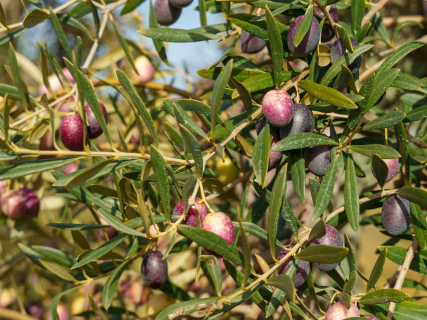

Spain could reach in the 2026/27 campaign a production of 1,602 million tonnes of olive oil, according to the estimate published on October 1 by the Ministry of Agriculture, Fisheries and Food. This figure would represent an increase of 23% compared with the previous campaign and of 35% compared with the average of the last six, as set out in the 2026 Sector Report on Olive Oil, prepared by AgroBank and Agrifood Comunicación.
In particular, it points to one of the largest harvests recorded, which would leave far behind the 2022/23 and 2023/24 campaigns, marked by very low productions that drove olive oil prices, both at origin and on the retail line, to unprecedented highs.
The 2025/26 campaign concluded in Spain last September 30 with a little over 1.3 million tonnes, 8% less than the previous one. Even so, this volume keeps Spain as the main benchmark on the global market, by accounting for 64% of the production of the European Union and 38% of the world total, estimated at around 3.4 million tonnes.
As for the area, Spain brings together 2.75 million hectares of olive groves out of the 11.7 million existing on the planet, placing it far ahead of Tunisia (1.8 million) and Italy (1.1 million). This is a crop already present in 60 countries across the five continents, with the addition of new producers such as El Salvador, Ethiopia, Kuwait or Uzbekistan.
The increase in oil availability has been reflected in quotations. In week 41 of this year, AOVE was paid in Spain at 331.86 euros/100 kg, 22% less than in the same week of 2025 and 4.37% below four weeks earlier, while virgin olive oil stood at 306.99 euros/100 kg. The adjustment is even more intense in Italy, where AOVE traded at 437 euros/100 kg, 53% less than a year earlier, although still at a clearly higher level than Spain’s.
If all categories are considered, except that of olive pomace oil, prices in Spain are 14.5% lower than those of the previous campaign. The drop reaches 54.4% when comparing with week 41 of 2024, when quotations still reflected the scarcity of the previous campaigns and were at extraordinarily high levels (688.74 euros/100 kg on average); therefore, this is not a comparison with the average of the last two campaigns, but with a specific point in time of maximums.
Despite this, the report emphasizes that current prices are not low when analyzed from a historical perspective, although they are clearly below those recorded in the most recent fiscal years and remain above those observed before 2021.
In the external sphere, Spanish exports reached 911,300 tonnes as of 31 August, 3.7% less than in the preceding campaign, but 10.2% more than the average of the previous four (827,200 tonnes). Their value, greatly conditioned by the evolution of prices, could exceed 6,000 million euros, with coverage rates standing at over 800%.
Italy figures as the main destination, with more than 1,000 million euros, followed by the United States, France, Portugal, the United Kingdom, China, Japan, Australia, Germany and Brazil.
The report identifies as the main weak point in the sector’s billing the fact that more than 60% of sales abroad are still carried out in bulk, in many cases to countries such as Italy, which bottles the product and reexports it under its own brands, thereby appropriating the added value.
The correction in prices is also reflected in the EU’s trade balance, which has moved from a historical high of 4,389 million euros in 2023/24 to 2,846 million between October 2025 and July 2026.
At the same time, world consumption has remained stable since 2019 at around three million tonnes, although with a different breakdown: non-EU countries already absorb 1.64 million tonnes, compared with 1.45 million in the Member States.
Traditional markets still account for nearly 70% of consumption, while the remaining 30% is gathered by new consuming countries that are not producers. In Mediterranean countries, more than 90% of the oil is sold through large-scale distribution, where the distributor’s own brands represent between 60% and 70% of sales. For its part, the gourmet channel and direct sales, with a share of less than 5%, allow higher margins and have driven the emergence of new brands linked to small oil mills.