
The European Parliament has urged this Thursday to reinforce the capacity of the European Union to anticipate wildfires, floods, earthquakes and health crises. To do so, it calls for improving early warning systems, increasing coordination between Member States and raising the budget of the Civil Protection Mechanism up to 12,420 million euros for the period 2028-2034, that is, 1,740 million more than that proposed by the European Commission.
The resolution, which has been approved with 424 votes in favor, 105 against and 83 abstentions, aims for the EU to stop limiting itself to reacting when disasters occur and instead to decisively strengthen prevention. To do so, it proposes identifying with greater precision the areas most exposed, continuously monitoring potential risks and using climate projections that make it easier to anticipate emergency scenarios.
With this vote, the Eurochamber sets out its position on the Civil Protection chapter within the negotiations of the next multiannual financial framework (MFF, for its acronym in English) for 2028-2034. From now on, negotiations will have to be opened with the Council, representing the governments, before closing the final content of the regulation and the distribution of funds.
Members of the European Parliament argue for making use of the EU’s space capabilities to improve early warning systems, give a more relevant role to local and regional authorities, and create a specific framework for collaboration between civilian and military administrations that makes it possible to coordinate the response better to crises of large magnitude.
"The Civil Protection Mechanism is the best example of European solidarity. But we still need to improve in terms of anticipation, develop a genuine culture of preparedness and coordinate better the different actors," the Spanish socialist MEP Leire Pajín, the rapporteur of the text, has argued, who has emphasized the need for citizens to know how to act when an emergency occurs.
Along the same lines, Pajín has pointed out that it is key to combat misinformation in crisis contexts and ensure adequate funding to strengthen the preparedness of Member States. "The European Parliament supports a mechanism that protects lives and anticipates crises," she has claimed.
The Parliament’s proposal increases the funding of the mechanism to €12,420 million for the next seven years, compared with the €10,680 million that appeared in the initial proposal of the European Commission. The resources would be divided between civil protection and health emergencies, with 40% for each area, reserving the remaining 20% to address unforeseen needs.
A key mechanism for Spain
According to data from the European Commission consulted by Europa Press, the Civil Protection Mechanism has been activated on twelve occasions in the last decade in Spain, including as a result of the fire that affected the Sierra Oeste of the Community of Madrid last summer.
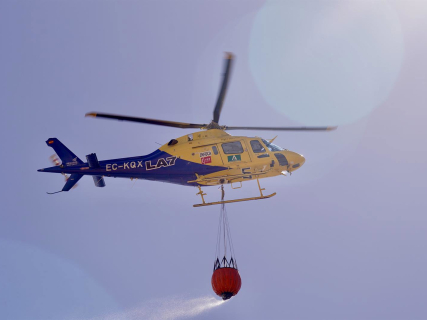
In that operation, aerial resources were mobilized from Germany (one), Greece (two), Portugal (three), Serbia (two) and Turkey (two), which worked together in the firefighting efforts in the provinces of Ávila and Madrid.
A European air fleet against fires from 2028
Among the measures put forward, the Members of the European Parliament support strengthening the European crisis response reserve, known as "rescEU", which will need to include the deployment of a specific air fleet for fighting wildfires, whose rollout is planned to begin in 2028.
In addition, the Parliament calls for better coordination between administrations during the reconstruction phase after disasters, through a framework that clearly defines the responsibilities of each level of government and the resources available, in order to speed up the recovery of the affected areas.
It also proposes legally recognizing the role of volunteers who take part in civil protection tasks, through a "specific statute" that includes insurance coverage, official recognition of the training acquired, and exemptions from certain employment obligations to facilitate their participation in emergencies.
More health preparedness for future crises
In the health field, the Eurochamber proposes strengthening the preparedness of the Member States against threats that could impact several countries simultaneously. To that end, it suggests creating strategic reserves of medical material, including personal protective equipment and essential components for the manufacture of medicines.
The text also calls for intensifying cooperation between hospitals and healthcare teams from different Member States, through systems that make it possible to monitor in real time the availability of beds in intensive care units and to facilitate the transfer of patients to other countries when national systems are overwhelmed.
"The COVID-19 pandemic showed the need to integrate health preparedness into the community framework for civil protection," the Lithuanian MEP Aurelijus Veryga, a co-author of the text, has said, who has warned that climate emergencies and hybrid threats require strengthening Europe’s response capacity.
"The cost of preparedness may seem high, but the cost of not being prepared is always much higher," Veryga concluded, belonging to the group of the European Conservatives and Reformists (ECR).