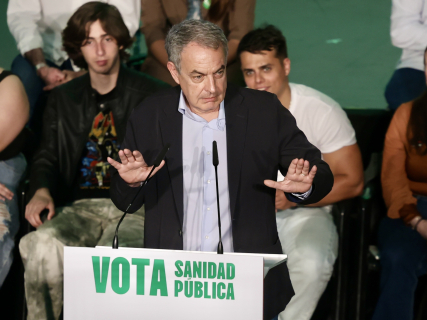

The indictment of former Prime Minister José Luis Rodríguez Zapatero for alleged crimes of criminal organization, influence peddling, document forgery, and money laundering has shaken the PSOE this Tuesday and has opened an unprecedented day in Spanish politics.
For the first time in democracy, a former head of government is summoned as a suspect in a corruption case before the National Court.
The magistrate José Luis Calama, head of Central Investigating Court number 4, has summoned Zapatero to testify on June 2 as part of the investigation into the public bailout of 53 million euros granted to the airline Plus Ultra during the pandemic.
And, despite Moncloa admitting that the indictment has been a "blow" for them, the Government has closed ranks around the former president and takes for granted that the current head of government, Pedro Sánchez, will defend him this Wednesday during the control session in Congress.
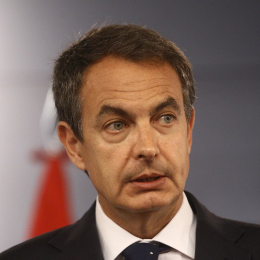
What the judge maintains about the alleged scheme
The information regarding the indictment of Zapatero, Sánchez's strongman and a great standard-bearer of the socialist wing of the Government due to his political trajectory, was first reported this morning by El Confidencial.
According to the judicial order, which Demócrata has accessed, the investigation points to the existence of "a stable and hierarchical structure of influence peddling" allegedly led by the former head of the Spanish Executive between 2004 and 2011 to obtain economic benefits through intermediation with public bodies and high-ranking officials of the Administration.
The judge maintains that the network would have used shell companies, simulated documentation, and opaque financial channels to benefit, mainly, Plus Ultra and other business interests linked to international operations of oil, gold, foreign currency, and stocks.

Featured story
How was the rescue of Plus Ultra? An operation that ignited PP and Vox from day one
2 minutes
The judicial resolution also mentions the alleged use of offshore structures, including a company based in Dubai, to channel payments and hinder the traceability of funds.
Nearly two million in commissions
Tuesday has been marked by several searches carried out by the Economic and Fiscal Crime Unit (UDEF) of the National Police, whose investigation in secret for months largely outlines the magistrate's instruction.
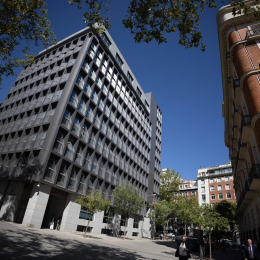
The agents have intervened in the office of the former president on Ferraz street in Madrid, near the PSOE headquarters, as well as in various companies linked to his circle, including Whathefav, a company managed by Zapatero's daughters.
The order also places the businessman Julio Martínez Martínez and the consultancy firm Análisis Relevante as relevant players in the alleged structure. This is precisely one of the most sensitive aspects of the order, the tracking of economic flows.
According to the resolution, the aforementioned consultancy firm, described as "an instrumental piece within a financial structure designed to channel funds from various companies", received more than 941,000 euros from Plus Ultra, Sofgestor, Grupo Aldesa and Inteligencia Prospectiva.
Subsequently, this company allegedly made relevant transfers for approximately 490,780 euros to José Luis Rodríguez Zapatero and another 239,755 euros to Whathefav. In total, the judge estimates the total amount of funds received by the "circle" of the former president at 1,948,857 euros.
The former president's defense: "I have never taken any action"
Hours after learning of his indictment, Zapatero released a video in which he denied any wrongdoing and assured that he has never taken any action with any public administration related to the bailout of Plus Ultra.
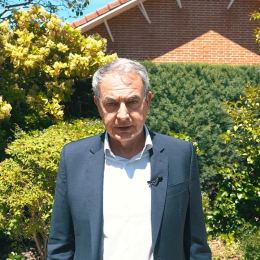
"I want to reaffirm that all my public and private activity has always been carried out with absolute respect for the law. My private activity and the income and remuneration I have received have been declared via IRPF with absolute transparency and legality," he stated.
He also stated that he will address the media "in the coming days."
A political earthquake
The judicial decision has caused immediate political reactions.
The Government has expressed its confidence in the former president's innocence, as stated this morning by sources from Moncloa. Within the Executive, they maintain that the former head of government is innocent and continue to support him, although they emphasize that they do not question the judicial investigation or the work of magistrate José Luis Calama.
Thus, the Executive recalls that Zapatero has accompanied Sánchez in all the crises of recent years and also when judicial cases affecting his wife, Begoña Gómez, and his brother, David Sánchez, have been opened. Therefore, they take for granted that the president will act in the same way and "will be there".
🔴 #INDIRECT | Elma Saiz (@SaizElma) on the indictment of Zapatero in the 'Plus Ultra case': "They are loans to airlines that saved jobs and companies during the pandemic. (...) We respect the presumption of innocence"
— demócrata (@democrata_info) May 19, 2026
📲 Find out all the details on Demócrata:… pic.twitter.com/eRHjmUEb10
In the same vein, the government spokesperson, Elma Saiz, has reiterated Zapatero's "presumption of innocence", while highlighting that the actions and procedures surrounding the loans granted during the pandemic, such as that of Plus Ultra, were "impeccable and transparent".
The PP claims that "corruption is the foundational reason" for the Government
For his part, the president of the Popular Party, Alberto Núñez Feijóo, has maintained that "corruption is the foundational reason" for the current Executive and has stressed that Pedro Sánchez "only has one dignified way out", alluding to his departure from La Moncloa.

Along these lines, the PP's top official has once again demanded Sánchez's resignation, a claim he had already made on previous occasions in response to the various cases of alleged corruption that have affected the PSOE and the Executive.
But the leader of Vox, Santiago Abascal, has gone further and urged the PP to file a motion of no confidence against Sánchez with the aim of "exposing" the Government, which he likens to a "mafia" led by the head of the Executive.
What it means to be investigated by the National High Court
The judicial case being investigated revolves around the rescue of 53 million euros granted in 2021 by SEPI to Plus Ultra through the Fund for the Support of the Solvency of Strategic Companies created during the pandemic.
The National High Court is investigating whether part of these public funds were allegedly used to channel irregular payments, commissions, or money laundering structures linked to business and political intermediaries.
As part of this investigation, Zapatero will testify as an investigated person on June 2. The term "imputado" (indicted), widely used for years in Spain, was replaced in the Criminal Procedure Law by "investigado" (investigated), precisely to reinforce the presumption of innocence during the initial phases of the judicial proceedings.
When a judge summons someone as a suspect, what they do is formally recognize their defense rights within a criminal proceeding. Among them, attending accompanied by a lawyer, accessing part of the proceedings, testifying voluntarily, or availing oneself of the right not to testify.
The Audiencia Nacional does not investigate any criminal proceeding. It is a court specialized in crimes of particular complexity or with national and international scope. Among the matters it usually handles are: terrorism, international drug trafficking, large economic schemes, money laundering, complex corruption, or crimes with ramifications outside of Spain.
Many cases opened in the investigation phase end up being dismissed before reaching trial. In any case, they are the beginning of a judicial process.