Macondo Park by Shakira in Madrid: hours, activities, and how to access

The ephemeral city installed around the Shakira Stadium opens at 12:00 hours on concert days and brings together eight spaces dedicated to music, gastronomy, fashion, literature, art, and Latin culture.

3 minutes

fotonoticia 20260914113819 1920

fotonoticia 20260914113819 1920

Add DEMÓCRATA to Google

Ask FREN

Published

3 minutes

Most read

The concerts of Shakira in Madrid start long before the singer takes the stage. The residency that the artist premieres this Friday, September 18, includes Macondo Park, a temporary city built around the Shakira Stadium within the Iberdrola Music venue in Villaverde.

The space will open at 12:00 hours on each of the twelve concert days and will allow attendees to spend a good part of the day inside the venue before the main show. The proposal brings together eight thematic spaces and activities related to music, gastronomy, fashion, literature, art, cinema, and Latin culture.

However, Macondo Park cannot be visited without a ticket for Shakira. Live Nation specifies that access to all its activities is included for those who have a ticket for the corresponding concert and that exclusive tickets to access only the park are not sold.

What is Macondo Park

Macondo Park is the cultural and leisure space that surrounds the temporary stadium built for the European residency of Las Mujeres Ya No Lloran World Tour.

Its name refers to Macondo, the literary universe created by Gabriel García Márquez, and serves as a starting point for a proposal focused on Latin American culture.

The promoter has proposed the space as a small city within Iberdrola Music. The project is structured around eight thematic pavilions, each dedicated to a different aspect of the experience and with its own programming during the residency dates.
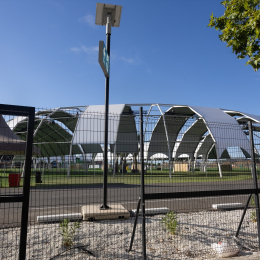
What is in Macondo Park

The eight spaces revolve around music, fashion, gastronomy, literature, art and cinema, children's culture, the artistic universe of Shakira, and the very concept of Macondo.

In addition to cultural and gastronomic proposals, Macondo Park will feature musical performances on a second stage before the main concert.

The programming is designed to turn each day into an experience of several hours and not just attendance at the nighttime concert.

What time does Macondo Park open

Macondo Park opens at 12:00 hours on each of the twelve dates of the residency. Access to the pitch and the stands of the Shakira Stadium will begin later, at 20:00 hours.

The City Council of Madrid establishes in its mobility device that the concerts will take place between 9:00 PM and 11:00 PM. From that moment on, the progressive evacuation of the venue will begin, which will last until approximately 1:00 AM. Therefore, those who want to take advantage of the entire experience will be able to stay in the complex for a good part of the day.
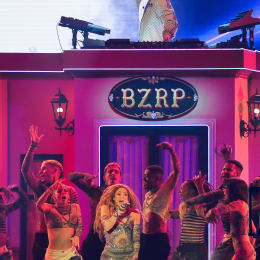
Is an entry ticket required to enter Macondo Park?

Yes. Having a ticket for the Shakira concert is mandatory to access Macondo Park. Live Nation clarifies that it is not possible to buy a ticket solely to visit this ephemeral city. Access to the activities, including the scheduled concerts on the second stage, is part of the experience associated with the main show ticket.

Each attendee must have a valid ticket for the concert corresponding to that same day.

Can minors enter?

Yes, although there are specific conditions. Minors under 16 years old must be accompanied by an adult. Both the minor and their companion must have tickets, and these must correspond to the same area and access door. All attendees need a ticket regardless of their age.

Where is Macondo Park?

Macondo Park is located within Iberdrola Music, in Villaverde, the same space where the Shakira Stadium has been built. The venue is situated on Laguna Dalga Street, south of Villaverde Alto. The City Council has established different pedestrian accesses and a special mobility device for the twelve days.

The main public transport options are the stations of Villaverde Alto, connected with Metro and Cercanías, and San Cristóbal Industrial, as well as different bus lines.

What days does Macondo Park open?

Macondo Park will operate during the twelve dates of Shakira's residency in Madrid:

  • September 18, 19, and 20

  • September 25, 26, and 27

  • October 2, 3, and 4

  • October 9, 10, and 11

On all of these days, the general opening of the venue is scheduled for 12:00 PM.

Macondo Park thus becomes one of the main differences between this residency and a conventional concert: the audience will be able to access a cultural and leisure program from noon before entering the Shakira Stadium for the main show.

More key points, information and questions with FREN

AI-GENERATED CONTENT

What legal procedures or municipal permits have been necessary to build the Shakira Stadium and Macondo Park in Madrid?

Based on the available information, the so-called “Shakira Stadium” and “Macondo Park” are not permanent facilities nor a new football stadium in Madrid, but rather a large temporary venue installed in the Iberdrola Music space, south of Villaverde Alto, to host Shakira's European residency.

According to the newspaper Demócrata, it is a temporary venue of about 30 hectares, featuring:

  • A temporary stadium with a capacity for more than 50,000 people per night, built expressly for the twelve concerts.
  • An “ephemeral city” around it called Macondo Park, with secondary stages, cultural spaces, gastronomic offerings, and family areas.
  • Located in the surroundings of Laguna Dalga, Real de Pinto Avenue, M‑45 and Camino de la Rabia, in an industrial area relatively far from residences.

The news does not detail each administrative file (license number, signing authority, etc.), but it does allow outlining the type of procedures required for such a complex to operate legally in Madrid, by analogy with other large events (concerts at Santiago Bernabéu or NFL games) and with what the City Council itself requires regarding licenses and environmental control.

1. Legal nature of the project

The Shakira venue at Iberdrola Music is conceived as a temporary installation, dismantled after the concerts. This is not an urban reclassification or a long-term concession on new land, but rather the intensive use, for a few weeks, of a space already designated for large events. This conditions the permits:

  • Instead of a major construction license for a permanent stadium, the assembly of structures, stands, and stages is channeled through specific urban licenses or declarations for provisional installations, with structural safety and evacuation controls.
  • The news itself emphasizes that the complex was “built in a few weeks” and will be dismantled after the last concert, reinforcing this ephemeral character.
2. Activity and entertainment licenses

A venue combining a temporary stadium, stages, catering, and capacities exceeding 50,000 people necessarily requires some form of authorization for public and recreational entertainment activities, which in Madrid is based on:

  • The prior evaluation of capacities, emergency exits, safety measures, and self-protection plans.
  • The approval of an evacuation and self-protection plan, coordinated with emergency services and security forces.
  • Coordination with the mobility plan detailed by the City Council for Villaverde: reinforcement of Metro and Cercanías, electric bus shuttles, specific zones for taxis and VTCs, and traffic cuts and restrictions on streets such as Laguna Dalga or Real de Pinto Avenue.

In the case of other large events covered by Demócrata (for example, the NFL game at the Bernabéu), there is an “exceptional authorization” to exceed noise limits granted by the Directorate General of Sustainability and Environmental Control of the City Council. It is reasonable to infer that, for a series of macro concerts like Shakira's, the City Council must issue specific operating and capacity authorizations linked to the regional entertainment regulations and municipal ordinances.

3. Environmental and noise permits

The news about the Bernabéu shows two relevant elements that are transferable to Shakira's case:

  • The urban licenses for a stadium do not by themselves authorize the systematic holding of concerts; for each event or series of events, additional authorizations are needed.
  • When it is expected to exceed noise limits exceptionally, the City Council processes and signs specific permits, which may be subject to contentious appeals by neighborhood associations.

At the Iberdrola Music venue, although the files are not published, the scheme is similar: the City Council validates that the acoustic and light impact is compatible with applicable regulations and, if necessary, grants conditional permits (concert end times, emission limits, noise measurements, etc.). The political controversy between the City Council and the Government Delegation, also covered by Demócrata, revolves precisely around the sufficiency of security and mobility measures, not the absence of permits.

4. Conclusion

In summary, the Shakira Stadium and Macondo Park are a temporary infrastructure erected at Iberdrola Music (Villaverde), not a new permanent municipal stadium. The legal procedures essentially involve:

  • Urban permits for the temporary assembly of structures and stands.
  • Activity and public entertainment licenses that cover the twelve concerts and the daily operation of Macondo Park.
  • Environmental and noise authorizations, with conditions on schedules and sound levels.
  • The approval of mobility and security plans coordinated with other administrations.

The fine details (file numbers, exact dates of granting, or literal content of each license) have not been made public in the consulted sources; what can be affirmed is that the venue operates under that framework of urban, environmental, and entertainment licenses that the Madrid City Council applies to the city's large events.

Can you detail which specific administration (City Council, Community, Government Delegation) assumes each type of permit in this Shakira venue? What legal and neighborhood controversies have other macro concerts in Madrid, such as those at the Bernabéu, generated regarding noise and licenses? How do the licensing requirements for this temporary venue compare with those of a permanent football stadium in Madrid?

What are the competencies of the Madrid City Council in organizing large cultural and musical events?

In organizing large cultural and musical events in the city (festivals, macro concerts, popular festivals…), the Madrid City Council plays a central role, but always within a division of competencies in which the Community of Madrid and the State also intervene. Based on the available information, its own competencies, those exercised in coordination with other administrations, and the legal framework conditioning them can be clearly distinguished.

1. Basic legal framework

Municipal competencies are generally supported by Law 7/1985, Regulating the Bases of Local Regime, which recognizes municipalities' powers in areas such as culture, environmental protection, use of public domain, traffic, and regulation of neighborhood coexistence. On this state basis, other key regulations operate in Madrid:

  • Law 17/1997, on Public Shows and Recreational Activities of the Community of Madrid (LEPAR), which sets the general regime for shows and recreational activities, safety requirements, admission rights, capacities, insurance, etc., and the role of municipalities in their authorization and control (specialized press notes that it is being reformed to update it to current large events).
  • Municipal regulations on noise and acoustic pollution, including the Action Plan against Acoustic Pollution approved by the City Council, which includes “the study of measures to reconcile the holding of large events with neighborhood rest,” as well as inspection and awareness actions in the city's 21 districts (municipal note).
  • The City Council's sectoral ordinances and regulations (municipal markets, use of public spaces, acoustic regulations, etc.), which regulate recreational and social activities (concerts in markets, festivals, live performances), as well as the requirements for their realization.

2. Madrid City Council's own competencies in large events

Within this framework, the Madrid City Council deploys several specific competencies in large cultural and musical events:

  • Cultural programming and promotion: through the Area of Culture, Tourism and Sport, it designs and executes programs such as 21 Districts, San Isidro festivities, La Paloma, or specific concert and festival campaigns. Municipal notes show it organizes hundreds of free activities and concerts in squares, parks, and cultural centers.
  • Authorization of acts in public roads and municipal spaces: the City Council processes applications to hold events in streets, squares, and green areas. The official guide “Madrid: acts in public roads” explains that the City Council authorized 2,787 public road events in 2024 alone and details procedure phases, deadlines, fees, and documentation depending on capacity, temporary structures, sound use, fireworks, or filming.
  • Urban and activity licenses: in venues such as stadiums or large open-air spaces, the City Council controls land use and permitted activities through licenses. In the case of concerts in large stadiums, available information emphasizes that when there is no permanent license for non-sporting shows, each concert requires extraordinary municipal authorizations based on general and cultural interest, as well as control of compliance with imposed conditions (capacities, soundproofing measures, self-protection plans, etc.).
  • Traffic regulation, mobility, and public space: the City Council designs and executes special mobility, road safety, and public space devices during large festivals or concerts (traffic restrictions, reinforcement of municipal public transport, signage, fencing, etc.), as reflected in notes about Christmas operations or major celebrations.
  • Noise control and neighborhood coexistence: within its acoustic regulations, the city sets noise limits and can open sanctioning files against promoters or organizers who exceed them. Judicial procedures about concerts in large stadiums explicitly mention the existence of municipal sanctioning files for very serious sound level infractions.
  • Inspection and municipal sanctioning regime: the City Council's inspection services control compliance with licenses and ordinances (capacities, schedules, structure assembly, public road occupation, noise, complementary safety conditions), being able to initiate proceedings and sanction organizers or activity holders.

3. Coordination with the Community of Madrid and the State

Alongside its own competencies, organizing large cultural and musical events requires inter-administrative coordination:

  • With the Community of Madrid: the regional administration holds the Law on Shows and the regulations controlling access to public shows and recreational activities; it accredits access controllers and sets general safety requirements. The City Council applies that regulation in its territory when authorizing and supervising events.
  • With the Government Delegation: citizen security in the strict sense (Civil Guard, National Police) is a state competence. The City Council, through Municipal Police and its emergency services, coordinates devices with these forces in large macro concerts or festivals, while the State reinforces security when the event requires it. Public debates about venues like Iberdrola Music highlight precisely this tension and division of competencies between security and material organization of events.

In summary, the Madrid City Council has broad competence in the planning, authorization, logistics, environmental control, and coexistence of large cultural and musical events, while the Community of Madrid sets the sectoral framework for public shows and the State assumes citizen security. Proper management of these events requires integrating these three levels of government.

Could you detail which municipal ordinances of Madrid are most relevant for outdoor concerts (noise, public road occupation, schedules, etc.)? How does the Madrid City Council coordinate in practice with the Government Delegation and the Community in a specific macro concert, for example at Iberdrola Music or a stadium? What mechanisms do neighbors have to appeal or challenge the authorization of a large concert in Madrid if they consider their rights are violated?

What legal requirements must minors and their companions meet to legally access concerts in temporary venues in Madrid?

In the Community of Madrid, there is no single “concert law” for minors, but rather a set of intersecting regulations: Law 17/1997, on Public Shows and Recreational Activities (LEPAR), as amended by Law 5/2015, Law 5/2002 on Drug Dependencies and other Addictive Disorders, and, secondarily, ordinances and specific conditions of each venue or festival. Temporary venues (tents, fairgrounds, etc.) are considered establishments or venues for public shows and are subject to this general regulation.

1. Can minors enter concerts in Madrid?

LEPAR has a specific minor protection regime (article 25, as amended by Law 5/2015, published in the BOCM on 12/28/2015):

  • General rule: entry and presence of minors under 18 is prohibited in special bars, party halls, dance halls, discotheques, and similar venues where alcohol is sold or provided.
  • Exception: when live performances take place in those venues, minors under 16 years old may enter provided they are accompanied by their parents or guardians. After the performance, “minors may not remain in the establishment.”

For concerts in temporary venues (tents, fairgrounds, plazas set up for festivals, etc.), LEPAR itself leaves room for authorities to set access conditions, but the basic criterion is the same:

  • The concert is considered a public show and LEPAR applies.
  • The authority (Community of Madrid / City Council) may introduce additional restrictions in the authorization of each event (capacity, time slots, family audience, etc.).

In practice, many concerts at popular festivals in tents and fairgrounds in Madrid admit minors, unless the license or the organization indicates otherwise (for example, if it is clearly adult nightlife).

2. Companions and minimum age

From the combination of LEPAR and the 2015 reform, it follows that:

  • Minors under 16 in leisure venues with alcohol and live performances must enter accompanied by parents or guardians. This rule is expressly stated in the new article 25 of Law 17/1997 (Law 5/2015).
  • In temporary outdoor venues or fair tents, the law does not set a specific minimum age but still requires guaranteeing minor protection. The authority may require minors to be accompanied by an adult, and it is common for promoters to establish this in access conditions.
  • There is no general requirement for written authorization for minors to attend as audience in the regional regulations. This requirement appears in other communities or contexts (e.g., active participation of minors in certain activities) but is not a standard requirement in Madrid for attending as spectators.
3. Alcohol and minors at concerts

The clearest point concerns alcohol consumption. Article 25 of LEPAR, after the 2015 reform, establishes that:

  • Minors under 18 who access establishments, shows, and activities regulated by the law cannot be sold, served, gifted, or allowed to consume alcoholic beverages.
  • Sale of tobacco to minors under 18 is also prohibited.
  • The Administration may develop regulatory systems to prevent minors from acquiring or consuming alcohol.

This applies both to permanent venues and to temporary tents and fairgrounds. Even if alcohol is sold to adults at the venue, the absolute prohibition of sale and consumption for minors remains.

Additionally, LEPAR prohibits any advertising that encourages alcohol consumption by minors, and municipal and regional prevention campaigns (such as those by the Madrid City Council or the Ministry of Health) emphasize that no minor should consume alcohol, also at festivals and concerts.

4. Schedules and other conditions

The closing hours of venues and premises, including temporary ones, are set by regional entertainment regulations and schedule decrees, and are specifically controlled in festival devices (the City Council mentions in various press notes the control of schedules, capacities, presence of minors, and alcohol consumption in venues and premises subject to LEPAR).

In summary, for a concert in a temporary venue in Madrid:

  • The minor may enter as a general rule, unless the license or organizer restricts it.
  • If the format is similar to a nightlife venue with alcohol, minors under 16 should only access accompanied by parents or guardians and not remain after the performance.
  • Written authorization is not generally required by law to attend as audience, although the organization may request it as a condition of ticket sale.
  • Under no circumstances is sale or consumption of alcohol to minors under 18 allowed inside the venue.

Finally, the central government is processing a state law to prevent alcohol consumption by minors, which will strengthen the prohibition of consumption and regulation of advertising at public shows, but as of now it is in draft stage and has not replaced the current regional regulations.

Can you specify how these rules are applied in the festivals of a specific municipality in Madrid, for example in their patron saint festival tents? What differences exist between concerts in temporary venues and in discotheques or party halls in Madrid regarding minors' access? Could you summarize in a practical table the rights and prohibitions for minors aged 14, 16, and 18 in public shows in Madrid?

Play

Test your knowledge with FREN!

How much do you know about this topic? Answer the following 3 questions.

Where is Macondo Park located in Madrid?

Question 1 of 3

What time does Macondo Park open on the dates of Shakira's residency?

Question 2 of 3

Is it possible to access Macondo Park without a ticket for Shakira's concert?

Question 3 of 3

Hola, soy Fren. ¿Cómo te ayudo?